
Flashback to 2011: Air raid shelter is rebuilt at RAF Cosford Museum
It was the year the England cricket team won The Ashes in Australia and the film The King's Speech earned four Academy Awards.
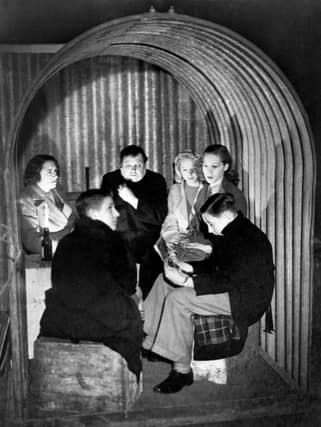


Back in 2011, a team of volunteers were helping to install a piece of history at RAF Cosford Museum.
Visitors to the attraction were going to get a better understanding of what it might have been like for those spending time in an Anderson Shelter during the Second World War.
The attraction had taken delivery of shelter donated by Etruria Industrial Museum in Stoke-on-Trent.
It was to be placed in the museum’s Second World War garden, which was visited by thousands of school groups each year.
Designed in 1938 and named after Sir John Anderson, Home Secretary during the Battle of Britain, Anderson Shelters were intended for use in the garden.
A shelter was built using six curved panels of corrugated steel that were bolted together at the top with steel plates at either end.
When covered with earth the shelter would give some protection from shell fragments and bomber splinters and could withstand compressive forces created by bombs as they exploded - they could not withstand a direct hit however.
Many people planted vegetables on top, making the most of the soil heaped on their makeshift dugouts that were designed to accommodate up to six people.
The first Anderson shelter was erected in a garden in Islington, London on February 25 1939.
One and a half million Anderson shelters were distributed in the months immediately leading up to the outbreak of war. And it's estimated that a total of 3.6 million were produced.
They were issued free to those whose income was less than £250 a year, otherwise they could be bought for £7.
Intended purely as an emergency protection during air raids, in practice, during the period of the Blitz, it was not uncommon for them to be used every night.
People were encouraged to sleep in their shelter without waiting for the air raid warning to sound.
They were also encouraged to take important documents with them into the shelters, such as marriage and birth certificates as well as any Post Office savings account booklets.
Despite being extremely cold during winter, people tried to brighten their Anderson shelters up, sometimes growing flowers and vegetables on the roof and decorating the insides with household items such as small bookcases, tables and rugs.
The Government issued advice on how to make their shelters, which could be prone to damp, more comfortable during the colder months, including constructing bunk beds to sleep in and making sleeping bags out of old blankets and skirts.
People were expected to construct the shelters in their gardens themselves and it wasn’t too difficult for individual householders to build the shelters themselves, or neighbours would help each other.
After the war, the corrugated iron roofs of many of the shelters were collected by the authorities at the end of the war.
Others were sold to the householders for either 15 shillings or £1, depending on the size.
People who bought their shelters often dug them up and re-installed them above ground, fitted them with proper wooden doors, and used them as workshops or garden sheds.
The 8ft long by 6ft high shelter was constructed at RAF Cosford Museum by police officers from Northfield Constituency Birmingham South Local Policing Unit, assisted by a group of teenagers, as part of their community outreach work.

PC Richard Barber, of West Midlands Police, said: “This is the first Anderson Shelter to be built in over 70 years. Through this type of activity, officers aim to build trust and confidence with young people and reduce levels of crime and anti-social behaviour through positive engagement.”
Education officer, Philip Clayton said: “Thanks to the efforts of PC Turner and PC Barber and the enthusiastic group of learners from Birmingham, we now have an Anderson Shelter, which will transform our experience for school groups.
“This is a unique opportunity to see an actual Anderson Shelter and for children to see where families had to take refuge during the Blitz. The Officers and Learners have worked extremely hard erecting the shelter, which will now be used by thousands of school visits each year.”
The shelter had spent 15 years at the Etruria Industrial Museum, having previously lived in a back garden in Abbey Hulton, Stoke-on-Trent since the war.