
Fatal affair of punch drunk boxer who killed his lover
Those who watched Del Fontaine – a middleweight boxer blessed with matinee idol looks – glide around the ring at gloriously named Palais de Danse, West Bromwich, could never imagine they were witness to one chapter in boxing’s darkest story.
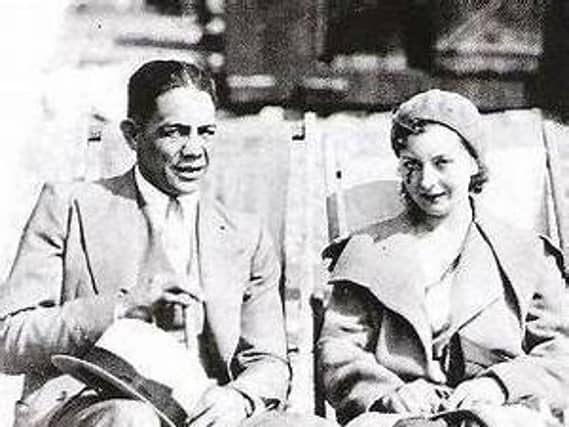


Fontaine’s dance partner that night, in May, 1933, was Brummie Alf Luxton, tough and battle hardened, but no match for his Canadian born tormentor. The one-sided contest underlined what a handful the handsome contender was in his pomp. Alf, a full-blown heavyweight, outweighed him by over two stone. Del didn’t give a fig.
Fontaine was sharp that night, the dull thud of his gloves against Alf’s bruised and battered features echoed through the smoky hall. By the 10th round, the last drags of resistance had drained from Luxton’s body. Del – an ever present in Midlands rings – was, for a flickering moment in time, hot property.
He was aggressive, believed in taking punches to land his own, and carried knockout power. He dressed to the nines and was photographed by the ‘30s paparazzi with a succession of glamorous blondes hanging from his arm.
Punters snapped up his brand of savagery at Birmingham Ice Rink and Kettering Baths Hall. Win or lose, Fontaine his hair teased by pomade into a trench-like centre parting, was guaranteed to have baying fans on the edge of their seats.
Yet, in the days before boxers were subjected to stringent medical checks, in the dark days when fighters were considered a commodity, those who carried Fontaine’s spit bucket and swabs to the West Bromwich ring were already harbouring secret concerns.
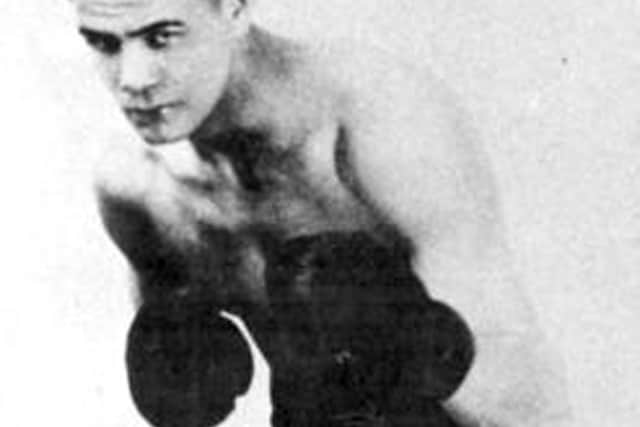
The blows that constantly bounced off his rugged features first scattered sand in Del’s boxing shoes. They slowed him.
Then they slurred his speech and, by the end, those hooks and uppercuts caused his hands to tremble. They shook so dramatically, Fontaine had difficulty raising a spoon to his mouth. Yet Fat City – the hard-nosed community of pugs and promoters – still fed Fontaine to Britain’s best boxers.
The man who strode so purposefully to the Palais de Danse ring became a shuffling, stuttering wreck. He was lost in a cerebral fog of dementia pugilistica – punch drunkenness – but could still sling blows.
And while he could still sling blows, although ponderous and telegraphed, he could still be abused. Those within the game all knew the former pin-up was “punchy”, yet they let him continue.
Boxers often have to be saved from themselves. No one saved the West Midlands favourite.
They hanged Del Fontaine.
They placed a noose around his neck just four months after the final beating, a one round, three knockdown mugging by Kid Abrew in June, 1935. While the sickening spectacle lasted, Fontaine took a fearful beating.
Sixteen days before that juddering confrontation with reality, Jack Strongbow pummelled Fontaine until he couldn’t come out for the eighth. Six weeks before that, Seaman Joe Wakeling used the washed-up boxer for 10 round target practice. Two months before that, Archie Sexton took 11 rounds to separate Fontaine from his senses.
Why did he hang? Suffering memory loss and headaches that split his skull like a fireman’s axe, Fontaine shot his showgirl lover in a fit of jealousy.
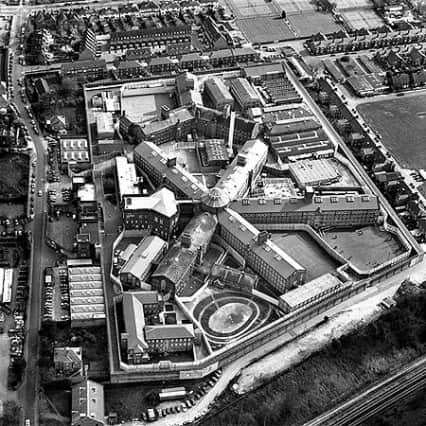
They hanged Del Fontaine at Wandsworth Prison despite a public outcry. Those who witnessed him attempting to roughly stitch together sentences in the Old Bailey dock, those who saw his large hands shake as they clutched the wooden shelf before him, knew he was damaged. Yet the Crown gave short shrift to a “diminished responsibilities” defence.
After they led the ring’s tarnished golden boy to the gallows, one warden told gathered journalists: “He was the bravest bloke we ever saw go to the gallows.”
The awful truth was Fontaine probably had little comprehension of the fate that awaited him.
The boxer committed the crime that he paid for with his life: that’s beyond doubt.
In a cold rage he gunned down his girlfriend, West End dancer and waitress Hilda Meek, a bubbly, striking, vivacious woman unkindly referred to as “flighty” by the day’s press. He also turned the gun on Hilda’s mother, but she survived.
During the high profile trial, legendary world champ Ted “Kid” Lewis took the witness stand and told the jury exactly how it was. “Del shouldn’t have been in the ring at all for his last fight,” he said. “He wasn’t in a fit state,” he added under oath. “As a boxer, he has received more punishment than anyone I have ever seen.”
Another fighter put it more bluntly: “Everyone could see he wasn’t right in the head.”
Yet despite the mountain of evidence, it was deemed that Fontaine was compos mentis enough to know exactly what he was doing when pulling the trigger. After the ultimate sentence was announced, hundreds signed a petition calling for clemency. On the day of the execution hundreds of boxers gathered silently outside Wandsworth Prison.
Fontaine, aged 31, was put to death on October 29, yet mentally he had been lost years before.
He won only three of his last 19 bouts and was a clear danger to himself. Today, his boxing licence would have been taken from him. Back then, he was simply pushed through the meat-grinder with increasing regularity. By the end, he had lost 39 of 102 contests.
Yet it had started so brightly for Del, born Raymond Henry Bousquet in Winnipeg. Frankly, it seemed Fontaine couldn’t miss. He made his debut in Canada in 1935, knocked out his first four opponents and was on an eight-fight winning streak before being outpointed by Harry Dillon for the Canadian middleweight title. It appeared a mere blip. He immediately returned to winning ways and when offered a second crack at the national title Del left nothing to chance, knocking out Harry Henning in two rounds.
Fontaine didn’t care who he faced. Mighty Mickey Walker – one of the greatest middleweights of all time – met the prospect in Saint Paul, Minnesota, and knocked him out in four rounds.
Lou Scozza, who fought for the world light-heavyweight title on three occasions, also starched the Canadian. With his reputation still sky-high, Fontaine decided fame and fortune could be found in England. He packed his bags and took a cattle boat in 1931, leaving his wife and children behind. Del faced the very best this country had to offer and, initially, proved more than a match for them. He lost only four of his first 30 bouts over here before the rot set in.
But from November, 1933, the slide to oblivion gathered pace, with only four wins from 22. He was now clearly unhealthy. He had also turned to drink.
Fontaine may have been married, but he retained an eye for the ladies. While over here, he began a two-year affair with attractive Hilda Meek, a 21-year-old with dreams of finding fame as a dancer.
She, like Fontaine, was not a model of fidelity.
On July 10, 1935, jealous Fontaine overheard his mistress’s romantic telephone call to another man. Drunk and dangerous, he grabbed the receiver from Hilda and growled down the phone.
At this point, the frightened girl’s mother rushed into the room, hell-bent on protecting her daughter. To their horror, Fontaine produced a revolver. Following his fleeing lover on to the street outside, the burned-out boxer aimed his pistol and shot her, then opened fire on Hilda’s mother.
Sam Meek, the dead girl’s father, arrived home just as Fontaine was carrying the body back inside. “I’ve done for her and done for the old woman,” said the gunman matter-of-factly. Sam certainly played his part in Del’s death sentence and, at the trial, rubbished claims that the pug was punch drunk. “Do you realise that he was knocked out seven times recently?” the grieving dad was asked from the witness box. “I don’t know about knockouts,” Sam answered bitterly. “The last one seemed to me more like a lie-down.” The implication was clear. Fontaine was a fighter willing to take a dive for cash.
Outrage over the death penalty grew with each day. The public demanded to know why the judiciary was sending an invalid to the gallows. On the day of execution, members of the clergy led the large crowd in hymns while politicians gave speeches denouncing capital punishment. Before the noose was placed around Fontaine’s neck, he scribbled a note.
It simply said: “Hilda Meek broke my heart. I spent my last cent on her. She turned me against my own wife.” When intervention was desperately needed, Del’s own sport turned its back on him.
Not all blame boxing for the tragedy. In his fascinating book Boxing Bonanza, author Lawrence Yearsley wrote: “When the chisel-jawed French-Canadian was charged with the murder of his 21-year-old English girlfriend, Hilda Meek, his lawyers entered a surprising plea of not guilty on the grounds of diminished responsibility due to his dementia pugilistica. But were these claims genuine? Was he really punch-drunk? And even if he was, could he still be held responsible? Or was he just a no-good, drunken bully attempting to blame our beloved boxing for his own murderous ways?”