
Coal heritage runs deep - remembering proud history and demise of Littleton Colliery
In Huntington, built brick by brick from coal, the pit has long gone, yet the pit has survived the pendulum of time.
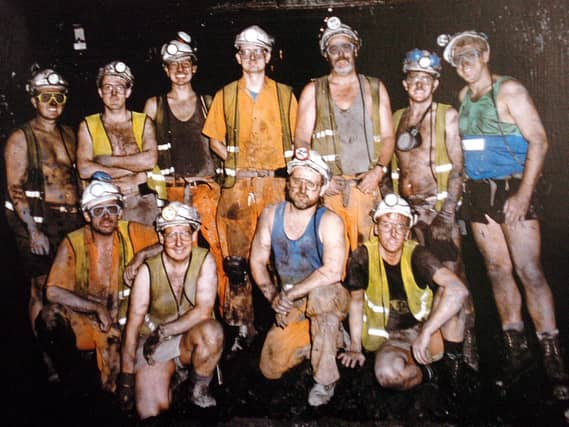


The black stuff that sustained so many lives in the village – a ribbon of homes stretched between Cannock and Stafford – still stains every street.
It is there, running below the surface. It is an indelible memory of a lost life, a hard, past life. Yet it is still visible, like the thin blue scars that adorned the weathered faces and arms of miners I interviewed all those decades ago.
Littleton Colliery has long gone, yet its name remains on a host of landmarks.
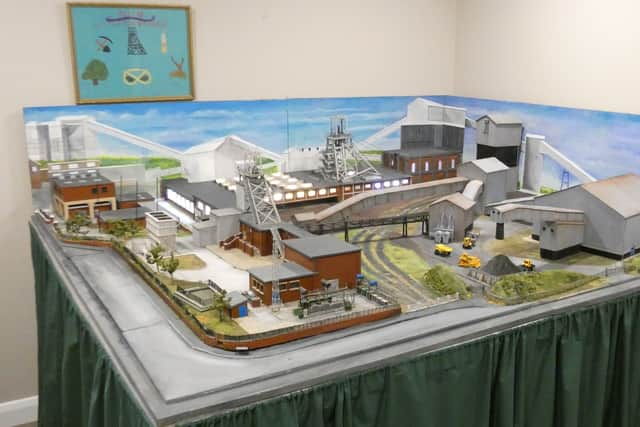
There’s a shrine to the mine at Littleton Lodge Care Home, with detailed scale model of the pit and a National Union of Mineworkers’ banner carried defiantly on the last day of the doomed colliery.
The 150ft pit mound, once an ugly blemish that cast a threatening shadow over homes below, has been transformed into Littleton Leisure Park, the blackened by-product of a decaying industry now disguised by trees. A Flag of St George flies on its pinnacle.
The men of Littleton who laboured like moles in the maze of shafts have long gone or found salaries on the surface. Yet the pride in what they achieved and endured remains.
In a small memorial garden in the heart of the parish, 660 bricks are etched with the names of miners.
Walk past the terraced homes of Monkey Row, built in the early 20th century for pit workers, and you can almost hear the crisp echoes of boots as workers march en masse in sunlight to the darkness of their daily grind.
From my own first footsteps in journalism, in the mid 1970s, through 25 years as editor of local weekly paper the Chase Post, Huntington was my patch.
I was there for Littleton’s pomp – in the early 1980s, 2,000 were employed at the pit. I witnessed the death rattle of its last day.
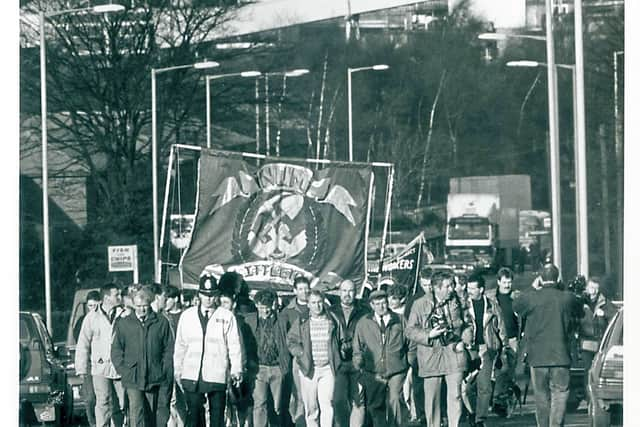
Scottish pipers played a mournful Littleton lament on the day the colliery died, while workers marched behind them like heroic soldiers returning from war.
It was a funeral march by the remaining 600 strong workforce and those who witnessed it – this writer included – were left with the same sense of loss, anger and injustice that comes with a passing.
In an angry letter to the Chase Post, Huntington Parish Council chairman Jeff Ashley seethed: “The tragedy is that there are millions of tonnes of high quality, mineable and economically viable coal left underground. The question is why?
“The deep mining of coal should have continued in Staffordshire well into the 21st century, instead the effect of Littleton Colliery closing with the loss of 600 miners’ jobs and probably some 1,200 support and service jobs will be devastating to the Cannock area. Mining skills will be lost, young men thrown on the dole during a recession and there will be a huge financial loss to the community.”
Only a year before the axe fell, Littleton had set a new record for mining one million tonnes of coal in the fastest time.
County Council chairman John O’Leary was equally scathing. He said: “This is the saddest day for Staffordshire in my 47 years’ association with the county. It cast a cloud over the whole county. When I first joined the mining industry in Staffordshire in 1948 there were some 22 working coal mines in Cannock alone.
“It is the worst Christmas present that could have been imagined.”
Gwilym Roberts, Cannock Chase District Council deputy leader, described the closure as an “act of treachery”. MP Tony Wright said: “I find it difficult to control my anger at the idiocy and inhumanity of what is going on.”
It was not only the last rites for Littleton, it was a requiem to an industry that had been the beating heart of my patch. Littleton was the last of the Cannock Chase coalbelt pits.
And for so long coal had been everything. Businesses, not directly linked to mining, were fuelled by its money. It was, to an extent, my bread and butter.
I wrote about coal industry beauty queens being crowned. I penned double page spreads on the annual miners’ gala, a lavish affair that, bizarrely, in 1983 included a performance by up-and-coming band The Smiths. I covered the successes of sports, rescue and safety teams.
I chronicled the lives and deaths of workers and the long list of inquests for men who succumbed to pneumoconiosis – “miners’ lung”, in layman’s term – underlined the physical cost of earning a crust.
And when it was over, when the coal dust settled, I covered the new careers taken by Littleton employees.
One, a taxi driver, said: “I miss the people, I don’t miss the work. It was cramped, dirty and dangerous. I’ve had nightmares about it.”
This week, former colliery worker Jeff Ashley, still a councillor at the age of 88, said: “Losing Littleton was devastating, but Huntington has recovered. It is a very nice village with 5,000 residents.”
I take a different view. Huntington has survived. The tight bonds that united mining communities have loosened, but the parish has learnt to thrive in a different way.
That’s what made the last day of Littleton, the last solemn, symbolic march, such a “lump in the throat” moment.
I not only witnessed grim-faced workers step towards an uncertain future, I watched an entire community step towards an uncertain future.
Coal had been king in Cannock Chase long before the first shaft was sunk at Littleton in 1876. We all knew the king had died – December 10, 1993, was merely his state funeral.
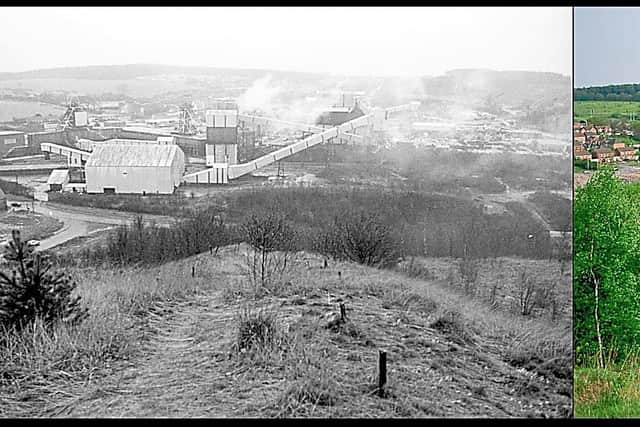
Coalfield a thriving industrial area for generations
Coalmining in Staffordshire dates back over centuries and together with the pottery industry is probably the one most synonymous with the county.
The Cannock Chase Coalfield was a thriving industrial area for generations, employing thousands of men. But the curtain was brought down on the industry on December 9 1993 when the area’s last pit, Littleton Colliery, closed.
The coalfield was once one of the largest concentrations of miners to be found anywhere, covering the present day district of Cannock Chase plus Huntington, Great Wyrley, Essington, Featherstone, Hilton, Pelsall, Brownhills, Walsall Wood and Aldridge plus Chasetown, Handsacre and Armitage.
The rush for coal triggered the social and economic development of the area and in the second half of the 19th century new housing settlements sprang up everywhere.
Virtually every village had its own pit and there was a need to house the workers and so mining cottages became commonplace – one of the last surviving examples being the row of houses along the A34 Stafford Road at Huntington, affectionately known locally as Monkey Row.
Part of the success was due to the extraordinarily rich seam which ran through the coalfield.
The coal was of a very good quality but was unsuitable for coking, which tended to limit its use to a domestic fuel.
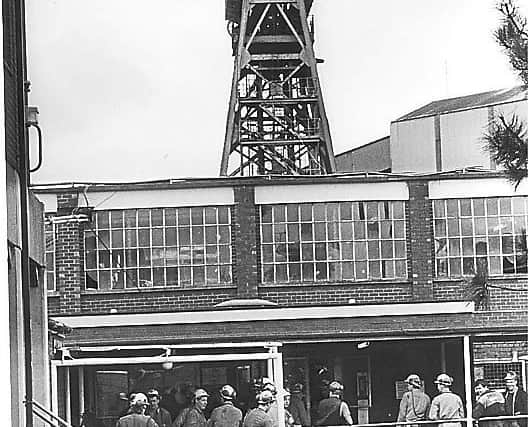
Demand was therefore seasonal –†high in winter but low in summer – and in the days before organised labour, miners could often find themselves laid off during the summer.
One option was to find new markets and when it was discovered that the coal was also good for firing, railways were extended to the north of the county and the coal exported to help the pottery industry meet its own needs.
At the time, the Potteries was flourishing as the demand for high quality goods pottery extended to the far flung corners of the Empire.
During the 1920s, the coalfields employed 23,000 men who between them extracted more than four million tons of coal a year.
Other industries also prospered alongside the collieries. Cannock became a centre of edge-tool manufacture, while Rugeley was well known for its ironworks.
In the period after the First World War new settlements sprang up across the district and over the next 30 years new estates were developed across the district leading to a population boom.
The whole infrastructure changed as new schools were opened, shopping facilities expanded, new health centres built and the road and rail network upgraded.
During the late 50s and early 1960s miners migrated from coalfields in the north east and Scotland to cash in on the boom.
For a time everyone prospered and unemployment was low. But the boom was to be short lived.
The energy crisis of the 1970s, poor industrial relations and the arrival of natural gas all helped to depress the market.
The problems peaked during the bitter strike of 1984-85 after which the fate of the industry was sealed.
Lea Hall Colliery, Rugeley’s last pit, closed in 1990 and then three years after that Cannock’s mining heritage ended with the closure of Littleton.
In 2000, after 109 years as an independent trade union, the Cannock Chase and Pelsall District National Union of Mineworkers was dissolved.
With the rundown of the industry came the inevitable social and economic problems.
The whole area had relied on one industry for so long that once it was gone there was nothing to replace it.
The service industry collapsed, shops closed because no one had money to spend and unemployment steepled.
For a time, the redundancy packages paid out to the ex-miners created a false impression of wealth but this was all too brief.
There was one light on the horizon. Due to the industrial decline the area qualified for massive European grant aid and in the decade following the Littleton closure hundreds of millions of pounds has been pumped into the local economy through schemes such as the Cannock Gateway Project and Rugeley’s Trent Challenge.
Slowly the coalfield area has reinvented itself and now has a thriving service sector.
Large new commercial developments have been built on former coalmining sites, such as Rugeley’s Lea Hall, and the construction of the M6 Toll has paved the way for further new investment.New jobs are being found and there is growing optimism about the future.
A small group of dedicated people is now determined that the contribution made by the Cannock Chase colliers should not be forgotten and moves are now afoot to develop a series of memorials to the men of the coalfields.
The most ambitious is a monument planned for Hednesford which will see the names of miners engraved on bricks to create a plinth supporting a giant Davy lamp.
Such a move should ensure that Cannock’s mining heritage lives on, if only in the symbolic sense.
Comment Guidelines
Iconic Media encourages reader discussion on our stories. User feedback, insights and back-and-forth exchanges add a rich layer of context to reporting. Please review our Community Guidelines before commenting.