
Captured, wounded or killed – the blood and terror of D-Day recalled by our local heroes
Most of the men who fought on D-Day, June 6, 1944, have passed away.
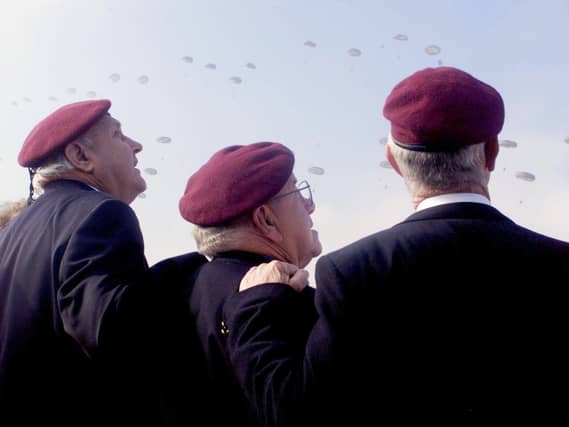

We have collected many memories of veterans over the years. Over the next week we will retell their stories, told first-hand, by some of the 100,000-strong band of brothers who stormed the beaches or dropped from the squally skies on a single day in June to seize a foothold in occupied France and begin the liberation of a continent.
D-Day, June 6 - 1am to 5.30am
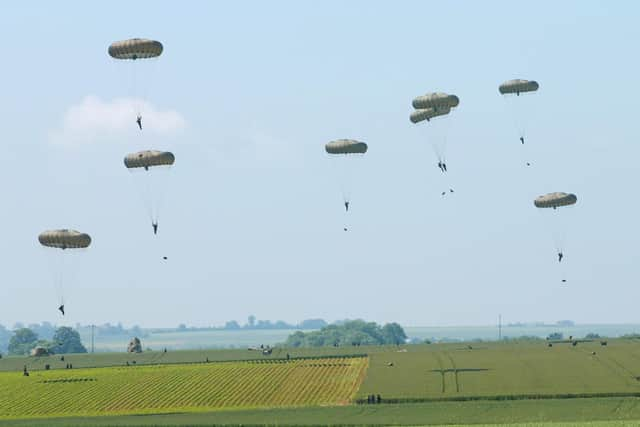
High over occupied France in a converted Halifax bomber crammed with paras, 20-year-old Fred Browning of Alveley near Bridgnorth heard a strange new sound.
It was the sound of German bullets hitting the Halifax. Fred and his pals knew it was time to get out. They parachuted into Normandy in the opening minutes of D-Day. His unit, the 700 men of the Parachute Regiment’s 12th battalion, were widely scattered but he joined a small group and set off into battle.
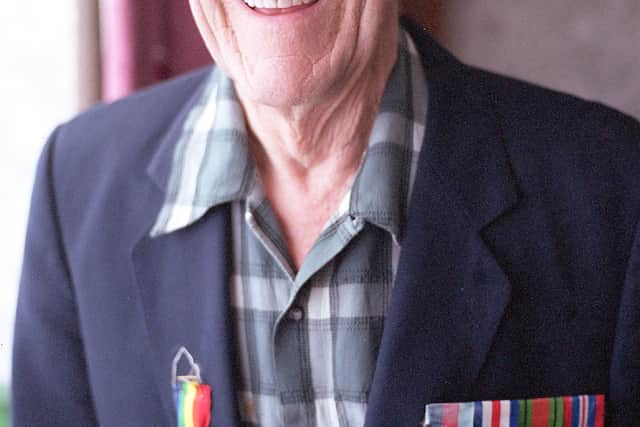
"We were straight into one or two skirmishes," he said. "It was bloody exciting. We all enjoyed it."
The battalion’s job on D-Day was to reinforce Major John Howard’s little force which had landed by glider and seized two vital bridges.
The lightly-armed paras were to hold the bridges until they were relieved. It was hard, bloody work. But the worst was to come six days later when the Germans, supported by tanks, launched two attacks on the paras.
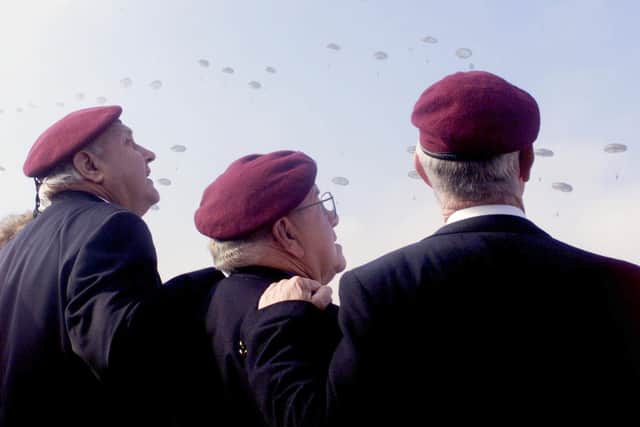
As they withdrew over a bridge, the Brits came under sniper fire. Fred vividly recalls how a Commando sergeant grabbed the body of a dead German, put a red beret on its head and pushed the corpse over the parapet. The trick worked. The sniper fired, revealing his hiding place, and was instantly killed.
"He was a German soldier but he only looked 14 or 15."
Walter Johnson of Stourbridge was part of the Parachute Regiment’s Ninth Battalion (9 Para) whose job on D-Day was to smash the Merville Battery, a maze of minefields, bunkers and barbed wire containing four big guns aimed at the invasion beaches.
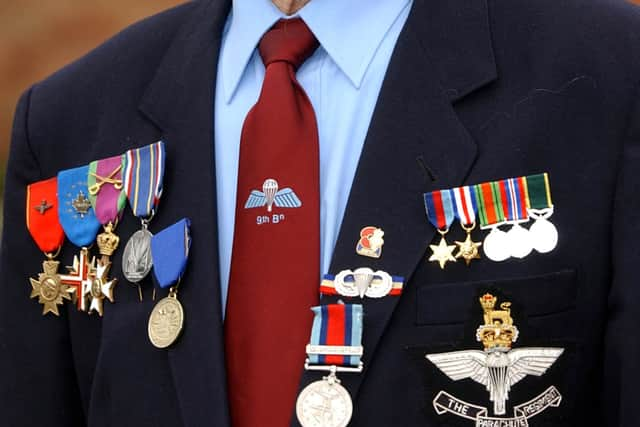
Seven hundred paras trained for the attack. But on the night of June 5, they flew into heavy German fire.
The battalion was scattered all over the coastal area and lost all its heavy weapons.
Only 150 paras showed up for the assault, less than one-quarter of the force.
Even so, they attacked and destroyed the Merville Battery, killing 200 German defenders.
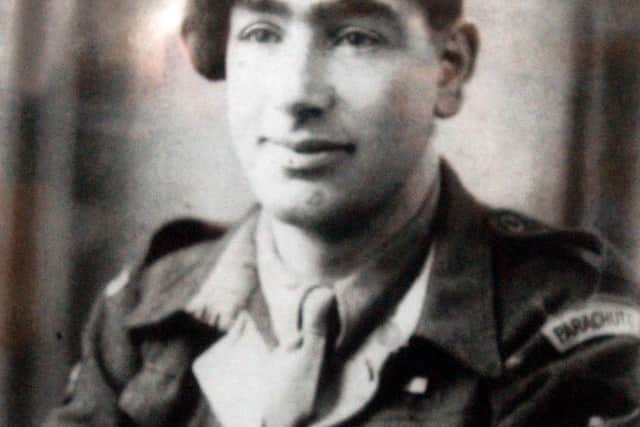
About 50 paras died in the attack. The paras had taken off from a Cotswold airfield just as night fell on June 5. He recalls the runway lined with Waafs, girls from the Women’s Auxiliary Air Force, 'and they were all crying.' As they reached the French coast, the sky filled with German tracer bullets.
"I could see flak coming through the fuselage," he said.
"We got the order ‘stand up!’ and I realised the plane was diving, which was not right. I jumped and I can still see the guns blazing away at us. Then this water was coming up to me in the moonlight."
He was terrified of landing in the sea. Instead, he crashed into a tree and was stuck for 20 minutes before he could cut himself free.
"I skinned my hands and I’d lost my kit. I had no rifle, nothing but my knife and two grenades. I didn’t see another soul for over an hour."
In ones and twos, through a squally night with clouds blowing across the moon, the paras made their way to Merville. When he had about 150 men, the Commanding Officer, Lt. Col. Terence Otway, decided to attack.
"The noise was terrific," said Wally Johnson.
"The Germans had 16 machine guns on us. Something hit me in the hand. Then someone threw a phosphorous grenade and I went straight into it. There was smoke and dead bodies everywhere."
It was all over in less than 15 minutes. Shocked, drenched in blood from shrapnel wounds and with a bullet hole clean through his right hand, he crawled out of the battery with five German prisoners.
As the battered, bleeding paras wrecked the German guns and withdrew, the scale of their losses became clear.
"There were only 65 of us came out and only about 30 of them were any use," said the old soldier whose wounds put him out of action for months.
Harry Pagett of Heath Town, Wolverhampton, was one of many of Wally Johnson’s comrades in 9 Para who went wildly off course on the night of June 5-6. D-Day was his first, and last, taste of action.
"Twenty of us were dropped into occupied territory to knock out the coastal guns," he said.
"But something went wrong. We landed 20 miles away from where we should have been. We tried to walk it, but kept running into the Germans. When we had lost 12 men and ran out of ammunition our sergeant said it was suicide to go on. So we surrendered."
Harry Pagett spent the rest of the war in PoW camps.
James Rose from Darlaston was one of the paras killed in action at the Merville Battery. His body was found near the battery three days after the epic attack.
His nephew, Jim Wheeler, later donated memorabilia to the world-famous Pegasus Bridge museum, including the telegram of condolence from the Queen to James's mother, photographs and letters from his commanding officer.
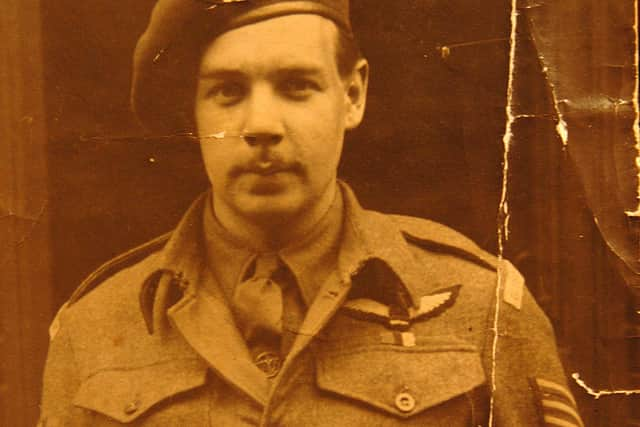
John Denis Potts from Cannock was a glider pilot whose D-Day ended in captivity.
His aircraft, with 24 soldiers on board, left the English mainland at about 10pm on June 5. He flew straight into a massive 600-strong Lancaster attack at Le Havre. Amid the bombardment his glider was shot down at about 1am. Everyone survived the crash-landing, almost on top of a German Army HQ.
"I was out first and almost immediately we could hear the Germans coming. They probably thought they had shot a bomber down so they were surprised when they saw us and the glider."
Wounded in the crossfire, he was forced to face the German media, paraded as a prisoner of war. It was exactly a year before he returned home.
Sergeant Kurt Fromm, of Bentley, dropped into Normandy early on D-Day as part of the oddest military unit in the British Army.
Born in Ireland of a German father, he joined Number 3 Troop of 10 Commando, an elite unit made up entirely of German speakers and jokingly dubbed The King's Own Enemy Aliens.
A liaison officer between the airborne and seaborne forces, he would not have lasted long if he had fallen into German hands. So he had a false identity as ‘Sergeant McGregor.'
He was also one of the few D-Day warriors with his name already on a war memorial in France.
A veteran of the Spanish Civil War, Kurt Fromm joined the French Foreign Legion and was ‘missing, presumed dead' on the retreat to Dunkirk in 1940.
Alf Garratt of Wollaston, Stourbridge was a 22o-year-old driver-mechanic, part of a six-man unit in a glider with an anti-tank gun and a jeep. Their aircraft crash-landed in a field after being hit by flak, which also hit the underside of their jeep as they sat on top of it.
"The landing wasn't too bad," he recalled. "It could have been worse. It was a bit hairy when we came down in all the flak, it wasn't pleasant."
The team headed towards the village of Ranville, where they set the gun up in an orchard.
"It sloped down to a cornfield and the idea was to put the gun in the hedge facing the cornfield in case anything came across the cornfield. They came into our sights and we had the advantage of seeing them first so that was the end of three German tanks."
Frank Payne of Cradley Heath, a machine-gunner in the Parachute Regiment, landed safely and set up his gun but had to leave it behind in the rush to rejoin his battalion.
"I noticed a tank with an 88mm gun and, as I warned the lads, it fired, killing one lad and wounding all the others except me. I managed to drag and walk some of the section back to Ranville, all with shrapnel wounds."
The afternoon was spent guarding the landing grounds from counter-attack. He recalled how the gliders came in, 'like cars in a car park, some failing to get in and smashing through brick walls'.
Comment Guidelines
Iconic Media encourages reader discussion on our stories. User feedback, insights and back-and-forth exchanges add a rich layer of context to reporting. Please review our Community Guidelines before commenting.