
I won't let Britain's heaviest man from the Midlands be forgotten - and here's why he matters

Black Country residents are urged not to forget the man behind the legend
It’s been more than nine decades since George Lovatt passed away, but in Brierley Hill, his story still feels very much alive.
Known locally as the “Brierley Hill Giant,” George wasn’t just famous for his extraordinary size. He was remembered just as much for his humour, his character, and the way he stayed connected to the world even when he could no longer step outside his front door.
Now, local historian Sarah Haywood is bringing his story back into the spotlight — and urging people not to forget the man behind the legend.
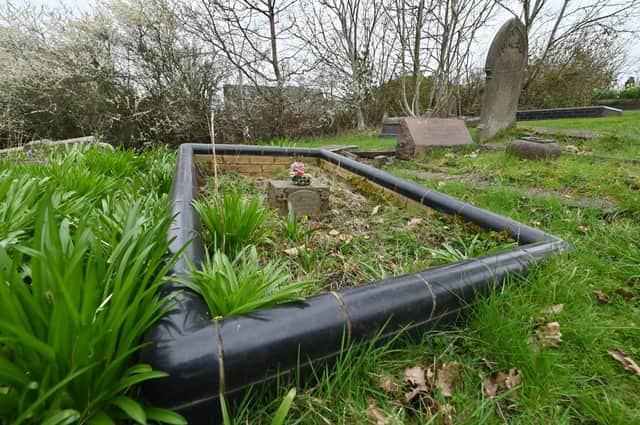
Today, George Lovatt rests at St Michael’s Church in Brierley Hill - and Sarah point out, you can spot his grave due to it being substantially wider than the ones around it.
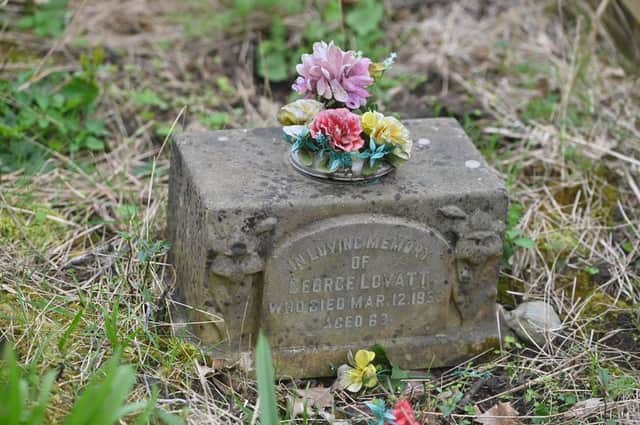

Standing at over seven feet tall and weighing, at one point, a reported 48 stone, George Lovatt was widely believed to be Britain’s heaviest man at the time of his death in March 1933.
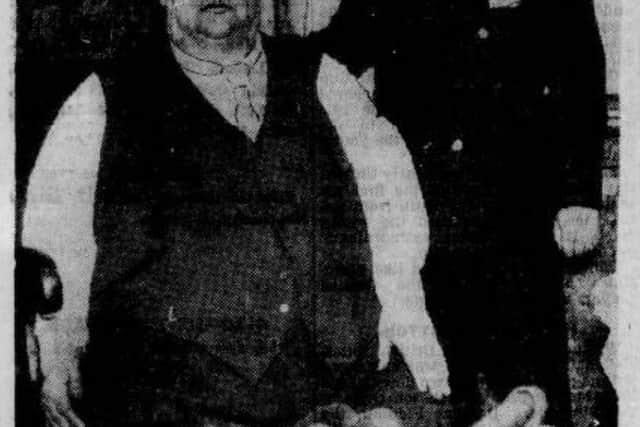
Newspaper reports across his lifetime tracked his weight as it climbed — 38 stone, 40 stone, and eventually close to that staggering final figure. His shoulders stretched nearly 3ft 8in across, with a neck measuring more than 30 inches.
But George himself took it all in stride.
When asked about his size, he famously joked: “I must follow my mother, who was 22 stone.”
That sense of humour stayed with him throughout his life.
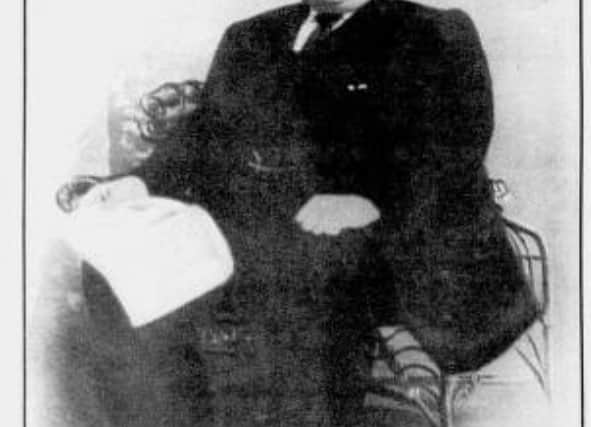
George lived much of his life in Brierley Hill, working hard in the local iron industry as a chain striker at Round Oak Iron Works and later at Wright’s Chainworks in Cradley Heath.
He left school at 12, having already reached the expected standard — something Sarah Haywood notes as a sign of his intelligence.
But life took a turn after a serious accident. A fall from a hayloft left him with two fractured legs. Combined with his increasing weight, it left him unable to walk.
For the final 12 years of his life, George never left his home.
Still, he didn’t disappear from the community.
He would sit by his open window, chatting with friends and neighbours passing by. His presence remained part of daily life in the town.
Over the years, stories about George spread far beyond Brierley Hill — some funny, some hard to believe, all unforgettable.
There was the theatre trip in London where he couldn’t fit into a seat and calmly sat in the gangway instead.
The taxi ride where, according to reports, the vehicle simply couldn’t تحمل his weight — and “the bottom dropped out.”
The tram journeys where passengers had to shift to the other side to balance the carriage.
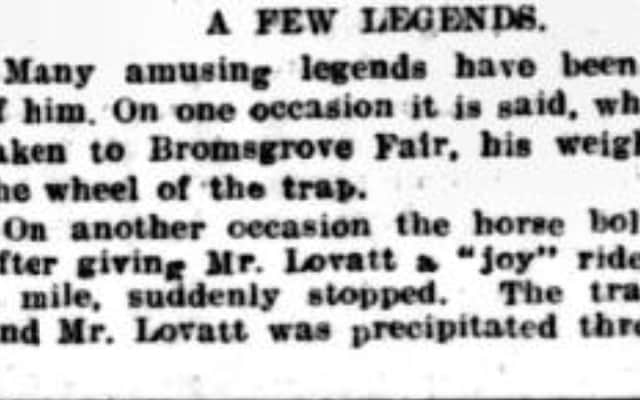
And even a trip to a fair where his weight reportedly broke the wheel of the trap carrying him.
Whether every detail was exact or not, the stories all point to the same thing — George left an impression.
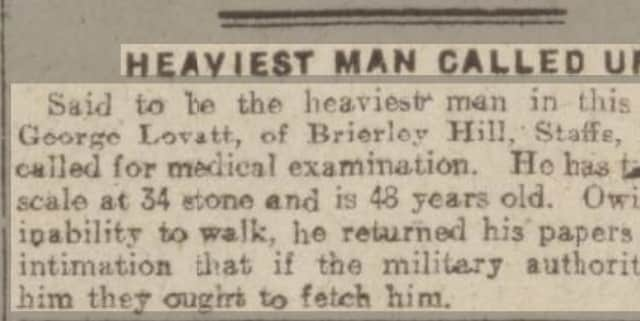
During the war, George was summoned for a medical examination.
At the time, he weighed around 38 stone and was already unable to walk.
His response became one of his most quoted lines: If they wanted him, “they ought to fetch him.”
It’s a moment that perfectly captures both his situation and his wit.
Burying George
When George died at home on March 12, 1933, aged somewhere between 63 and 65 depending on reports, the scale of the challenge became clear.
His coffin had to be specially made — over 7ft long and more than 3ft wide — described at the time as the largest ever made in the country.
To remove him from the house, workers had to take out the windows and part of the structure. His body was moved using planks, rollers, pulleys and sheer manpower.
Even the funeral procession had to be adapted. A traditional hearse wasn’t practical, so his own coal cart was used instead.
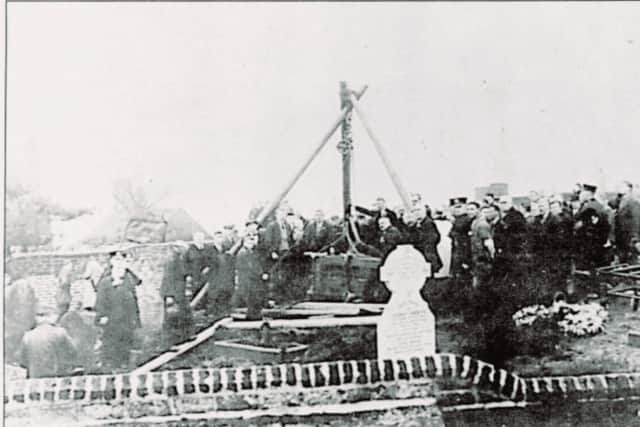
Thousands lined the streets.
Crowds were so dense at the church that gates had to be locked, with people climbing walls and rooftops just to catch a glimpse.
It was, as newspapers described, a sight “unique in local history.”
A news article was written by The Dudley Chronicle on the day of the funeral. It reported: "Thousands of people lined the route of the funeral procession to the parish church, a distance of just over half of mile, and so dense was the crowd outside the entrance of the church it was deemed wise to lock the gates against the people and those actually concerned with the funeral were allowed in.
"Hundreds of people however overcome this obstacle by climbing the nearby walls and climbing onto roofs of houses.
"Several hundred people also had an uninterrupted, although rather distant view from Marsh Park.
"Very many people came from adjacent towns, some people from Birmingham, Worcestershire, West Bromwich and Wolverhampton to witness what was said to be a sight to be unique in local history."
Despite the headlines and the spectacle, those who knew George remembered something else.
He was kind. He was sociable. He had a surprisingly soft voice. And he was well liked.
Furniture had to be specially made for him — a huge chair and an oversized bed — but he never let his situation define his spirit.
Even when housebound, he stayed part of the community.
And that’s what Sarah Haywood wants people to remember.
Not just the measurements. Not just the records. But the man.
Remembering George in 2026
Today, George Lovatt rests at St Michael’s Church in Brierley Hill.
His title as Britain’s heaviest man may have passed on, but his place in local history hasn’t.
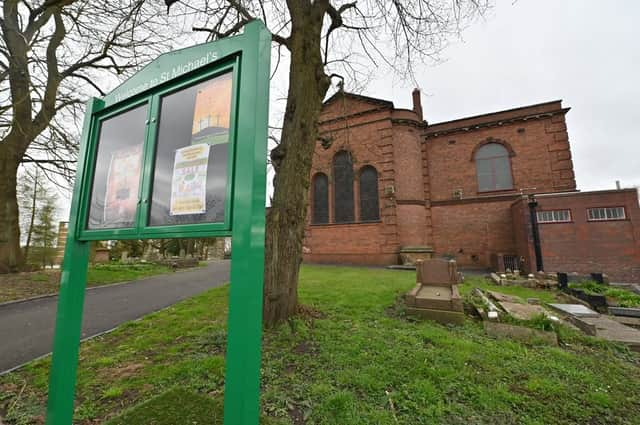
Sarah Haywood hopes that by sharing his story again — through old newspaper archives and photographs — a new generation will come to know him.
Because after 93 years, George Lovatt is still being talked about.
Still being remembered.
And still, in many ways, part of the town he never really left.
Comment Guidelines
Iconic Media encourages reader discussion on our stories. User feedback, insights and back-and-forth exchanges add a rich layer of context to reporting. Please review our Community Guidelines before commenting.