
Watch: Scorching heat parches fields and exposes Shropshire's buried Roman city
Outlines from the buried Roman city have begun to appear

A long spell of hot, dry weather is beginning to reveal the hidden structures of an ancient settlement near Shrewsbury.
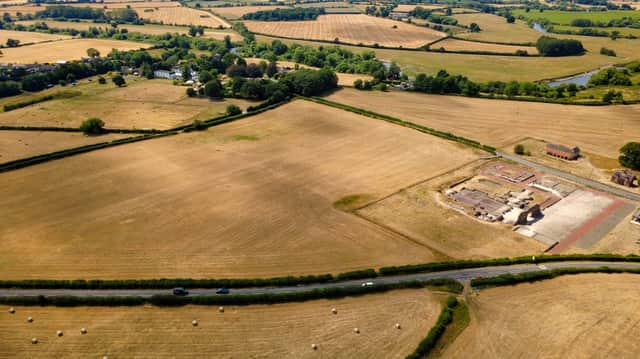
During sustained periods of dry weather or drought conditions the buried stone walls, streets, and building layouts of Wroxeter Roman City begin to emerge as parched patterns among the green grass and freshly cut wheat fields, as seen in photographs by Mike Sheridan.
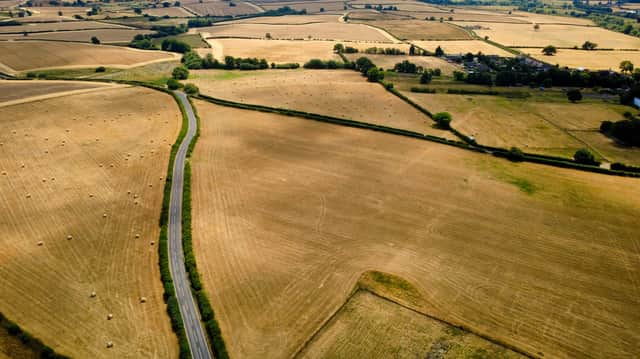

This is because the ground over buried stone or brick walls dries out faster than surrounding turf because the shallow soil holds less water, causing the grass above to turn brown, or crops to grow differently.
It’s not a new phenomenon, but in recent years parchmarks and cropmarks have been seen more often due to the impact of climate change.
Notably this summer the ‘lost’ 17th-century Great Parterre garden at Chatsworth has been uncovered by the dry weather (although dry spells in 2022 and 2018 also revealed the gardens’ outline).
But historians have been utilising periods of drought for aerial research for many years.
At Wroxeter, ex-RAF pilots regularly flew over the site between the world wars and after the Second World War, and recorded the underground city in great detail from the air.
The long spell of hot, dry weather in recent weeks means the shadow of the buried Roman city is now beginning to appear as faint grid-like lines across the neighbouring wheat fields.
And with no significant rain on the horizon for the rest of the week, it’s likely more of the historic site will begin to emerge.
Wroxeter - known by the Romans as Viriconium - was once the fourth-largest city in Roman Britain. Today, visitors can explore the excavated remains of its city centre, including a gigantic public bath house complex.
Comment Guidelines
Iconic Media encourages reader discussion on our stories. User feedback, insights and back-and-forth exchanges add a rich layer of context to reporting. Please review our Community Guidelines before commenting.