
We put Royal Mail to the test, by sending 20 letters first-class to different addresses: Here's how it fared
Royal Mail is still failing to deliver a decent postal service for the West Midlands.


That is the conclusion of a snapshot test carried out by the Star as customers across the region continue to complain about later deliveries.
Ofcom targets under the Universal Service Obligation, require say that 93 per cent of first-class mail should arrive the following day, and 99 per cent of all letters within three working days.
If our test is anything to go by, Royal Mail is is failing to meet those obligations.
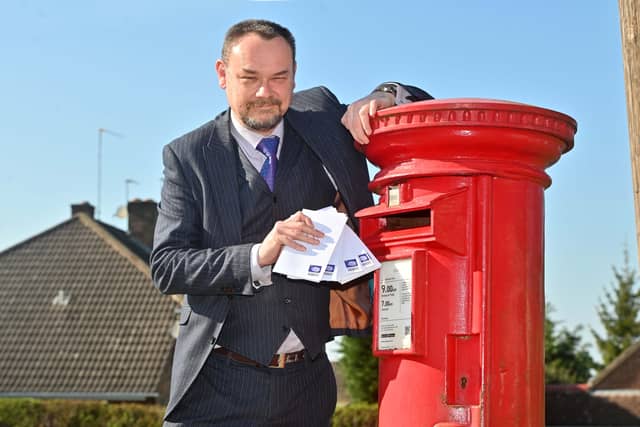
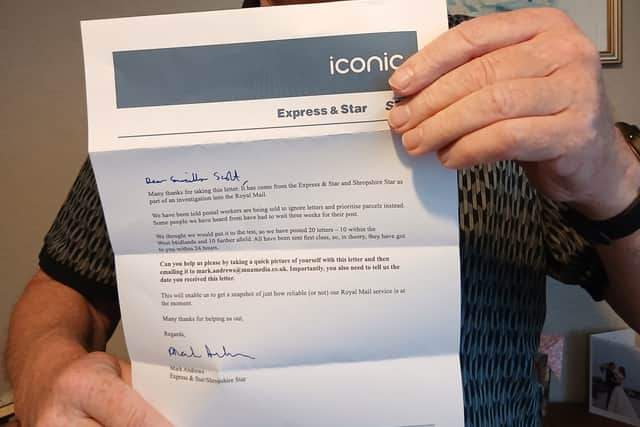
We posted 20 letters, by first-class post, at lunchtime on March 4. Straight away, the first obstacle was apparent - the pillar box would not be emptied until 9am the following day, so the chances of the letters arriving the next day were presumably zero. Not so long ago, people had until 5pm each day to post their letters.
But given the new collection times, we'll be reasonable, and assume that 18 of them will reach their destination by March 6, and the remainder arriving by March 10 - surely not too much to ask for a £34 outlay?
Sadly this has not proved to be the case. More than two weeks on, we are still waiting for two of these letters to reach their destination - including one a 30-minute, 1.3-mile walk from the post box.
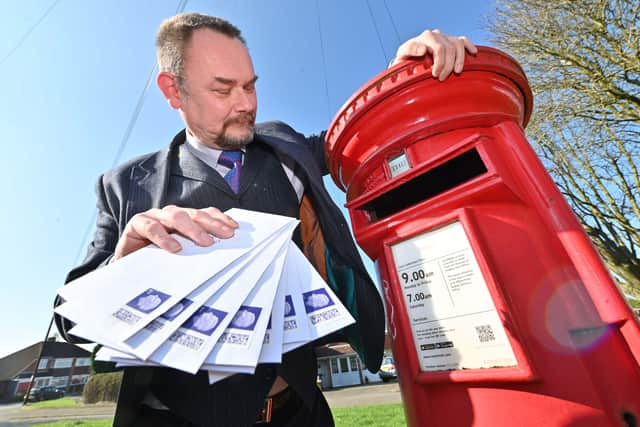
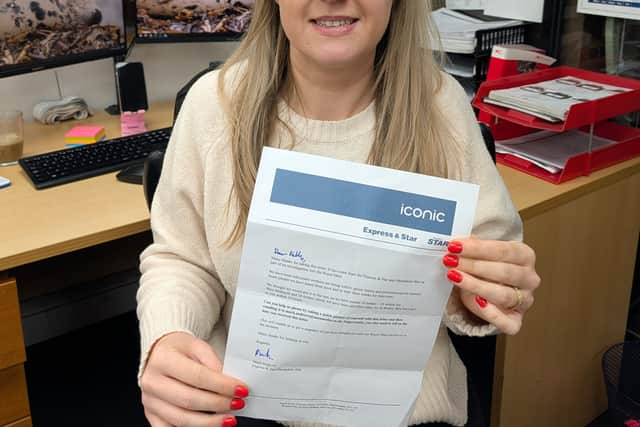
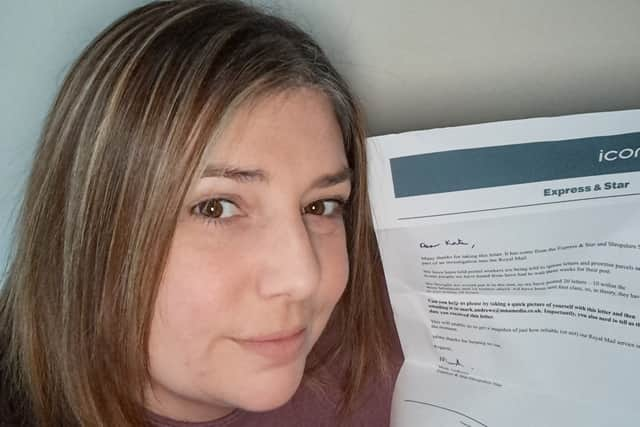
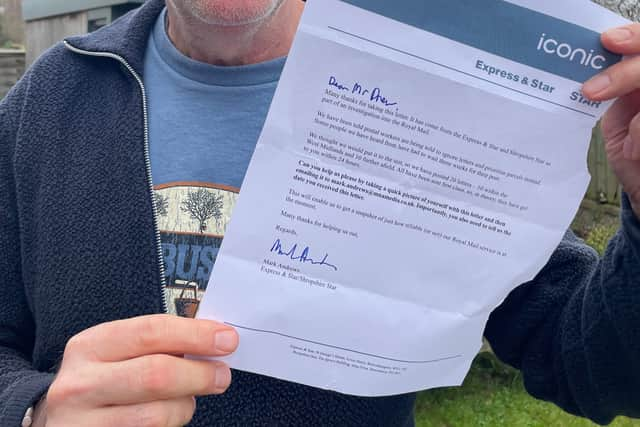
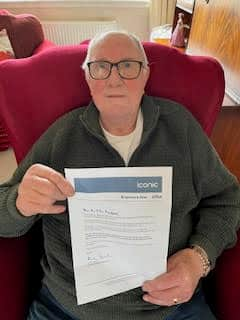
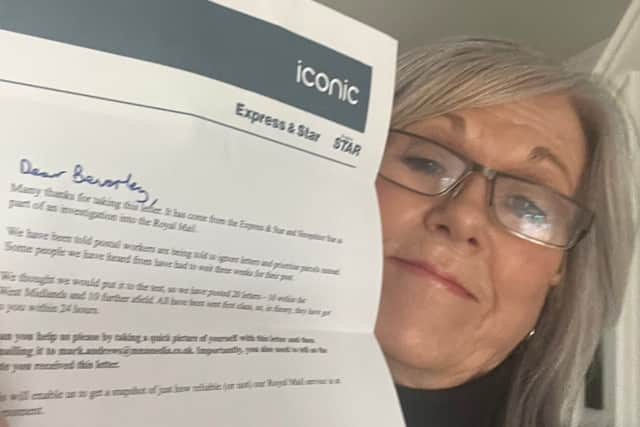
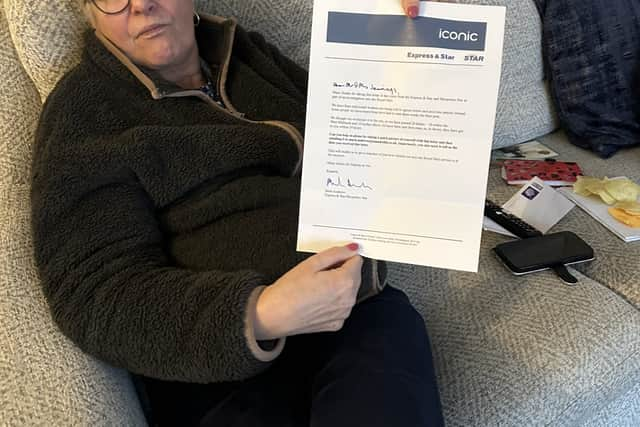
Of the letters posted, 12 were received the day after collection, a success rate of 60 per cent. Five more, a further 25 per cent, were received the following day, and another one finally landed on the doormat on March 10, some three days late. And the other two? Nothing, we're still waiting.
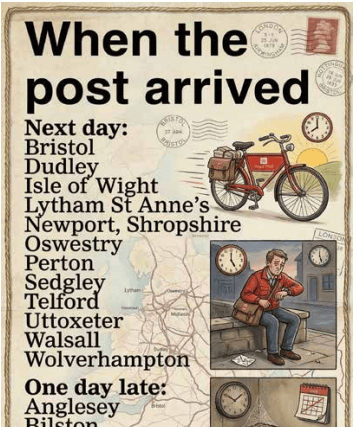
To put the service to the test, we sent letters to 20 addresses, one including my own, a 10-minute walk from the pillar box. The others were sent to a mixture of addresses - nine across the Wolverhampton, Dudley, Walsall and Staffordshire areas, five in Shropshire, and five elsewhere in the UK.
On the positive side, the one to my home address had arrived on time, within about 28 hours of being collected. And distance does not appear to have been a deciding factor, with letters to Lytham St Annes and Bristol also arriving on time - while one to Coseley in the Black Country has yet to reach its destination.
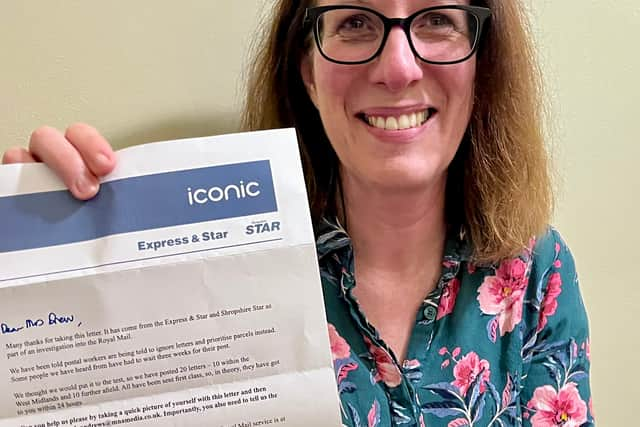
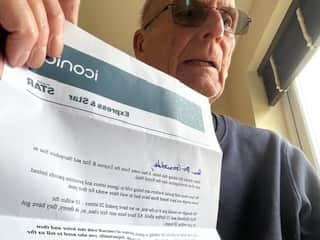
Catherine Drew, of Penn, Wolverhampton, received her first class letter on March 10 - three days late. Yet she said a parcel sent to her second class from Bristol in the same week actually arrived the next day.
She said: “It is so haphazard. I don’t think our post is too bad, but the days of paying for a next day service are just gone. I don’t believe the Royal Mail’s promises on first class post and it is now longer reliable.”
A spokesman for Royal Mail, who declined to be named, said about 92 per cent of letters arrived on time, but admitted there were problems.
However, a cross-party committee of MPs said this hid the fact that just 74 per cent of first-class post was delivered on time, against a target of 93 per cent.
With 6.3 billion letters delivered by Royal Mail each year, the business and trade committee said this was equivalent to 126 million first-class letters arriving late.
The spokesman said: "We know how important it is that customers receive their mail on time, particularly when it includes important items. Recent figures show around 92 per cent of letters arrive on time, but we recognise performance is not yet where it needs to be in all areas.
“Items taking significantly longer than expected to arrive are not due to delays in the network and are more likely to be related to an issue with the item itself.”
Problems with postal services in Shropshire have rarely been out of the news this year, with MPs Mark Pritchard, Shaun Davies, Stuart Anderson, Julia Buckley and Helen Morgan all reporting examples of mail taking weeks to arrive.
Mr Davies said his own postman had told him letters were being given lower priority to allow Royal Mail to concentrate on the more lucrative parcel service.
Yet as far as this test was concerned, Shropshire performed slightly better than the other areas tested, with three of the letters - 60 per cent - arriving on time, and the other two coming the following day. Nevertheless, even this service falls far short of the 93 per cent target.
As well as the letter to Coseley, a letter to Nottingham is also yet to arrive.
Mike Wood, the MP for Kingswinford and South Staffordshire, has kept a diary of complaints from constituents, logging 22 separate incidents. These included missed hospital appointments, and people going two months without receiving any mail - before a huge bundle suddenly arrives.
It comes as sources within the Wolverhampton sorting office say post had been left for a week when one member of staff went on holiday. Workers have also been instructed to clear parcels first because they could become a trip hazard.
Last month Royal Mail told Telford MP Shaun Davies it would be bringing in extra postal workers to deal with a backlog in postal services.
Mr Davies has written to Ofcom, spoken on the issue in Parliament, and now raised it directly with Royal Mail, where he met with them face-to-face this week to push for action.
He said Royal Mail representatives had acknowledged that the current backlog in Telford was unacceptable.
He said they had confirmed that steps are being taken to address the delays, including recruiting additional staff at local delivery centres to help restore normal service.
But last week Royal Mail admitted that more than 80,000 people in Lichfield, Burntwood, Telford, Shrewsbury and North Shropshire were suffering from disruption to mail services, with deliveries being 'rotated' in order to 'minimise the delay to individual customers'.
Mr Pritchard, who has raised the matter in Parliament at least six times this year, spoke again about the matter earlier this month.
He said he had met postal services minister Blair McDougall and Royal Mail executives, but there was no sign of the situation improving.
"Clearly the problem has got worse rather than better," he said.
"This situation has had a huge social and economic impact on people throughout our constituencies, but what concerns me is that the minister has referred to being unable to intervene in a private company, and the regulator is of course independent."
Mr McDougall said ministers had spoken with Royal Mail's ownership and management, and made it clear there needed to be an agreement on reforms to improve service standards.
"I have stressed, in no uncertain terms, my dissatisfaction with current levels of service," he said.
The cross-party Commons business and trade committee has written to Royal Mail chief executive Alistair Cochrane raising concerns about 'chaos' in the postal service.
Its letter claimed that 'in some cases Royal Mail deliberately chooses not to deliver letters until a batch of mail is ready to be delivered to that address'.
Mr Cochrane replied: “To deliver an efficient service, our letter sorting technology is designed to group letters together due for delivery on a specified day, ensuring they meet the target timeframe for the service used.
“This can mean several items arrive together in a ‘batch’ – but we would not hold back mail if that meant it would miss its target delivery date.”
Mr Cochrane told the committee Royal Mail did not operate a general policy of prioritising parcel deliveries over letters.
He added delivering parcels before letters was prioritised during busy periods like Christmas, or else they could overcrowd delivery offices and bring the operation to a halt.
He said Royal Mail did not keep specific records on the number of letters de-prioritised for parcels during these periods.
Mr Cochrane said the company was doing all it could within its current financial constraints to improve quality of service.
He added: “Through universal service reform and sustained investment in our network, technology and delivery options such as lockers and upgraded postboxes nationwide, I am confident that Royal Mail will be in a stronger position to deliver a more reliable, convenient and customer-focused service in the years ahead.”
Dame Harriett Baldwin, a shadow business minister with responsibility for postal affairs, said: “People are paying more and getting less from Royal Mail.
“The Government must take responsibility, hold Royal Mail to account and protect the universal service people rely on.
“Ministers need to get a grip and make sure the postal service delivers the standards the public are paying for.”
Comment Guidelines
Iconic Media encourages reader discussion on our stories. User feedback, insights and back-and-forth exchanges add a rich layer of context to reporting. Please review our Community Guidelines before commenting.