
Watch: CCTV captures heartwarming moment rare baby rhino is born at Chester Zoo

CCTV footage has captured the heartwarming moment a rare greater one-horned rhino was born at Chester Zoo
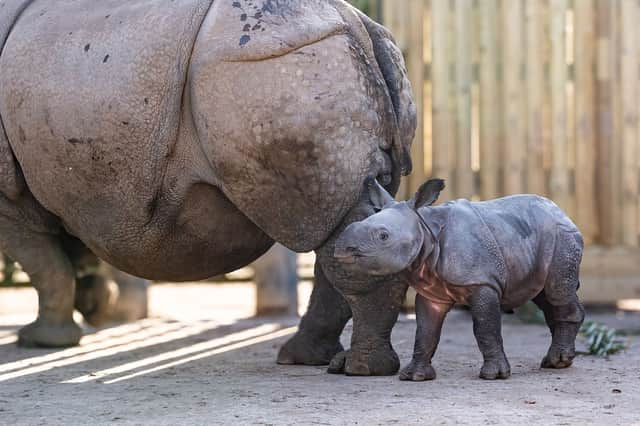
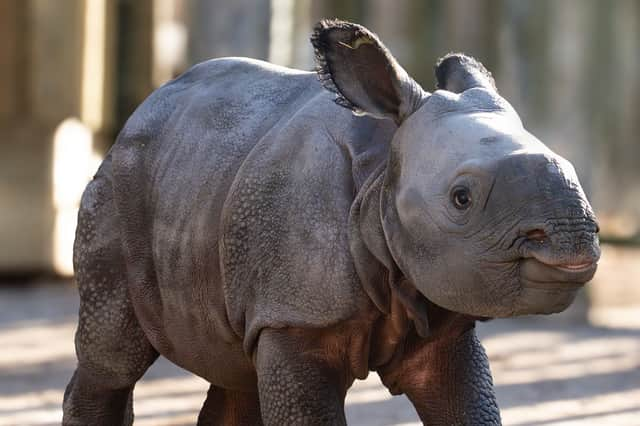
A rare greater one-horned rhino has been born at Chester Zoo in a significant boost for conservation efforts to protect the threatened species.
CCTV footage captured the remarkable moment experienced mother Asha gave birth following a 15-month pregnancy.
Zoo keepers have confirmed that both Asha and her calf are in good health. The pair spent the first few days indoors to keep the youngster warm before moving into a specially prepared behind-the-scenes paddock.
The calf is the fourth born to Asha and father Beni, who sadly died earlier this year following a short and sudden illness.

Tom Garland, Assistant Manager of the rhino team at Chester Zoo, said: "It's always exciting to welcome a new calf and Asha has been a brilliant mum to all her youngsters. Every birth is important for the future of this species and it's wonderful to see another healthy arrival."
Paying tribute to Beni, Tom added: "Beni was a lovely rhino. He was calm and approachable, helped train animal care specialists and even took part in animal behaviour studies.
"It's lovely to know that his legacy lives on through this calf."
Emma Evison, team manager for rhinos, said the crew had been eagerly anticipating the arrival after Asha's lengthy pregnancy.
“Asha was pregnant for about 15 months, so it’s a long wait! We had our fingers crossed when she showed signs of labour and we knew we were likely to welcome the calf very soon.
“It was a big moment for us - and for the conservation breeding programme - when the calf arrived.
“Any birth can be risky, even for an experienced mum, but fortunately everything went smoothly. The calf was up and about within an hour and feeding shortly afterwards.
“Asha knows exactly what she's doing.”
There are approximately 4,000 greater one-horned rhinos remaining in the wild, living across the wetlands, forests and grasslands of India and Nepal.
The species was driven close to extinction in the early 1900s due to habitat loss and trophy hunting.
Although conservation initiatives have helped the species recover significantly, it remains vulnerable to extinction.
Many of the remaining animals are concentrated in a relatively small number of protected areas, leaving them exposed to threats including disease and environmental changes.
Conservation scientist John O'Hanlan said supporting Asha's pregnancy had been an exciting experience, highlighting the importance of every successful birth.
"She's one of relatively few greater one-horned rhinos in Europe actively breeding, so every successful birth is important in maintaining a healthy and genetically diverse population," he said.
Comment Guidelines
Iconic Media encourages reader discussion on our stories. User feedback, insights and back-and-forth exchanges add a rich layer of context to reporting. Please review our Community Guidelines before commenting.