
Tragic cause of catastrophic Shrewsbury fire that killed Rose Roberts
The catastrophic fire claimed the life of Rose Roberts and gutted one of Shrewsbury’s historic buildings
An exploding mobile phone battery caused the fire which tragically killed a Shrewsbury woman and devastated one of the town’s most historic buildings.
Dorothy Rose Roberts, who was 81, died on January 27 this year after fire engulfed her timber-framed Grade II-listed home, Perches House, off Shrewsbury’s Castle Street.
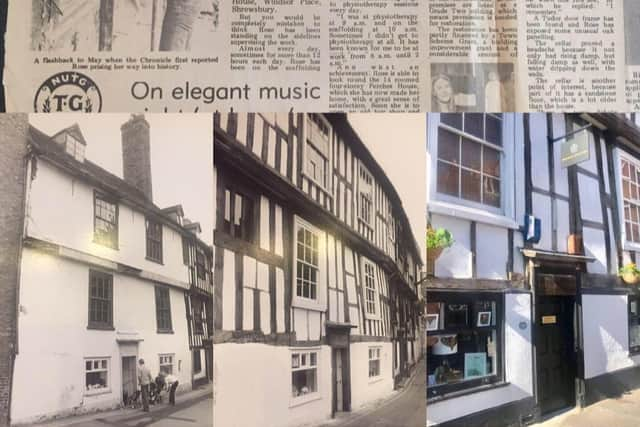
Ms Roberts had lived at the famous house for 40 years - and had been instrumental in saving the property from falling into disarray.
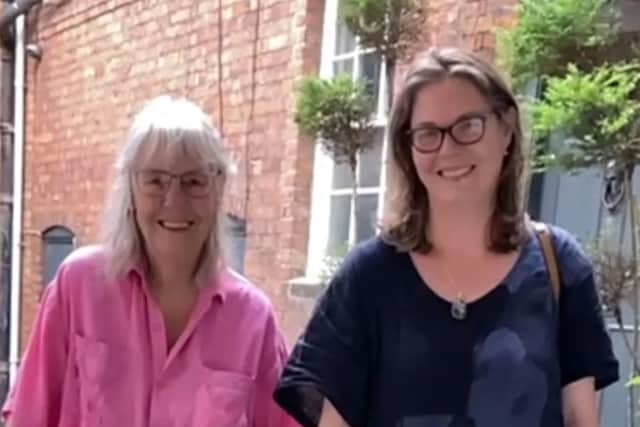

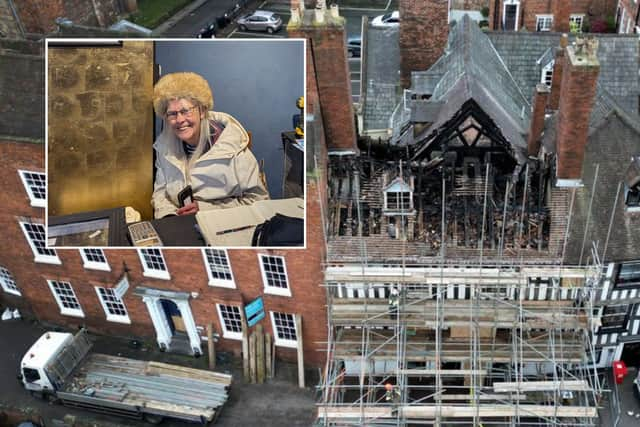
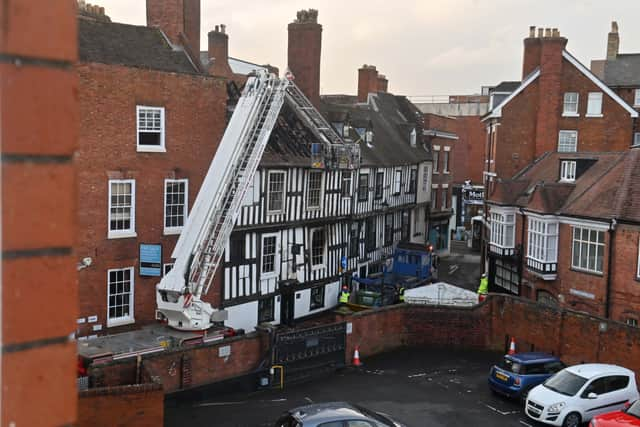
At the height of the blaze, which started shortly before 3.24am, six fire crews were battling the flames.
An inquest at Shrewsbury Coroner’s Court confirmed the cause of the fire, and revealed how Mrs Roberts’ long-standing lodger, Luke Harrison, had been thwarted in brave attempts to rescue his landlady after being woken by a loud explosion.
Shropshire’s Deputy Coroner, Heath Westerman, said that Ms Roberts had been found dead in a chair in her ground-floor room.
He said the cause of death had been the “thermal effects of fire” with a pathologist saying soot had been found in her upper and lower airways - as well as increased carbon monoxide levels.
Mr Westerman read a statement taken from Mr Harrison following the tragedy, detailing how he had battled to try and rescue Ms Roberts from the fire.
He said: “I can’t remember what time this incident happened but I remember being asleep and suddenly being woken by a loud bang and the wall was shaking.
“I knew it was bad because the pictures were falling off the wall.”
He added: “I could hear Rose shouting help next door, in fact she was screaming help, and I knew something was wrong.
“I ran to her door and tried to get into her property but the flames were so bad I could not get in.”
The inquest heard how he had tried again but the flames and smoke made it impossible to get through the door so he called the emergency services.
The statement explained how Mr Harrison then ran to get a ladder to try and access the room through a window.
He said: “Just as I got there the window blew out and I knew I would not be able to get in. It was not long after that the fire service turned up.”
Detailing his memory of the beginnings of the tragedy he said: “From what I remember there was a large loud explosion and the fire started from there.”
He said it had not been long from hearing the explosion to seeing the flames.
Mr Westerman also read a report from Shropshire Fire and Rescue Service fire investigator, Ross Donnelly, which was compiled following the incident.
He told how the fire service was alerted to the blaze at 3.24am and the fire crews were at the scene four minutes later at 3.28am.
Mr Donnelly said that on arrival crews found “significant fire” on the ground floor of the building - particularly from the ground floor window to the right hand side of the property.
Three crews were initially sent to the scene, with three more scrambled as the scale of the blaze became apparent.
Mr Donnelly’s report told how officers spoke to Mr Harrison outside the home who “stated his landlady remained inside the building”.
Crews were equipped with breathing equipment and proceeded to try to get to Ms Roberts, tackling hazardous conditions as they battled into the building.
The report told how crews had to use “progressive firefighting” to get into the building as they committed to searching the right hand side of the ground floor to find Ms Roberts.
The hearing was told that the door to the room was partially destroyed, with the rear window blown out.
During their first search officers could not locate Ms Roberts, but when the fire was brought under greater control they were able to find her in a chair next to the broken window.
Mr Donnelly’s report said the fire started from a lithium ion mobile phone battery going into “thermal runaway”.
The inquest was told the phone was located at the end of the bed, near to a quantity of what was described as combustible material.
The fire was said to have “developed rapidly” due to the “high level of fuel loading” in the vicinity.
The report also described how the failure of the window provided increased ventilation to the fire, while moderate winds were also a factor.
The inquest was told that the historic nature of the building - the old timber framed voids, and wattle and daub partitions had been a factor.
The inquest heard that Ms Roberts was a smoker and suffered from health conditions.
The property was also said to have smoke alarms but not what would be described as a “full fire detection system”.
Mr Westerman recorded a conclusion of accidental death, saying Ms Roberts had died as a result of the thermal effects of fire after the blaze starting in her bedroom due to thermal runaway in a mobile telephone battery.
Comment Guidelines
Iconic Media encourages reader discussion on our stories. User feedback, insights and back-and-forth exchanges add a rich layer of context to reporting. Please review our Community Guidelines before commenting.