
The Shropshire rectory which waged a secret battle against Hitler
Whitchurch’s “Cloverfield girls” who played a key role in Britain’s codebreaking operation and were sustained on watch by dreaded Spam sandwiches
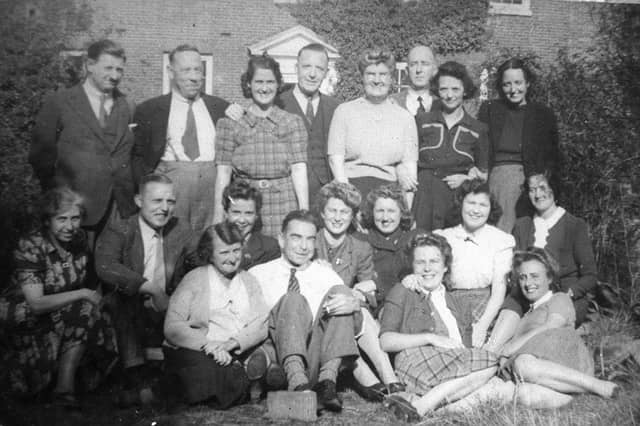

For years what went on at a Shropshire rectory was a national secret.
But decades after the Second World War the story emerged of how civilian post office counter clerks and telegraphists waged a secret war against Hitler from this unlikely setting.
Whitchurch's old rectory played an important part in Britain's codebreaking operation. It was a "Y" station which eavesdropped on coded messages in Germany and elsewhere and passed them on to the famous codebreakers at Station X - Bletchley Park.
Its role carried on into the post-war period when staff were even listening in on the Americans.
Among those to work there was a teenage Betty Morris who, like the others, kept a vow of silence. But as the veil of secrecy was eventually lifted Betty Hayes, as she had become, told the Star her story in a 2000 interview, by which time she was 74.
"There was a large army of we civilians who worked at these stations," the late Mrs Hayes, of Radbrook Road, Shrewsbury, would recall.
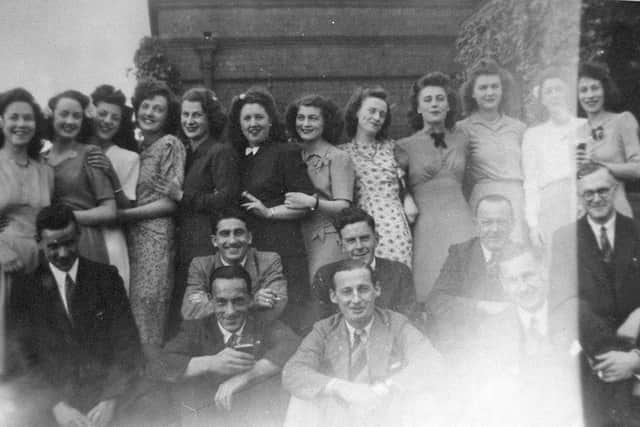
"I had been in the telephone manager's office in Shrewsbury in the old Singleton's tobacco building in Mardol. We could not volunteer for the services because we were post office staff.
"They sent circulars around post office managers and telephone managers' offices asking for young people to volunteer to become wireless telegraphists. Several of my friends and I volunteered. We could go to London!"
So, together with Gwyneth Roberts, Monica Roberts (no relation), Glenys Jones, and Moira - she could not recall her surname - the Shrewsbury fivesome made their way to London for training.
They learned Morse, touch typing, and how to tune a radio to find a frequency. There were girls from all over the country and they were posted to as near as possible to their home towns.
"So we Shrewsbury girls went to the station at Whitchurch. We were billeted in a big house, Cloverfields, up the Chester Road. When we got to the station they put us back into school, and taught us how to listen to the Germany army units in the field. They had not taught us that before in case we did not pass. It was top secret."
Their base was the old rectory, which had radio sets in every room and radio aerials in a field outside.
"People in Whitchurch thought we were radar. We never told them anything."
Nobody at the station was in uniform and the station head was a Mr Thompson.
"They did say that there was sufficient khaki uniform there to fit us out with khaki had we been invaded, because otherwise we would have been shot because we were spying."
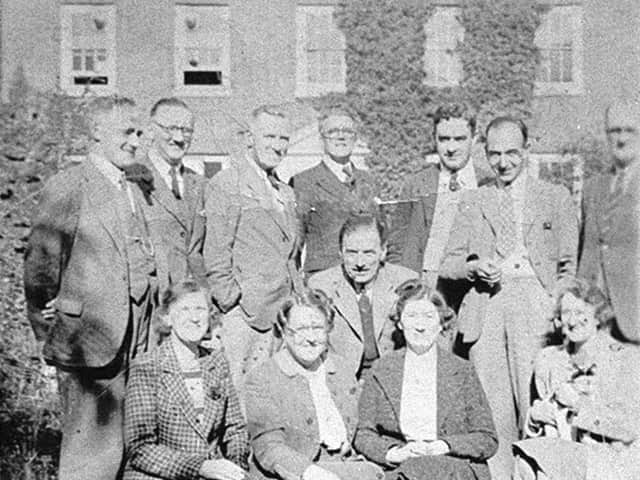
On a typical working day she would be listening in to messages on headphones.
"We covered Lisbon and a lot of Portuguese stations. Every country has its own call signs. Theirs was CUD. The British call signs began with G. The Portuguese began with C, and I think the Americans were W."
She went on: "After the war finished we watched stations from France and the occupying armies, which were mostly Americans. We watched their traffic going to America, which was a lot of telegrams to mum and sweethearts and whatnot. They were in English and all had to be typed regardless of what they said. What we were looking for, I don't know."
Mrs Hayes was still working at the Whitchurch Y station in 1948, leaving on her marriage to National Hunt jockey Doug Hayes.
For relaxation the Y station workers would typically go to dances at the old Oddfellows Hall in Whitchurch, or to the Horse and Jockey and the Grindley Brook Hotel.
"When we were on watch we had to have sandwiches from Cloverfields. Spam - horrible things. That was the worst thing when we were away from home during the war. We used to continually talk about food and what we were going to eat when the war finished. I was going to have syrup tart at one stage.
"The food in the hostel was dreadful. It was bread and margarine and Spam and fish paste sandwiches. There's nothing worse than that at three o'clock in the morning."
- You can enjoy this and more with our weekly FREE Nostalgia Newsletter - with scores of archive pictures and exclusive features on the history of Shropshire and Mid Wales - all sent to your inbox every week. Sign up here.
Comment Guidelines
Iconic Media encourages reader discussion on our stories. User feedback, insights and back-and-forth exchanges add a rich layer of context to reporting. Please review our Community Guidelines before commenting.