
The Midlands folk on Hitler’s hitlist as he planned to spread terror from a Shropshire base
Imagine this New Year’s Eve, while you raise a glass to glorious memories, departed loved ones and future hopes, a very different Britain.
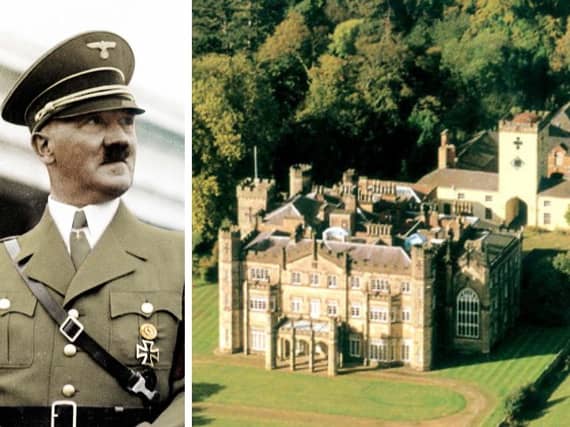


Imagine a very different 2024, a shackled society where the freedoms of speech, belief and expression have long been rinsed from our lives.
Imagine a totalitarian state where swastikas flutter from Black Country buildings, where portraits and statues of the Fuhrer adorn every town and city centre.
Close your eyes and imagine this country’s landscape had the Third Reich succeeded and stormed through our defences in the new year of 1941, as planned. Envisage the goose step march of triumph through cities such as Wolverhampton.
Even image the homage to Britain’s cruel conqueror during this holiday season.
Allegedly, Adolf would’ve spread terror from an unlikely power base – Apley Hall, near Bridgnorth, Shropshire.
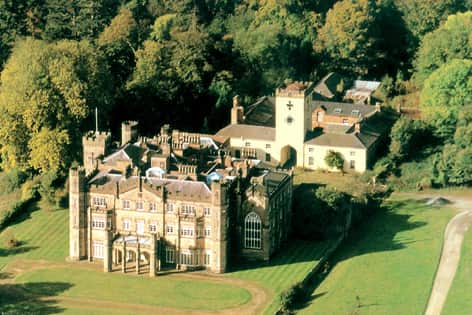
The nightmare of Nazi rule came perilously close to becoming a reality. And the oppression, that would have still been with us in 2024, is underlined by Hitler’s “Black Book” – a chilling pamphlet of destruction.
With “Geheim!” – secret – stamped on the front cover, it is a catalogue of 2,820 “enemies of the state” to be rounded-up, incarcerated or eliminated when victory came.
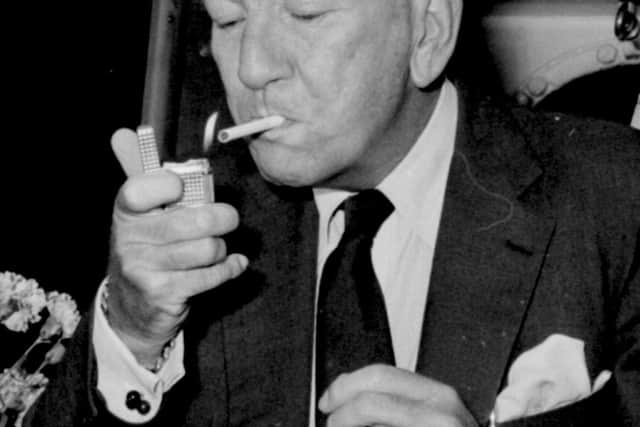
It is a curious, even, at times, bizarre mix of politicians, industrialists, artists and actors. What Noel Coward did to deserve a place on Hitler’s hitlist is unclear, but the actor and playwright was rather chuffed by the honour.
Cartoonist David Low, also strangely dubbed an undesirable by the Gestapo, quipped: “That’s all right. I had them on my list, too.”
Motor racing legend Fergus Anderson’s only “crime” appears to be winning the Grand Prix world championships twice. Perhaps he pipped Germans to the chequered flag.
When referring to the Third Reich’s reign, “silly” seems an unduly kind and ill-fitting description. But it springs to mind when browsing organisations earmarked for destruction in the dossier, now translated by website Forces War Records.
They include the YMCA. Had the plan for world domination succeeded, anyone breaking into the Village People classic this New Year’s Eve would face incarceration, at the very best.
Hitler and his henchman evidently saw no fun in staying at the Y-M-C-A.
The Rotary Club, also on the list, would now have to hold meetings in secret. The boy scout movement was to be erased on the grounds it was “a powerful instrument of British cultural propaganda and ideal source of information for the British Intelligence Service”.
Its founder Robert Baden-Powell was to be arrested.
Masonic Lodges, public schools, the Salvation Army – all are among the 400 strong doomed groups.
A spokesperson for Forces War Records said: “Similar lists were drawn up, and indeed used, for the USSR, France, Poland and many other countries in Europe.
“Thankfully, the only place in the British Isles where the list was actually consulted to round up ‘enemies of the state’ was the occupied Channel Islands.
“Of the 20,000 or so versions of the German lists originally printed, only two are thought to be in existence today. One is at the Imperial War Museum and the other is somewhere in Germany.”
The spokesperson added: “If The Few had lost the Battle of Britain and Hitler’s Operation Sea Lion – the planned invasion of Britian – had succeeded, the people on the list would have been the first to be rounded-up and risked being killed or sent to concentration camps.”
Surprisingly, none of the Royal Family are in the pamphlet of undesirables. That’s because Hitler was certain they’d be spirited out of Britian when invasion became a certainty.
There are Midlands men and women in the dreaded book, all consigned to be removed. Perhaps the most well known is Stourbridge spymaster Major Frank Foley, dubbed both Britain’s Schindler and the Scarlet Pimpernel.
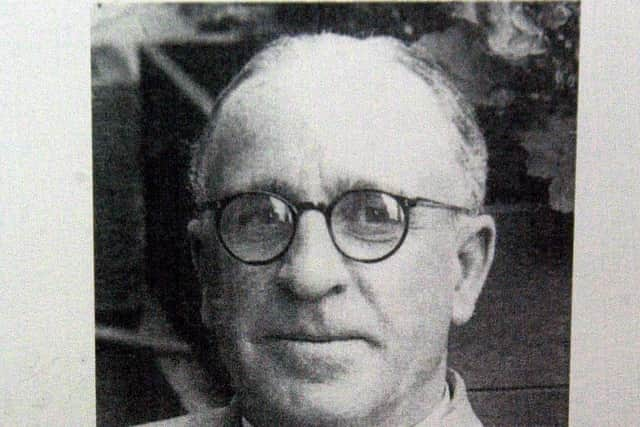
There is an understandable reason for Hitler’s loathing of Foley, who died in 1958 aged 73. The British Secret Intelligence Service Officer helped thousands escape the Holocaust.
He lived a life worthy of a John Le Carre novel.
Foley – badly wounded in World War One – recruited for MI6 during the 1920s and ‘30s and also pilfered German military blueprints.
With National Socialism sweeping Germany and the storm clouds of war gathering, Foley found employment as a Berlin based passport control officer. It was the ideal cover for his espionage missions.
And it allowed the hero to save Jewish families by stamping passports and issuing visas. He sometimes went way beyond merely bending the rules. He would enter the first concentration camps to save individuals and even hid Jews at his home.
When war broke out, Foley co-ordinated a team of double agents for MI5 and MI6. He was posthumously given the title “British Hero of the Holocaust” in 2010.
The Major, who escaped to this country when his cover was blown, has not been forgotten by his home town.
In 2018, Prince William unveiled a statue of Foley in Mary Stevens Park, Stourbridge.
The Black Book underlines one truth – Hitler’s bitter grudges were not diluted by time. He remembered and the book served as a shopping list of those who merited “payback”.
When Hitler offered peace terms to Britain, journalist and broadcaster Sefton Delmer delivered a BBC broadside, telling the tyrant his words should be “hurled right back at you, in your evil smelling teeth”.
That earned him a place in the book.
In 1933, Times reporter Norman Ebbutt warned readers: “All evidence available to the observer on the spot indicates that this Germany, in its present mood, is inspired by the determination to recover almost all it has lost and that it has little hope of doing so by peaceful means in the long run.”
That tip-off saw Ebbutt’s card marked.
Wolverhampton’s Sir Geoffrey Mander, boss of Mander Brothers Ltd paint and varnish manufacturers, was on the hit list.
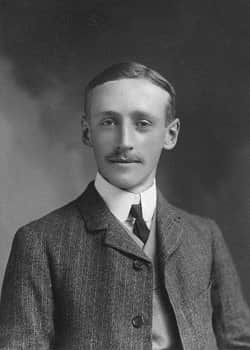
The Liberal MP for Wolverhampton East was among the very first to warn in the House of Commons of the threat posed by fascism.
What Vera Brittain, a nurse, feminist writer and pacifist from Newcastle-under-Lyme, Staffordshire, did to so upset the Third Reich is not known. One can only think she earned her place because the movement disliked feminists and those who believed in peaceful solutions.
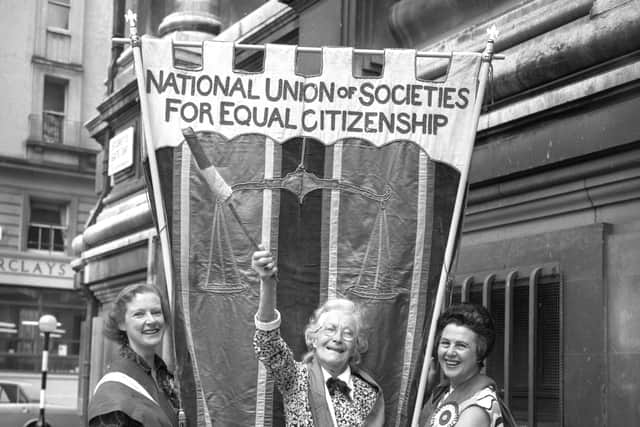
That’s probably what blotted suffragette Dame Margery Corbett Ashby’s copybook, too. She contested the Birmingham Ladywood seat in the 1918 general election and was a tireless advocate for women’s rights.
The ire aimed at Birmingham’s Neville Chamberlain, Prime Minister when war broke out, seems a little misplaced. He died in 1940. Someone evidently forgot to cross his name off the list.
Clement Attlee, PM from 1945 to 1951, is on the list twice.
Others were dead, but still included in the Black Book and entertainer Paul Robeson had long left these shores for America.
The, at times, absurdity of Hitler’s hitlist is best summed up by writer and suffragette Rebecca West who, on learning of the book’s existence, told Noel Coward: “My dear – the people we should’ve been seen dead with.”
Meanwhile, Shropshire seems an unlikely epicentre for Hitler’s Britain.
Claims of Apley Hall becoming the Fuhrer’s luxurious seat of power appear little more than conjecture.
But there is a thread of evidence. The theory surfaced after a cache of Nazi papers were discovered in a Belgium bunker. Along with the files was a book about Shropshire and its historic buildings, Apley Hall among them.
Hitler liked old buildings. And surely a man with his ego would want nothing less than Buckingham Palace.
The content of some of the secret papers was beyond surprising. They detailed lines of communication between Bridgnorth and other towns in the area, including Ludlow. Maps showed potential storage depots in Ludlow.
War historians believe Bridgnorth ticked all the boxes as an invasion HQ. It was at the very centre of England, was away from the West Midlands urban sprawl and had an air-base nearby.
Documents expert Richard Westwood-Brookes said: “As far-fetched as it may sound, the papers earmarked a place in the middle of nowhere where Hitler hoped to set-up camp during his planned invasion.
“To go to so much trouble in researching Bridgnorth and the surrounding area indicates that the Nazis saw the town as of key importance for something. Clearly the felt it held some special strategic purpose.”
Comment Guidelines
Iconic Media encourages reader discussion on our stories. User feedback, insights and back-and-forth exchanges add a rich layer of context to reporting. Please review our Community Guidelines before commenting.