
Major restoration for historic church in the middle of a Shropshire town
Major restoration work is planned to be carried out at a historic church which is tucked away in the middle of a Shropshire town.
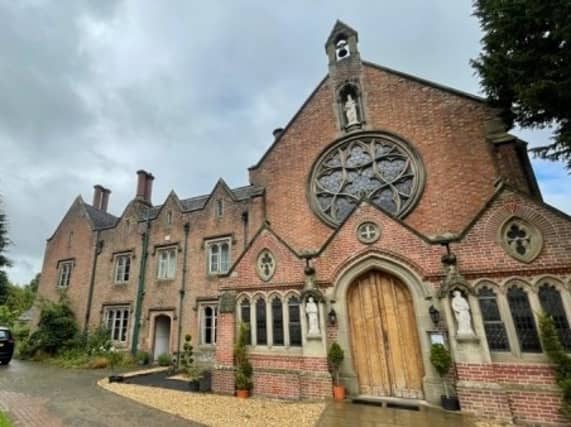

Proposals have been submitted to Telford & Wrekin Council for the restoration work of St Peter & St Paul’s Church off Salters Lane in Newport.
Work includes a replacement roof to part of the church due to ‘significant damage’ being caused by leaks.
A heritage statement included with the plans state that the building is a ‘good example’ of an early 19th century Roman Catholic church with an attached ‘contemporary’ presbytery which also retains remnants of a 17th century hall.
The church was designed by architect Joseph Potter and was opened by Bishop Walsh in July 1832.
“The primary focus of all proposed works is in the best interest of the church to ensure the preservation of its architectural and historical integrity,” said the plan’s design statement.
“By conducting these essential works, it will ensure the longevity of the building and maintaining its historical importance as reflected by Historic England on its Grade II-listed status.
“The church has significant importance within the local community and it is acknowledged that any alterations or repairs must adhere to strict preservation principles to maintain the historical status of the structure and site.”
Applicant Richard Crawford, Diocese of Shrewbury, has applied to replace an existing orangery and roof of presbytery along with external brickwork and repairs to internal oak timbers.
In the plan’s design statement agents Cunliffes said that the replacement roof to the Presbytery is ‘deemed essential due to significant damage being caused via leaks’.
They stated that these had been caused by slipped, chipped and damaged roof tiles, defective flat roof coverings, missing and defective mortar between the roof and gable along with missing and defective flashings between the pitched and flat roofing.
They added that the roof lanterns on the flat roof area were ‘severely weathered’.
“This damage has collectively caused internal wet-rot damage to timber elements that in turn also now require repair work,” the statement added.
North West Dry Rot Ltd has surveyed the timber structures within the Presbytery for any timber decay.
It was concluded that in the front left attic room has an infestation by common furniture beetle (Anobium punctatum) in the roof rafters.
There was further evidence of infestation by the Deathwatch beetle (Xestobium rufovillosum) on the bearing ends to the main truss.
The proposal also includes a replacement orangery which the applicant says is necessitated by the general decay of the existing timber structure as a whole.
They stated that any prolonged delays in its replacement ‘increase the risk of further structural defects and the potential damage to recoverable elements such as stained-glass windows that could otherwise be preserved through its reconstruction’.
“The recommended works include addressing cracked brickwork to the orangery masonry base, garden wall, and presbytery elevation,” added the application.
“All proposed works including the replacement orangery, re-roofing, brickwork repointing and repair works, therefore intend to replicate the existing structure like-for-like
“The existing orangery is suffering from significant general decay from weathering, resulting in visible leaning within the timber structure in areas.
“The re-roofing to the Presbytery is deemed essential due to the overall roof coverings and sky-lights being defective in multiple areas.
“The project aligns with the principles of conservation, maintaining the church’s historical and architectural significance while addressing the decay in a manner sympathetic to its Grade II listed status.
“The proposed works will prioritise the preservation of original features by rebuilding the existing timber orangery. All works including repair interventions will be carried out with utmost sensitivity to maintain the authenticity and integrity of the structures.”
Comment Guidelines
Iconic Media encourages reader discussion on our stories. User feedback, insights and back-and-forth exchanges add a rich layer of context to reporting. Please review our Community Guidelines before commenting.