
Shropshire rates of child poverty revealed as campaigners call to scrap the two-child cap on benefits
New figures from the End Child Poverty Coalition reveal the overall rates of child poverty in Shropshire, Telford and the West Midlands.

Figures obtained through the Freedom of Information Act (FOI) also detail the number of children who are impacted by the two-child limit to benefits payments across the West Midlands.
It comes as a debate took place in Parliament on Tuesday, where MPs called for an end to the "cruel" two-child cap on benefits payments, led by the MP for Liverpool Riverside – Kim Johnson.
The two-child limit policy was introduced in 2017, whereby parents are not entitled to any extra support through universal credit or child tax credit to help with raising a third or subsequent child born after April 6, 2017.
The government argued that removing the benefits, worth £3,000 a year per child, would act as an incentive to parents to move into work or work more hours.
But campaigners at End Child Poverty say that the "ineffective" and "cruel" cap on benefits hasn't driven parents back into work, but more children into poverty.
Official statistics from the Department for Work and Pensions, show that as of July 14 2022, 58 per cent of claimants affected by the policy – or 216,000 – were classified as in-work.
Campaigners say the two-child limit creates a huge hole in budgets that cannot be plugged by working additional hours.
Findings from the End Child Poverty Coalition for Shropshire, Telford and the West Midlands
In Shropshire, 4,300 children are living in families that have been impacted by the two-child limit, according to figures from the End Child Poverty Coalition.
In Shrewsbury & Atcham, 1,710 children are living in families which have been impacted by the two-child limit, with the constituency having an overall child poverty rate of 29 per cent.
In North Shropshire, 1,660 children are living in families which have been impacted by the two-child limit, with the constituency having an overall child poverty rate of 32 per cent.
In Ludlow, 930 children are living in families which have been impacted by the two-child limit, with the constituency having an overall child poverty rate of 31 per cent.
In Telford, there are 3,590 children living in families which have been impacted by the two-child limit, with the constituency having an overall child poverty rate of 38 per cent.
Across the border into Wolverhampton, the overall rate of child poverty is staggering, sitting at 46 per cent in Wolverhampton North East and 47 per cent in Wolverhampton South East.
Birmingham, Hodge Hill, Birmingham, Ladywood, Walsall North and Stoke-on-Trent North are some of the constituencies with the highest overall rates of child poverty in the West Midlands.
"Short-sighted"
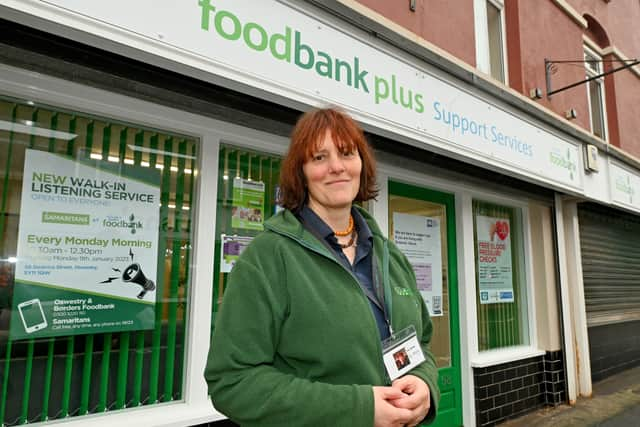
Reflecting on the findings from the End Child Poverty Coalition, the manager of Oswestry Foodbank, Liz Jermy, said she was not surprised by the overall rate of child poverty in the North Shropshire constituency.
She said: "I am not surprised by their findings and we no longer talk about food poverty, it's just poverty because basically it's a lack of money that's bringing people in.
"I think any cap on benefits for families is a shame and is short-sighted really. We do have families of seven and nine so if only two of those children are covered by benefits then how do you put money aside for things like shoes or school uniform?
"There are families who would like to be able to choose the number of children they have without thinking 'I won't get that credit', so we would sit behind that campaign for anything that would raise the income and we are in support of that."
When asked about the current demand Liz added: "The numbers are remaining high. The numbers of people who need the foodbank who haven't used it before or accessed benefits – we do have people who are generally struggling all the time with those things.
"It's not a subset of those people anymore and the struggle to pay your bills has become a normalised part of life.
"We are asking the government to guarantee the essentials because no one should not be able to afford the essentials they need."
The End Child Poverty Coalition say that abolishing the two-child limit is the most cost-effective way of reducing child poverty.
If implemented, they believe it would immediately lift 250,000 children out of poverty and a further 850,000 children would be raised out of deep poverty, at a cost of just £1.3 billion.
Kim Johnson, MP for Liverpool Riverside said: “The two-child cap on benefits payments is as cruel as it is ineffective. Larger families are punished, leaving them struggling. Lifting the cap would immediately lift a quarter of a million children out of poverty – making it the single most effective intervention to tackle child poverty.
“The evidence is there for all to see. Punishing families for having more than two children doesn’t push parents back into work – it only drives more children into poverty.
“The impact of growing up in poverty can be lifelong. We cannot wait for a new government to provide these children with a future, the government must listen now and lift the two-child cap."
Joseph Howes, chair of the End Child Poverty Coalition and CEO of Buttle UK added: “The benefits system should be there to help us all.
"Any family could fall on hard times – from losing a partner, being unable to obtain secure properly paid employment, or not being able to keep up with the increase in the cost of living.
"Poorer families who rely on benefit payments are denied the money they need for their children as payments are capped at the second child.
“There is one policy change that we know would make a direct and immediate difference, and that is to scrap the two-child limit.
"The policy is unfair in the indiscriminate impact it has on children, and there is no evidence it has achieved its aims.
"Abolishing the two-child limit would immediately lift 250,000 children out of poverty, and the government could make this change now.”