
‘We need six officers per shift’: Inside Shropshire’s uphill battle against rural criminals
As our rural crime awareness campaign continues, we sat down with the police to get their side of the story: “Report everything”
The police responsible for fighting rural crime in Shropshire would ideally have more resources to keep the county’s farmers safe but they must work with what they have, one officer has said.
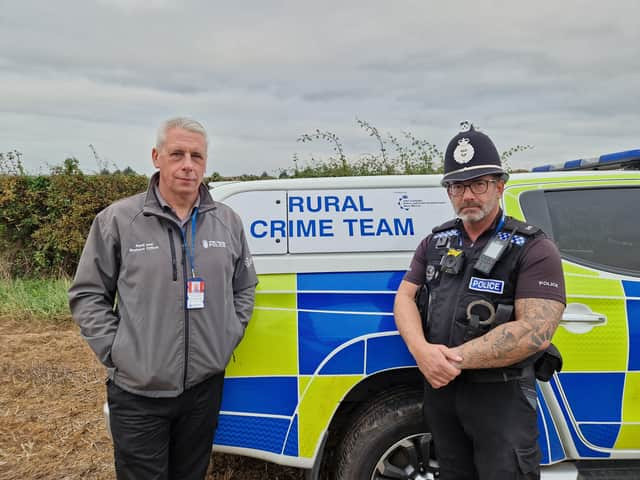
We had an exclusive interview with Police Constable Phil Nock and civilian staff member Graham Donaldson - two men at the centre of West Mercia Police’s strategy to tackle rural crime.
The interview forms part of the Shropshire Star’s ongoing Rural Crime Awareness campaign, which is running this November to shine a light on an issue that is plaguing farmers and rural communities across the county, and costing the region millions of pounds.
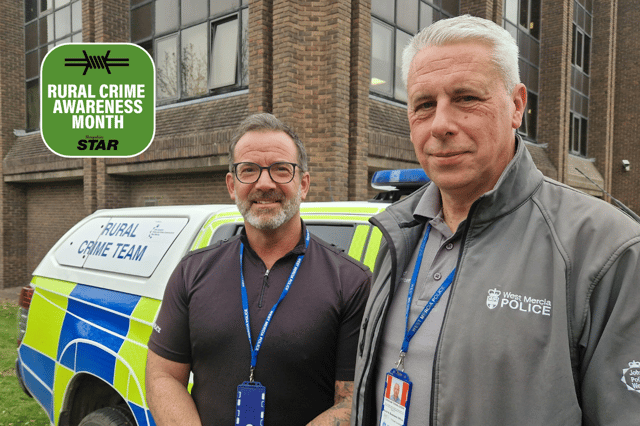

In the interview at Telford’s Malinsgate Police Station we discussed a range of topics relating to rural crime, from issues around reporting offences to whether the force is facing an uphill battle in the fight against criminals, and more.
PC Nock has been in the police for 24 years, he told me. He served in response for 17 of those before he transitioned into the role of rural crime and business officer seven years ago. He became a dedicated rural crime officer two years ago.
He admitted to me that he is a “name” in the rural crime community because of his reputation for taking down criminals in connection with crimes like fox hunting. Talking about having such a reputation, he said: “That is not a nice part of the job - but it is my job.”
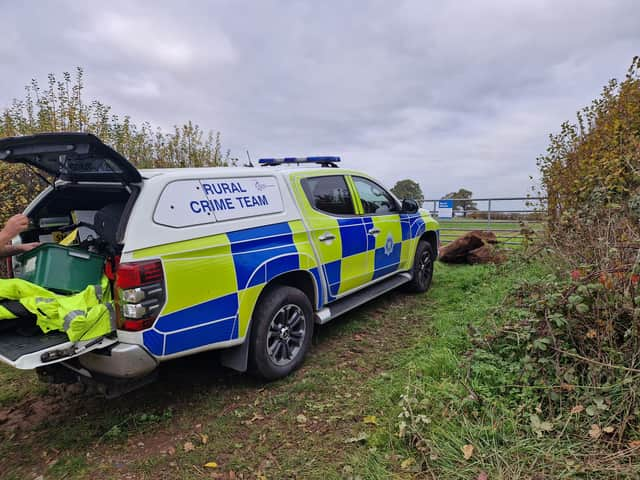
Despite West Mercia Police only having two dedicated rural crime officers in the whole force, thanks to technological advancements - including the invention of WhatsApp - PC Nock likes to think of himself as “an electronic bobby on the beat”. This is because he believes he is a key cog in the public/police relationship machine.
Another important part is Graham Donaldson, who is officially a civilian rural and business officer for the force. His post was established because members of the rural community complained to the police that they were not being treated as fairly as other parts of the public.
He was brought in to try and change this. His role is to be a link between the community and the police.
“It works quite well because rural communities see me as their personal contact,” said Mr Donaldson. “I have become the face of West Mercia Police within rural communities across Shropshire.”
Mr Donaldson, however, does have a history in uniformed law enforcement. He spent 30 years as a police officer, 15 of which were in London’s Metropolitan Police.
One of the first things I wanted to ask the two men when I sat down with them in the station’s cafeteria was: What is the police’s process when a member of the public reports a rural crime?
Mr Donaldson said the first thing the rural crime team does every morning when they get into work is check what incidents have been reported.
He explained to me the risk assessment system THRIVE (threat, harm, risk, investigation, vulnerability and engagement) which is used by the force to determine the importance of each individual report and how officers will deal with it.
However, when it comes to rural crime, the former Met man illustrated why officers are not always sent straight to the scene of crimes like machinery theft.
He said that, for example, if a quad bike was stolen from a farmer's workshop, this would be classed in the risk assessment system as a non-residential burglary, unlike if someone’s actual house had been broken into.
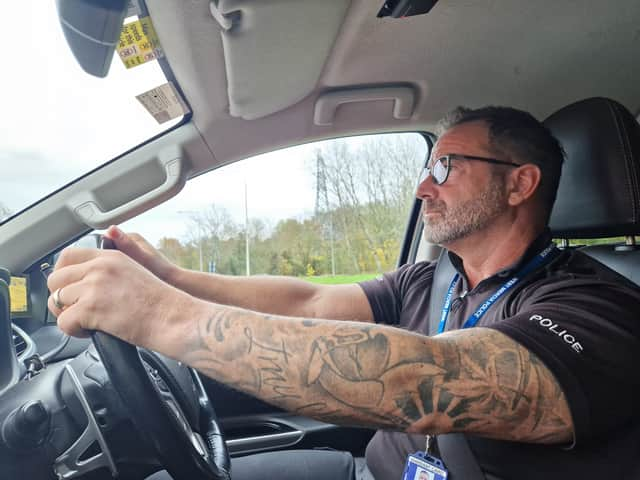
Because of the quad theft’s non-residential burglary status, Mr Donaldson said it would not take precedence over other crimes deemed more serious.
Nevertheless, both Mr Donaldson and PC Nock said this is the very reason their roles exist in the first place. They said they themselves would eventually make a visit to the farm affected to “plug that gap” left by the risk assessment system.
Mr Donaldson said one of the team’s main functions is to urge farmers and rural members of the public to continue to report crime because “sometimes they are not very good” at doing so.
He explained his point: “I think the main reason is that they think ‘what is the point in reporting it? The police won’t do anything about it’. But there is a big difference between ‘won’t do anything’ and ‘can’t do anything’.”
He went on to say that because the force is now so data driven, it relies on the public reporting crime so that they can analyse it and adjust how they police areas with high reported offences accordingly.
If crimes are consistently reported, PC Nock added that preventative steps can then be put in place to stop them from happening again.
But I pushed back slightly on Mr Donaldson’s claim that farmers are not good at reporting crime.
I asked: Is it fair to say that farmers’ low reporting of crime is a symptom of the perception that officers aren’t necessarily sent straight away to something like a tractor theft, because of the risk assessment system, which is not set by PC Nock or Mr Donaldson?
“It could be,” said Mr Donaldson, before PC Nock interjected.
“We have addressed that and we have turned the tide,” said PC Nock. “They [the public] know Graham throughout Shropshire. And if that individual victim does not know Graham, they will know me or someone that does know him. We are bridging that gap.”
Mr Donaldson later stressed: “We never ignore crimes. Every crime is assessed and triaged and dealt with.”
But are the police in Shropshire, which is a very large county to cover with only two dedicated uniformed rural crime officers, alongside people like Mr Donaldson, facing an uphill battle against rural offences despite their best efforts?
PC Nock said: “If we had a team of six officers per shift, working around the clock, 24 hours, dedicated to rural crime, [that is an] ideal scenario - with a sergeant looking after us and an inspector making decisions. But we haven’t got it. So we have to do with what we have.”
One thing both Mr Donaldson and PC Nock wanted to stress is that all officers in West Mercia Police have the responsibility to cover and tackle rural crime.
Finally, when asked what their big message would be to people in Shropshire who are fearful about rural crime, both men were in agreement: reporting is key.
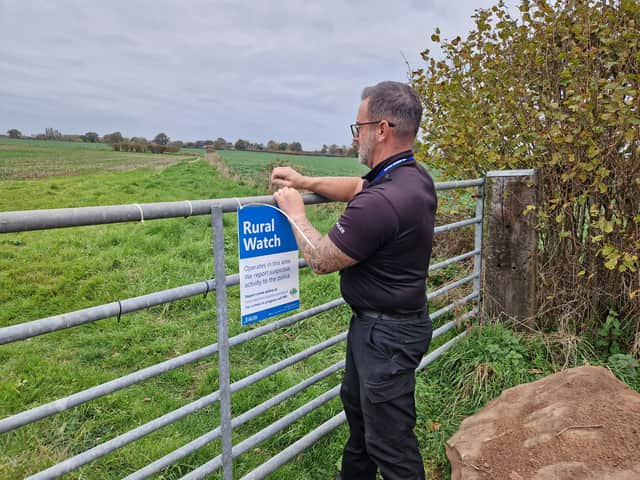
Mr Donaldson said: “I would say to form a rural watch group where they can share information.
“There is nothing worse than when somebody sees something suspicious and they keep it to themselves. They have got to do something with that information.”
He added: “Report everything - no matter how trivial.”
PC Nock interrupted: “Even down to the slightest incident where you think ‘oh, it is just not worth it. We have just got a cut-through padlock, that’s it’ - report it.
“Report anything - it leads to other things.”