
Shropshire place name origins: Where does Shrewsbury get its name from?
Old English, the Normans, and controversial pronunciations: it’s fair to say the origin of Shrewsbury’s name is certainly interesting.
Whilst walking down the time-honoured streets of Shrewsbury, it can be hard to imagine a time when there was just nothing there at all. Probably because, well… for the most part, there has been something there for a long, long time.
I was recently asked by the big bosses here at the Shropshire Star to do a little digging. They asked “Tom, I wonder, can you do a feature on the origins of the name Shrewsbury for us? It could be fun!”
What I discovered after going full Dan Snow on the topic was that either I am a terrible historian - which, reader, I probably am - or the town is that old, the ancient origins of its name are still a bit of a mystery. For example, a lot of literature says ‘one person says the name comes from this’. But then another says ‘it actually comes from that’. You get the idea…
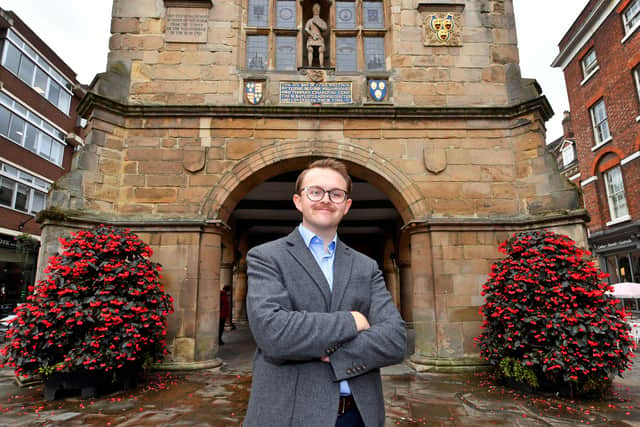

This compounded the idea for me that a town can be that old, it could almost have its own secrets lurking somewhere deep within its streets, hiding, not wishing to reveal themselves. And as a town’s current occupants march on with their busy 21st-century lives, its name can go from what is a form of identity shared by millions going back generations that should be cherished, into something akin to one of those name tags you get when you go to a work conference. Cheap, flimsy, a word for a face, and forgettable.
But Shrewsbury is not forgettable, and neither is its history. Famously, it was the location of the Battle of Shrewsbury in 1403. It was a Royalist stronghold in the English Civil War. Charles Darwin was born there. And the famous Victorian Prime Minister Benjamin Disraeli was MP for the town.
The origins of its name are no less interesting, just perhaps a bit mysterious.
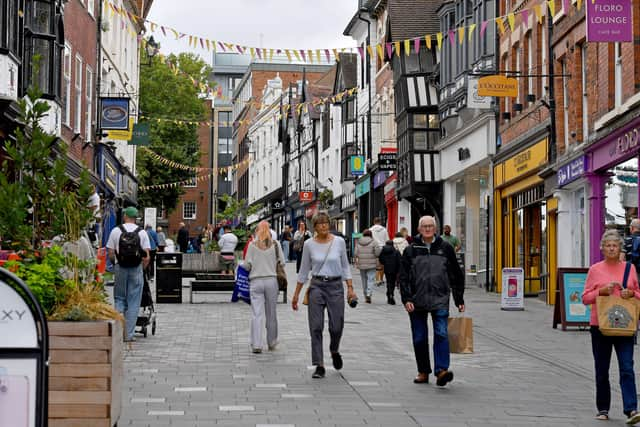
In Old English, the town was called Scrobbesburh or Scrobbesbyrig. These, as far as I understand, can be pronounced SROB-es-burch - the ending like loch in Scottish - and SROB-es-bry. However, multiple different sources state multiple different things about the pronunciations. Reader, don’t shout - I am trying my best here, I swear.
However, once our good friends the Normans rocked up in the 11th century - William the Conqueror and all that - they were like ‘what the heck, how am I meant to pronounce that?’. And to be honest, I happen to agree with them.
So, they decided, in all their French wisdom, to rename the place. So, Scrobbesburh was scrapped, and Salopesberie replaced it. Recorded in 1094, the name is thought to be pronounced Sal-op-es-ber-ee. Keen historians amongst you won’t need telling that this is likely where Salop, the traditional name for the county of Shropshire, comes from.
The origins of the Old English names are still to this day disputed amongst some historians.
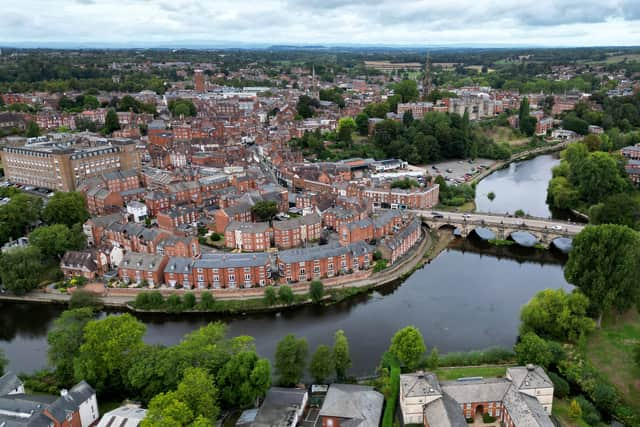
According to research conducted by Margaret Gelling, the town’s name could come from a nickname for a ‘gruff person’. Scrob means gruff in Old English. Burh means fort. Scrob also is related to the English word shrub and the Frisian equivalent, meaning brushwood.
But it’s all a bit, well, as you are probably getting the picture of by now, up in the air…
Over time, pronunciations changed as the English language developed and became what we now use day-to-day. As a result, slowly, through centuries, we went from Scrobbesburh to Shrewsbury.
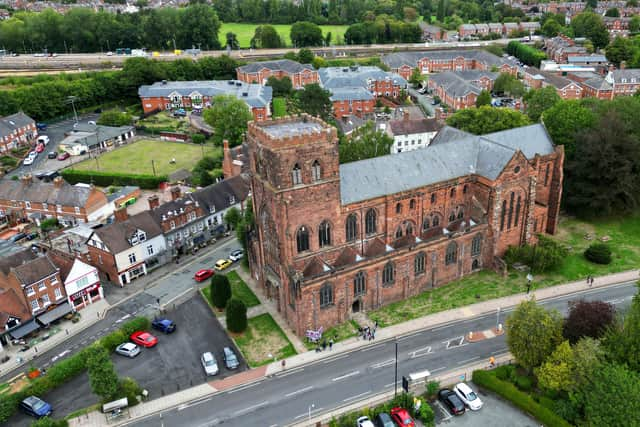
Of course, even to this day, we still have debates over how we pronounce the town’s name. There are some people who call it Shroo-es-bury. And there are others who live among us who say Shroh-es-bury. This argument is something that I am not going to get bogged down with in this article.
One thing I loved about doing a bit of research into the origins of Shrewsbury’s name was feeling a sense of unbridled joy that I don’t live in a soulless place with no history - cough, Telford, Milton Keynes and other ‘new towns and cities’ (for those of you reading this in Telford, that is a joke…).
To live and work in a town that is so steeped in history, and whose residents, at least I feel, for the most part, understand their luck in that, is truly fulfilling.
So, folks, here we are. We are at the close of this dive into this very deep topic. And if you feel like you’ve not really dived that deep on the matter, I urge you to get your best Antique Roadshow-esque clobber on and get down to the Shropshire archives for a little extracurricular activity.
The main thing is, we know what it was called thousands of years ago, we might even have an idea why it was called that - we just can’t be certain.
Comment Guidelines
Iconic Media encourages reader discussion on our stories. User feedback, insights and back-and-forth exchanges add a rich layer of context to reporting. Please review our Community Guidelines before commenting.