
Shropshire mum first in Europe to join lifesaving baby vaccine trial
“Stories like Menna’s highlight why research matters”
A Shropshire mum who was the first in Europe to join a world-first clinical trial into a potentially lifesaving baby vaccine says she hopes others will take part.
Menna Hulme’s comments come as researchers are calling on pregnant women in Shropshire to join the trial which is testing a new vaccine that could prevent infant deaths and stillbirths from the life-threatening bacterial infection Group B streptococcus (GBS).

The Princess Royal Hospital in Telford is among 10 sites across the UK administering the vaccine as part of the BEATRIX study, which is supported by the National Institute for Health and Care Research (NIHR) and sponsored by Pfizer.
GBS is the most common cause of life-threatening infection in newborn babies, causing sepsis, pneumonia and meningitis. It can kill a newborn baby within hours if untreated.
Around one in every 1,750 babies in the UK and Ireland develop a GBS infection.
Each year, GBS kills 50 babies a year in the UK - around one a week - and around a further 70 babies survive with long-term disabilities, such as hearing loss, vision problems, cerebral palsy, or developmental difficulties.
There are typically around 4,000 births annually at SaTH and more than 60,000 each year in the West Midlands region.
Professor Will Parry-Smith, Consultant Obstetrician and Gynaecologist and Principal Investigator in the BEATRIX study at Shrewsbury and Telford Hospital NHS Trust (SaTH), said: “Group B Streptococcus can cause serious illness in newborn babies, yet there is currently no licensed vaccine available to help prevent these infections.
“The BEATRIX study is evaluating an investigational maternal vaccine and aims to expand our understanding of maternal immunisation against GBS.
“Research such as this is important in helping build the evidence needed to address a significant unmet public health need.”
The BEATRIX study is the first large-scale phase 3 vaccine trial in the world for GBS.
The study is being developed by researchers from the NHS and UK universities, alongside international partners.
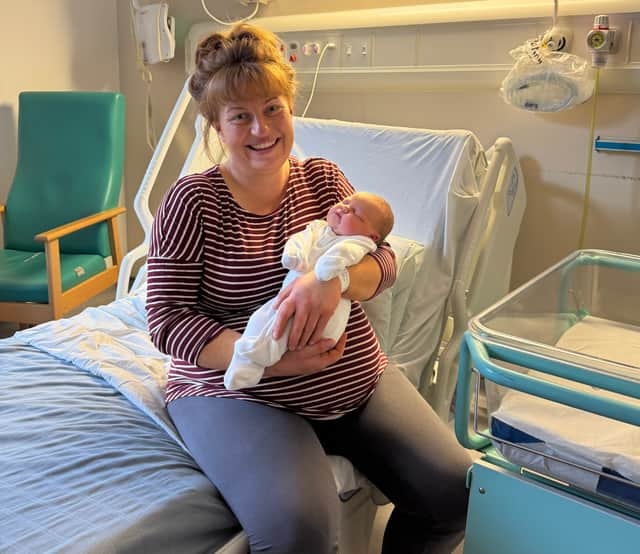
Menna, a mum of three from Cockshutt, near Ellesmere, was the first person in Europe to sign up to the BEATRIX study.
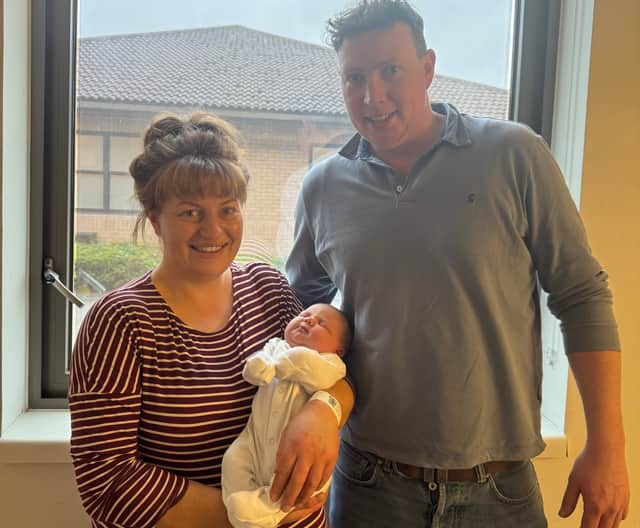
She gave birth to daughter Cheri, weighing 9lbs 6 ounces, at the Princess Royal on Monday 26 January by caesarean section.
Having had GBS in both previous pregnancies with sons Seth, aged five, and 21-month-old Vince, Menna was willing to sign up to BEATRIX.
She was recruited to the study by the SaTH Research & Innovation Team.
Along with partner Nick, 36, Menna is a farmer.
She said: “I was chuffed to be the first European participant. Other ladies enrolled locally too and I would hope others will, because there would be massive benefits to developing this vaccine.
“I just wish ladies in general could have more faith in vaccines and the advice from healthcare professionals and that the uptake was better.
“I was fortunate that Group B Strep was picked up early in both my previous pregnancies so I have a good experience understanding of the limitations. I was on antibiotics, which reduces your birth choices and it’s costly, along with the cost to the NHS as well.
“It’s also about creating awareness because I have an older sister and she was unaware of the trial on GBS until I told her about it, despite already having two children herself.”
Prof Parry-Smith added: “We have found there is a real willingness of pregnant women in Shropshire to come forward and volunteer to take part in studies.”
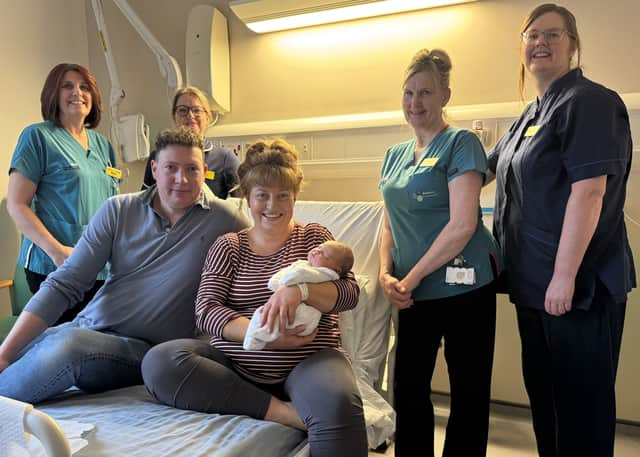
Menna said she was made to feel very comfortable by staff throughout her experience at SaTH, adding: “Will, Shell (Dewsnap, Research Midwife), Mandy (Beekes, Clinical Research Officer) and the staff and talked me through everything.
“It was more about the timeliness of creating the antibodies. The staff were all really fantastic – they couldn’t do enough for me.
“Will even performed the C-section, so it was wonderful to have someone familiar deliver my baby, and the staff came to visit me the day after the birth. They really went out of their way to ensure I was looked after – I couldn’t fault them.”
Professor Paul Heath, Chief Investigator of the BEATRIX study and Chair of the NIHR Vaccine Research in Pregnancy Working Group, said: “Group B Streptococcus can cause serious illness in newborn babies, yet there is currently no licensed vaccine available to help prevent these infections. The BEATRIX study is evaluating an investigational maternal vaccine and aims to expand our understanding of maternal immunisation against GBS. Research such as this is important in helping build the evidence needed to address a significant unmet public health need.”
Professor Matthew Brookes, Network Director of the RDN in the West Midlands said: "This study is a great example of the practical and life-saving impact that people can have by taking part in research. It not only helps the participants, their families, and the wider community, but also provides UK and international knowledge on how to save lives. We are delighted to have supported its delivery in our region."
Professor Lucy Chappell, Chief Executive Officer of the NIHR and Chief Scientific Adviser at the Department of Health and Social Care, said: “Stories like Menna’s highlight why research matters.
“Behind every study are families with a shared determination to find better ways to prevent serious illness and improve outcomes for others.
“Every woman who takes part is helping generate the evidence needed to advance this promising new vaccine and shift towards preventing life-threatening infections before they take hold.
“As a practising NHS obstetrician, I know families want to give their baby the safest possible start in life.
“That’s why we are asking pregnant women across the UK to help us by taking part in research, this study, and others like it. Every woman who takes part brings us closer to the evidence we need to protect babies and mothers.”
How does the vaccine work?
The vaccine works by stimulating the mother’s antibodies, which are transferred to the foetus via the placenta.
The BEATRIX study is testing whether these antibodies can protect the infant against GBS disease in the first 3 months of life.
Participants are randomised to receive either vaccine or placebo in a staggered enrolment approach based on how far they are in their pregnancy.
Reducing antibiotic exposure in newborns allows for healthier development of gut bacteria, necessary for digesting milk.
Who can take part in the study?
Pregnant women can take part in the study for 14 months - 6 months after delivery - and their babies for about 12 months after they are born.
Estimates suggest 70 per cent coverage could avoid more than 50,000 GBS-related deaths and 170,000 pre-term births annually worldwide.
For more information on the new Strep B vaccine trial or to take part in clinical research, visit the NIHR’s Be Part of Research Service online or through the NHS app.
Any women who would like to be part of the BEATRIX study can e-mail [email protected].
The study is open across hospitals supported by NIHR Clinical Research Facilities, Biomedical Research Centres and Clinical Research Delivery Centres.
Comment Guidelines
Iconic Media encourages reader discussion on our stories. User feedback, insights and back-and-forth exchanges add a rich layer of context to reporting. Please review our Community Guidelines before commenting.