
Shropshire ambulance response times challenged as councillor questions survival chances

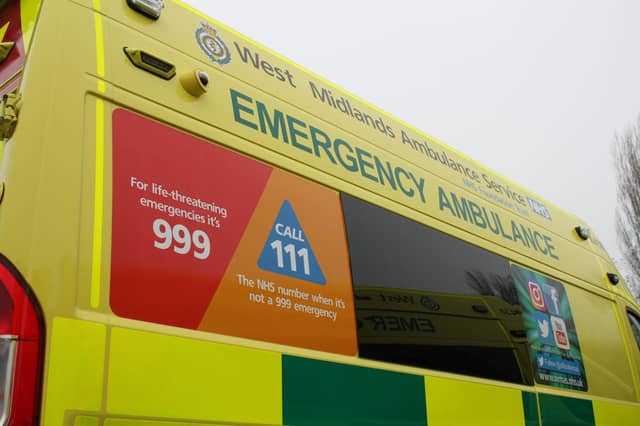

The county's Reform UK group leader challenged the WMAS strategy and engagement director at a meeting this week
A Shropshire councillor challenged a regional ambulance chief over patients' chances of surviving due to longer emergency response times in rural areas.
A senior figure at West Midlands Ambulance Service (WMAS) told a meeting that the service would need to “double its workforce” to be able to reach patients in “far-flung places” within target response times.
Vivek Khashu, strategy and engagement director at WMAS, praised the role of Shropshire's “life-saving” community first responders and network of heart starting defibrillators which provide 'mitigation' for patients.
Shropshire’s joint health overview and scrutiny committee was given access to figures showing ambulance response times by postcode.
The data was not released to the public because of fears that it might have revealed details that can be connected to individuals.
But Councillor Dawn Husemann, the leader of Shropshire Council's Reform UK group, referred to a particular postcode's response time of 36 minutes and 42 seconds.
She represents the rural Claverley and Worfield division at Shropshire Council.
"If someone is in the middle of a heart attack, does that person stand much chance of surviving if it takes half an hour?" she asked.
Mr Khashu pointed out that a “heart attack” meant a category two response. Cardiac arrests demand a faster category one response.
He added that "other provision is critically important" and said this is "mitigation" as there are not going to be enough staffed ambulances to reach patients in those time frames.
WMAS has a target of getting to 90 per cent of category one calls within 15 minutes, with an average target time of seven minutes for about 50 per cent of those calls.
Shropshire's category two response time average is 26 minutes, the meeting heard.
Mr Khashu said there are 1,400 registered defibrillators in Shropshire, Telford and Wrekin, meaning that callers can be 'pointed to' the nearest one.
He added that there are 70 first responders in the area with 12 more in training and 60 others also trained up.
He said those individuals "can make the difference between life and death before an ambulance turns up”.
Mr Khashu added that it is a "really rich community resource we need to cherish and still keep building up on”.
Councillor Huseman added: "So would your solution to this issue just be we need more of the community first responders?"
Mr Khashu said: "We are not realistically going to have what would effectively need to be a staffed ambulance almost every second square mile waiting for that one call that may not come for a month.
"Community-first provision is the mitigation and a big part of the solution."
The meeting was told that the clock starts on response times when a call is made, not when it is answered.
But the WMAS average answering time is 0.1 seconds and its answering rate for two minutes is the "best in the country", the meeting heard.
After the call is answered, the case is discussed, which is also counted within the response time.
Mr Khashu said WMAS has an average category two response time to issues including strokes, chest pain or heart attacks of 26 minutes "in this part of the world”.
The meeting was told that WMAS thinks government response times of 30 minutes are "too long" and the service wants to get to category two patients in 18 minutes.
The meeting was shown that more than 126,000 hours of ambulance time has been lost waiting outside hospitals across the WMAS region in the five months since April 2026.
In the year 2026-27 so far more than 3,000 hours have been lost to delays at both Princess Royal Hospital in Telford and The Royal Shrewsbury Hospital.
That is far less than the 25,000 hours lost at Royal Stoke hospital but much more than the one hour each that have been lost this year outside both Sandwell and City hospitals.
Mr Khashu said the acute hospital trust in Shropshire has made "real progress" on tackling this.
He added that this was "significant in April, May, June and July" but has "deteriorated a bit since then".
"There has been real progress but we need to reflect on where we go next."
The official told the meeting that WMAS has been asking for an independent capacity review to ask what resources would be needed in which areas.
But a previous assessment had shown it would need to double its workforce and add two thirds to its fleet to be able to reach even "far flung places" faster.
Mr Khashu added that "pulling in more and more ambulances" is "not the right answer”.
"What we need to do and what the hospital trust has been doing is doing better with resources.
"We need to reduce the level of delays in the system."
Comment Guidelines
Iconic Media encourages reader discussion on our stories. User feedback, insights and back-and-forth exchanges add a rich layer of context to reporting. Please review our Community Guidelines before commenting.