
Reminder of historic scandal that dripped blood and betrayal sits in Albrighton
Graveyards are a protracted puzzle, a crumbling stone maze of chiselled clues, writes Mike Lockley.
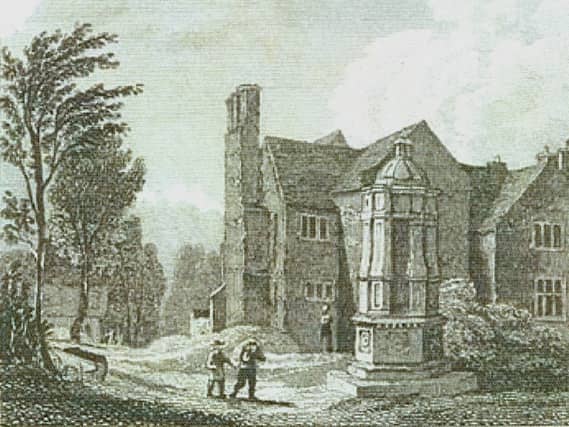


The epitaphs on ancient headstones hint, in a single line, at the life led by those laid to rest in the soil at their foundations.
We take the words and brief poetry, set to slate or marble over 100 years ago, and create a mental portrait of their world: their miserable battle against poverty, their wartime heroics, their Downton Abbey existence in the parish’s “big house”.
In the autumn afternoon stillness of St Mary Magdelene Church, a 12th century place of worship in Albrighton, the traffic of Wolverhampton a dull hum in the seven-mile distance, I silently contemplated the truly extraordinary life of Francis Talbot whose tomb is inside the building.
No other interred in the grounds lived such an adrenaline-fuelled existence, no other cheated death so many times.
Yet history has near forgotten Talbot, 11th Earl of Shrewsbury – and that’s an injustice. There are no images of him to be found, unlike those who were to be his downfall.
The peer’s life and that of his bed-hopping second wife Anna Maria, a woman high on immorality and exceedingly low on marital loyalty, is the stuff of Hollywood swashbucklers. It is an action-packed book, each page dripping blood, betrayal and bawdy, X-rated liaisons.
Make no mistake, Talbot, whose residence was Pepper Hill, Boningale, was the blueprint for Errol Flynn’s sabre-rattling roles.
He survived the English Civil War, a conflict in which he served the Royalist cause with distinction, only to fall victim to his wife’s insatiable lust. During the mid 17th century, she was Britain’s most celebrated scarlet woman, conjuring fascination and condemnation from the public in equal measure.
Some historical documents hint, in flowery terms, at Anna Maria’s desires: she was a “passionate woman”, she was wild. Those with a more earthy view of the past have dubbed her a nymphomaniac.
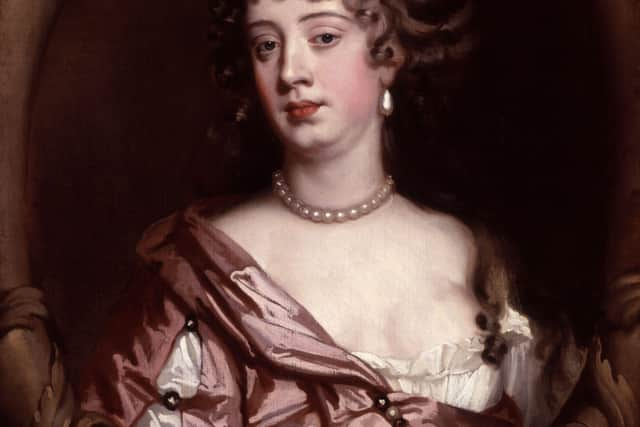
Today the tabloid press would probably describe her as a swinger. She, the Countess of Shrewsbury, was a breath-taking beauty, whose image, painted by Sir Peter Lely, now hangs at the National Portrait Gallery. There is also a statue of her by Thomas Burman at St John’s College, Cambridge.
Anna Maria was certainly a source of constant embarrassment to her husband. An accomplished swordsman, he fought five duels for her honour, even though the fight for his wife’s reputation had been lost long before.
He was evidently besotted with the controversial countess who certainly knew how to cast a spell over men. I’ve traced six duels fought for her, because of her.
She was the embodiment of fatal attraction.
On the mist-shrouded morning of January 16, 1668, at Barn Elms, Richmond upon Thames, Talbot took part in one duel to many.
Had I been present on that fateful day, I would’ve pulled the blue blood to one side and in no-nonsense, Black Country terms advised: “Forget it mate, she isn’t worth it.”
Anna Maria wasn’t.
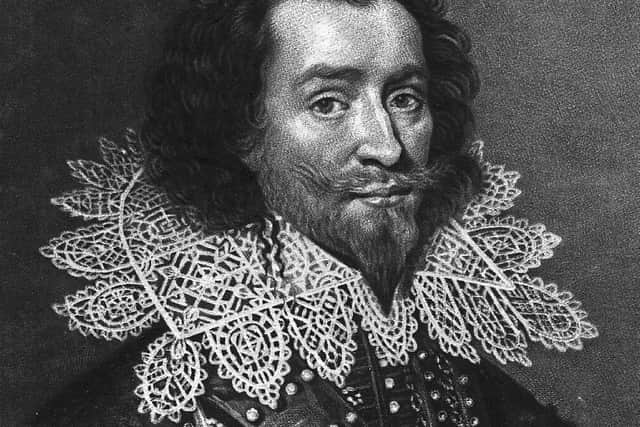
In the opposite corner was her latest flame, George Villiers, 2nd Duke of Buckingham – already married, a cad, notorious womaniser and a man burdened by a furnace-hot temper. One member of Charles II’s court described him as “an atheist, blasphemer, violent, cruel and infamous for his licentiousness in which he is so wrapped up that there is no sex, nor age, nor condition of persons who are spared from it.”
Anna Marie had evidently found a kindred spirit.
As Talbot solemnly walked the sodden, overgrown field at Barn Elms, he must’ve have been startled, and more than a little annoyed, by the scene.
His wife – cause of yet another life-or-death drama – was present. Disguised as a boy, she held Villiers’ horse in a telling gesture of support. She was rooting for the other man.
Things had not started well and Talbot could have been forgiven for muttering under his breath: “What is the bloody point?”
He was “run through” by Villiers, yet lived for another two agonising months before dying at the age of 45.
On the field of combat, Anna Maria heaped more embarrassment on her long-suffering husband. She left the grisly scene with Villiers and, it is said, immediately slept with the killer, who still wore the blood-stained shirt selected for the duel.
Villiers then moved Anna Marie into his home where wife Mary also resided. It was a very odd menage a trois.
Literary observer Samuel Pepys chronicled the duel, which probably made the splash in the day’s newspapers: “Duke slain in toff sex scandal”. He evidently didn’t like Anna Maria.
Pepys wrote: “From the whole house the discourse of the duel yesterday between the Duke of Buckingham, Holmes and one Jenkins on one side, and my Lord of Shrewsbury and one Bernard Howard on the other side: and all about my Lady Shrewsbury, who is a whore, and is, at this time, and has for a great while been, a whore to the Duke of Buckingham.
“And so her husband challenged him and they met yesterday in a close near Barn Elms and there fought and my Lord Shrewsbury was run through the body, from the right breast through the shoulder.
“This will make the world think that the King hath good councillors about him, when the Duke of Buckingham, the greatest man about him, is a fellow of no more sobriety than to fight about a whore.
“It is said that my Lord Shrewsbury’s case is to be feared, that he may die, too and that may make it much the worse for the Duke of Buckingham and I shall not be much sorry for it, that we may have some sober man come in his room to assist his government.”
The three lead players in the tragic love triangle were certainly larger than life.
Anna Maria Brudenell was born on March 25, 1642, with a silver spoon in her mouth. Her father was Robert Brudenell, 2nd Earl of Cardigan.
She married much older Talbot on January 10, 1659, and the couple had two sons. Yet it was a relationship scarred by Anna Maria’s infidelities. The long list of lovers included some impressive names. Both Henry Jermyn, 1st Baron Dover, and Charles Howard, 1st Earl of Carlisle, shared her considerable affections – at the same time.
When the titled pair discovered they were both locked in a part-time relationship with Anna Maria, they decided to settle matters with a duel.
Jermyn lost, but recovered from injuries sustained in the 1662 challenge. However, his second, Giles Rawlings, was killed by Howard’s second. The solemn dignity of the occasion seems to have been lost in a free-for-all.
The killing was pointless. Howard was soon ditched by Anna Maria for Villiers.
She gave birth to Villiers’ illegitimate son and sparked a royal scandal by having the child baptised at Westminster Abbey.
Anna Maria and Villiers – showbiz couple of the 17th century – split up in 1673. Her son was removed from her care and, devastated, she moved to France and joined a convent.
Anna Maria was not done with men, however.
In 1677 she married George Rodney Brydges, MP for Haslemere and Winchester, and bore him a son. Anna Maria died on April 20, 1702, aged 59, and was buried at Westminster.
Francis Talbot was an immensely courageous individual with strong royal ties. He was captain in the Royalist army during the civil war and excelled at the 1651 Battle of Worcester. Talbot fled to Europe after the Royalists were crushed, but returned and begged Cromwell for forgiveness.
When Charles II took the throne, he ensured Talbot was rewarded for his loyalty. Talbot bore the Second Sword at the King’s 1661 coronation, was made Lord Housekeeper of Hampton Court and Treasurer and Receiver of Ireland.
Talbot was a very powerful individual, but that didn’t stop behind-the-back sniggers over his wife’s affairs.
Villiers was, in today’s terminology, a lech. A drunken one, at that. As a description, “rake” has been used. He couldn’t keep his hands to himself.
He angered the king by relentlessly pursuing the monarch’s widowed sister, Mary, Princess of Orange.
In 1661, Villiers was tasked with accompanying Princess Henrietta to Paris for her marriage to the Duke of Orleans. He was sent home because of his “shameless” advances to the princess.
Villiers was also violent. He exchanged punches with the Marquess of Dorchester in the House of Commons, ripping his victim’s wig off in the process.
Both men were sent to the Tower, but released after they apologised.
Villiers died, near-destitute, on April 16, 1687, from flu. Of his final resting place, Alexander Pope wrote: “In the worst inn’s worst room, with mat half hung,
“The floors of plaster and the walls of dung,
“On once a flock bed, but repaired with straw,
“With tape tied curtains never meant to draw,
The George and Garter dangling from that bed,
“Where tawdry yellow strove with dirty red.”
Villiers died near penniless and disliked by the masses. His last words were: “I am despised by my country and I fear forsaken by my God.”
Albrighton Parish Council helpfully carries a short history of the village on its website. Visitors are informed: “In 1597 three Pattingham women, attending the Albrighton fair, were sentenced to be placed in the stocks for drunken behaviour.”
The potted history does not refer to Francis Talbot and Anna Maria, which I consider a glaring omission.
What happened is considered a 17th century scandal. It reads more like a 17th century soap.
Comment Guidelines
Iconic Media encourages reader discussion on our stories. User feedback, insights and back-and-forth exchanges add a rich layer of context to reporting. Please review our Community Guidelines before commenting.