
Review of the year: West Midlands was crucial as political landscape turned upside down
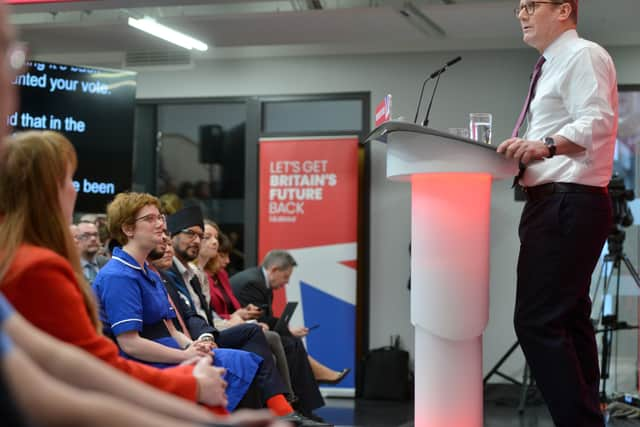
As Sir Keir Starmer took to the stage in the Black Country, he spoke of his disappointment that it was the local rather than General Election campaign he was launching.

The Labour leader told an audience of party loyalists that he had booked the venue in Dudley in the expectation that Prime Minister Rishi Sunak was about to go to the country.
He had to content himself with using the speech in March to launch Labour's campaign for the council and mayoral elections - but the West Midlands would prove crucial to his success when finally securing the keys to No. 10 Downing Street a few months later.
Ironically, Dudley Council was the one local authority that stubbornly eluded his grasp, as Labour made sweeping gains around the country in the election on May 2.
The Conservatives brought former naval reservist and Leader of the House of Commons into the fray, for breakfast at a cafe in Penn, Wolverhampton, before joining local councillors in doing a spot of canvassing.
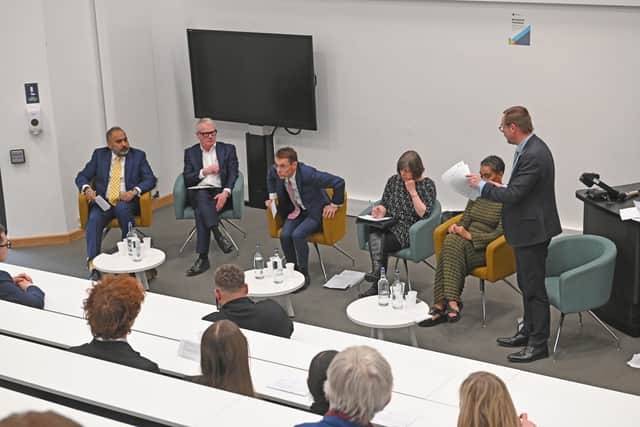
The Express & Star held its own hustings for the mayoral race, with five of the six candidates taking questions from readers at the event at Wolverhampton University.
The elections saw Labour take control of Cannock Chase Council, which they had been running with a minority administration, and Lichfield City Council. They strengthened their grip on Wolverhampton, and deprived the Conservatives of their majority in Dudley. But the party made little impression in Walsall, where the Conservatives comfortably held control.
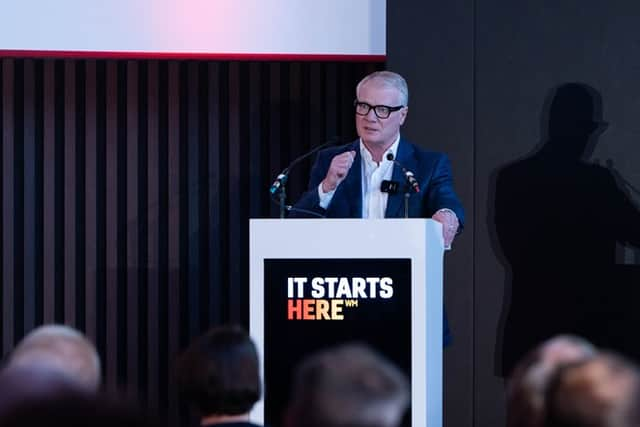
For Labour, though, the icing on the cake came the following Saturday,. when it was announced Richard Parker had ousted the incumbent West Midland mayor Andy Street by the narrowest of margins. Mr Parker who had joined Sir Keir and his deputy Angela Rayner on the stage at Dudley, pipped Conservative Mr Street by less than a third of a percentage point to take over the role of mayor.
Mr Street, the former chief executive of John Lewis, was first elected mayor in 2017, and became one of the most high-profile regional leaders in the country. The previous October he had considered resigning the Conservative whip in protest at the Government's dropping of the HS2 link to Manchester. But he decided to stick with the party and came within a hair's breadth of retaining his seat.
Mr Parker said tackling youth unemployment and bringing bus services under public control would be his priorities on taking office. At a press conference at Wolverhampton bus station on May 14, he put the flesh on the bones. The new mayor announced plans to introduce a rail-style franchise system, where private operators would be invited to tender for services that would be managed by the West Midlands Combined Authority.
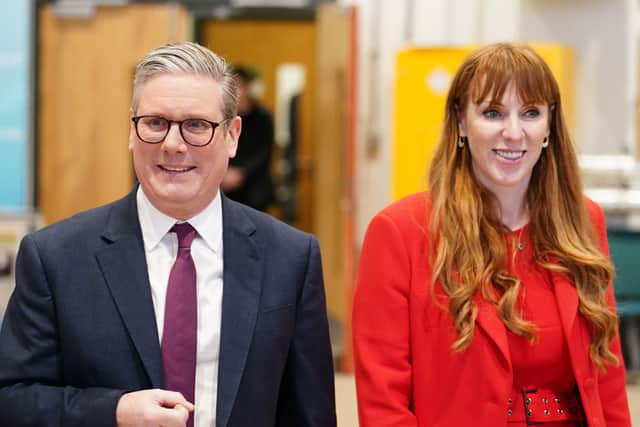

The day before, Mr Parker had joined Sir Keir, Mrs Rayner, and shadow chancellor Rachel Reeves for an event at Willenhall-based transport training company GTG. He was one of 11 Labour regional mayors who were now in charge following the May elections. During the visit, Sir Keir told the Express & Star that he would take nothing for granted when the General Election finally came.
“I think it’s very important to be clear about what the choice is at the next election, it’s a clear choice between five more years of chaos and division and of failure under the Conservatives, or a Labour Party coming in with a laser-like focus on the priorities of working people across the country," he said.
“We take absolutely nothing for granted. We must win the trust and confidence as we showed we can in that West Midlands mayorality.”
Sir Keir said Mr Parker’s win was ‘a very significant’ victory for the party.”
Eight days later, on May 22, Sir Keir finally got his wish when Rishi Sunak called a surprise General Election. Indeed the announcement was so unexpected that he even caught several members of his cabinet off-guard.
Sir Keir heavily targeted the West Midlands in the run-up to the election. Prior to his visits to Dudley and Willenhall, he and Mrs Rayner had also visited the new housing development in Bicton Heath, Shrewsbury.
On June 10, as he appeared to be closing in on victory, he rallied cheering supporters at Halesowen Town football club. Perhaps indicating growing confidence of a landslide win, two days before the poll he visited Norton Canes in what appeared to be the safe Tory seat of Cannock Chase.
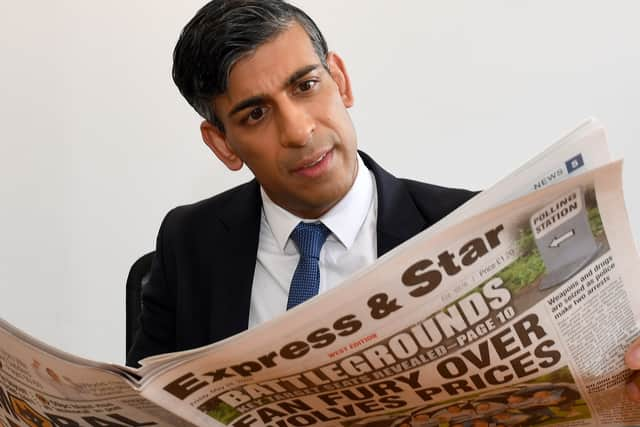
Prime Minister Rishi Sunak also visited Cannock, calling in at Cannock College just two days after calling the election. He also visited the Express & Star's head office in Wolverhampton, where he spoke about the murders of Bailey Atkinson and Shawn Seesahai and Ronan Kanda.
He also voiced his concerns about the discharge of sewage into the River Severn, and challenging regarding the funding of local government and adult social care. Mr Sunak appeared to have a spring in his step as he chatted with staff, and accepted a gift of a Greggs' doughnut during a birthday celebration, but many viewed his decision to target Cannock rather than one of the more marginal seat as an indication that he was fighting a rear-guard action to mitigate his losses.
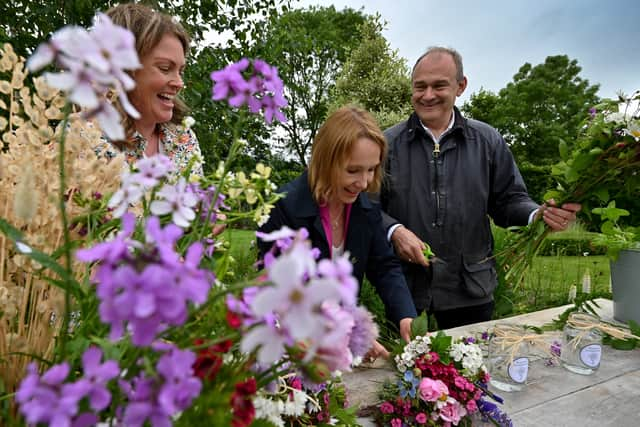
The Liberal Democrats focused heavily on Shropshire, and North Shropshire in particular, with leader Sir Ed Davey visiting the constituency three times. His first visit came in April, long before the election was called, where he was pictured stroking pigs as he paid tribute to MP Helen Morgan. On June 6 he returned with a visit to Ash Parva, near Whitchurch, where he joined Mrs Morgan picking blooms at Shropshire Flower Farm. And then on June 27, he was back again, this time visiting an alpaca farm near Oswestry.
If the local elections had failed to deliver the decisive blow that many had been expecting, the General Election would be little short of a rout, with the Tories being wiped out in most of the region. It was perhaps inevitable that Labour would regain 'Red Wall' seats, such as in West Bromwich, and the newly formed seats for Tipton & Wednesbury and Smethwick, and few were really surprised when the party also took the 'bellwether' seats of Shrewsbury, Dudley and Stourbridge.
But the real shock was how the party cleaned up in areas it was not expecting, such as Lichfield, where Michael Fabricant was removed after 32 years in office. Rishi Sunak's visit could not prevent Tory losses in either Wolverhampton, where Labour swept the board, or in Cannock Chase, either.
While Sir Keir was no doubt delighted by his 174-seat majority, it did leave a chink in his armour: Labour's actual share of the vote was a somewhat disappointing 33.7 per cent, actually less than Jeremy Corbyn had achieved in 2017.
While Labour was comfortably ahead of the Conservatives, whose support fell to a disastrous 24 per cent, many of these disaffected voters has switched to Nigel Farage's Reform UK, which polled the third highest share of the vote at 14.3 percent, and the Liberal Democrats on 13 per cent.
Sir Keir knew his majority was deceptive, and that he would have his work cut out the moment he stepped into Downing Street.
Such a devastating result left Rishi Sunak with little option but to resign as Conservative leader, triggering a lengthy contest to succeed him. Six candidates lined up for the role: first to fall was former home secretary Dame Priti Patel, followed by former work and pensions secretary Mel Stride.
The final four - former security minister Tom Tugendhat, former business secretary Kemi Badenoch, ex-home secretary James Cleverly and former immigration minister Robert Jenrick - made their case to the Conservative Party conference in Birmingham. Jenrick and Badenoch were seen as the front-runners going into the hustings at the Birmingham International Convention Centre on October 2, but a powerful speech by Cleverly saw him take the lead in the third ballot of MPs.
Jenrick talked much about his childhood in the West Midlands, to the amusement of some commentators, while Badenoch talked about her early life in crime-plagued Nigeria. Tugendhat, who was generally considered to have delivered the most lacklustre speech of the debate, was eliminated.
In an interview with the Express & Star at the party conference, Cleverly spoke of the importance of winning back seats in the Black Country and Shropshire, conceding the party had little chance of winning an election without retaking seats in the West Midlands.
Cleverly was clearly in the driving seat for the final ballot of MPs on October 9, but surprisingly he lost ground when a fourth ballot was held the next day: Both Badenoch and Jenrick had overtaken him, and he was eliminated from the contest. Badenoch was announced as the winner on November 2, following a ballot of party members in what must surely have been one of the longest processes to choose a new leader.
The real attention, though, was being focused on the performance of the new government. In July, Chancellor Rachel Reeves had angered many within her own party by announcing the end of winter fuel payments for pensioners, unless they were in receipt of pension credit.
This meant about 10 million pensioners would be left worse off during winter, and speculation began to mount about what other measures would be in her first budget on October 30. Sir Keir attempted to calm the public's nerves with a pre-budget speech at Birmingham Repertory Theatre two days earlier.
His slogan this time was 'Fixing the Foundations', and he used building metaphors to deliver a warnings that 'tough decisions' would need to be made. If anybody had gone to the theatre expecting fun and frolics, they were likely to have left feeling rather dejected.
The main announcement was that the £2.cap on bus fares would increase to £3, although he did hint that there would be some respite for motorists concerned about rising petrol duties. Sir Keir's last public appearance in the West Midlands seemed a world away from the carnival atmosphere in Dudley in March.
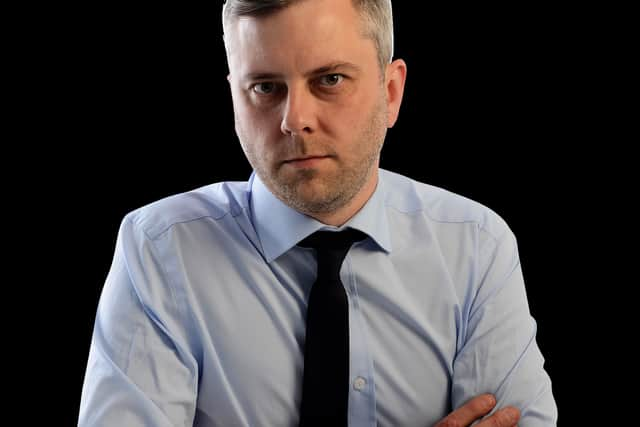
For us at this newspaper, 2024 was a year that was also marred by much personal sadness, with the loss of our popular and much-respected political editor Peter Madeley at the age of just 50.
Sir Keir, former prime minister Boris Johnson and Andy Street were among those who paid tribute to a talented and scrupulously impartial journalist.
Comment Guidelines
Iconic Media encourages reader discussion on our stories. User feedback, insights and back-and-forth exchanges add a rich layer of context to reporting. Please review our Community Guidelines before commenting.