
EU referendum: Leader of the House of Commons Chris Grayling in Shrewsbury
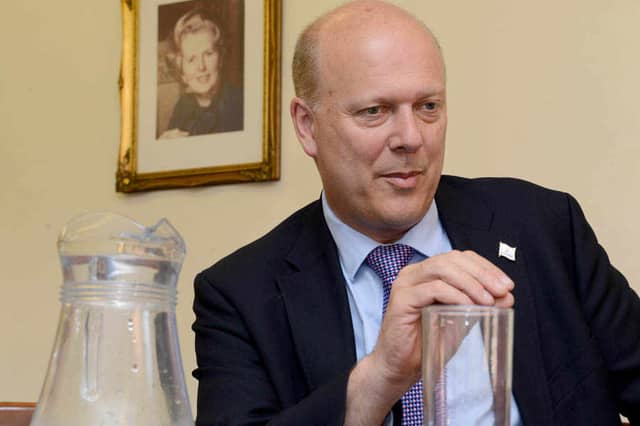

He was the first cabinet member to indicate he was to campaign to leave the European Union - and this week, the leader of the House of Commons Chris Grayling was in Shrewsbury to fire further salvoes in the war on the country's European membership.
Mr Grayling was discussing its ramifications with business owners, as well as trying to convince those on the fence about the benefits of Britain leaving the EU just three weeks shy of referendum day – June 23.
Speaking to the Shropshire Star ahead of a talk at the Beaconsfield Club along with Shrewsbury and Atcham MP Daniel Kawczynski, Eurosceptic Mr Grayling pointed his crusade in particular towards the business community, claiming that it's the big guns benefiting from our European membership, rather than the country's small businesses.
"The people who are arguing that we should stay in the business community are big businesses and banks," he said.
"It is small business that is saying actually the European Union does not work for us and therefore we think we would be better off out.
"I think from a small business point of view, from the point of view of the business itself what they gain from being outside the European Union is to remove all the red tape and bureaucracy that costs small business money and give us control in this country over how we approach the rules that apply to small business."
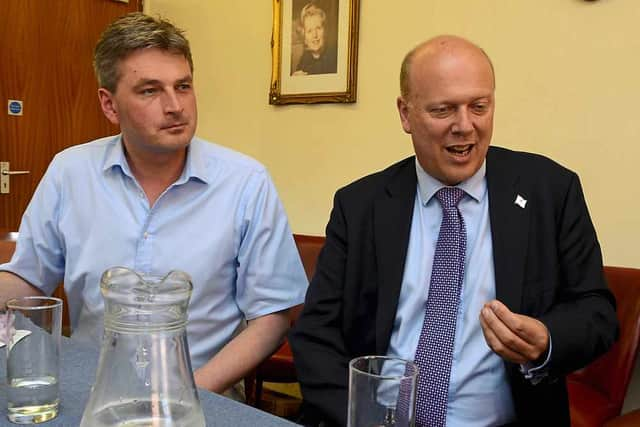
The cabinet minister claims that small businesses will have more freedom outside the EU.
"I'm not suggesting there won't be regulation in future but it's regulation that will be right for British small business and we have the freedom if we leave to modify what we do but actually from their point of view," he added.
"If we leave the European Union we take back control of our trade, form free trade agreements around the world with countries where there is economic development happening."
Although earlier this week Mr Grayling told the media pro-Brexit ministers cannot make promises about how any money saved from leaving the EU will be spent, he said the country will see some of that money spent on public services such as health, as well on farming.
He said: "We've always said that our overall subscription is £350 million a week, about half of that we never see again, that's about £10 billion a year that we would get, even after we have continued to spend money on farming, continued to spend money on universities, even after we've done that and that's really important to the farmers of Shropshire.
"It's really important that we provide the funding for them that they receive now, we can pay it directly rather than sending it via Brussels but even after we have got money back from out rebate, even after we've continued to support our farmers and our scientists, even after we've continued to provide regional support, we still have £10 billion a year left over that we currently spend elsewhere in Europe that we never see again which is money that can be spent on public service like the health service, and on cutting people's fuel bills by getting rid of VAT on fuel."
Mr Grayling said outside the EU, farmers would be supported regardless as the government pays Brussels for Brussels to just pay back to farmers.
"It's our money in the first place, we pay to Brussels for Brussels to pay back to us. We can pay directly. I want to support our farmers, I want our agricultural sector to flourish Actually the CAP is geared around supporting small French farmers, it's never been worked in the interests of the United Kingdom but I think it's important that we commit that we're not going to be paying less money to farmers than they receive now. We can pay that money directly," he said.
Looking to the younger voters, Mr Grayling said remaining in the EU would make it more difficult for young people to get a foothold on the housing ladder because the government will be unable to control European immigration.
"One of the things that I feel particularly strongly about for young people is that if we continue to bring into this country a population, an extra population through immigration the size of Newcastle upon Tyne every single year how is it possible for it to become easier to get on the housing ladder," he said.
"We've got more and more people coming to Britain, we're trying to to build houses as fast as we possibly can but it makes it really difficult to help young people on to the housing ladder. It's difficult to see how it will become easier for them to do that, easier even for them to get somewhere to rent, let alone somewhere to buy if we are bringing in so many people into the country each year.
"The point about the migration system is that I don't want us to become a closed door nation but I do want people in this country to have the power to say we want to slow things down, we want to set limits and at the moment, we legally cannot do that."
According to the cabinet minister, Britain would be able to better govern itself outside the EU.
"We can take back control of our democracy. We are increasingly governed by Brussels. Something like 60 per cent of our laws have their roots in Brussels. We only have a small proportion of the votes in the EU institutions, that means that week in, week out we are having to accept change that we don't want to, that places extra costs on our business, and causes problems with the United Kingdom that we don't want," he said.
"It's about being able to govern ourselves – it's about being able to take decisions that are right for Britain and about being able to actually decide what's right for Britain."