
Austerity is chance to modernise, says Shropshire Council leader
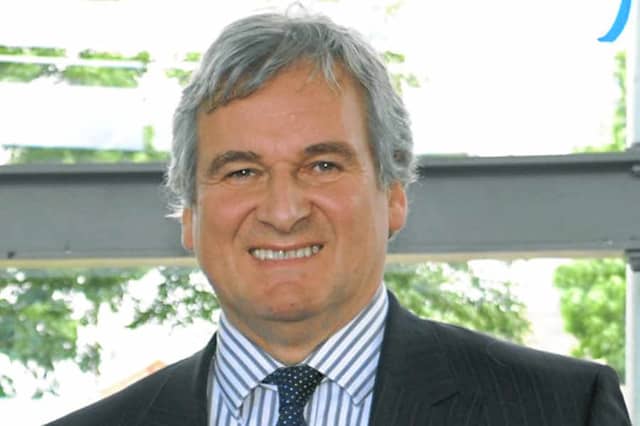

Austerity measures are offering a huge opportunity to reform and modernise "archaic and inefficient" local authority services as Government cuts continue, the leader of Shropshire Council has claimed.
Conservative group leader Keith Barrow said he believes austerity is a necessity due to the nation's debt problems.
But he added budget reductions are driving more creativity and higher productivity in local government.
It comes a week after the council's decision-making cabinet agreed to make a further £80 million in savings over the next three years, with about £37 million of the cuts to be found from the areas of adult social care and children and young people's services.
The council is also looking to shed half its workforce in the next two years.
Mr Barrow made the comments in response to a question that was due to be asked by Labour councillor Mansel Williams at today's cancelled full council meeting.
Mr Williams was to ask: "In the face of central Government response to the banking crisis, local authorities are being starved of funding.
"What urgent representation is Shropshire Council making to central Government in terms of explaining the consequences to Shropshire?"
In a written response to the question, Mr Barrow said: "Whilst the annual national deficit is reducing, the UK national debt overall continues to escalate.
"This means that a significant proportion of tax raised is used to pay off interest and if this is not well managed then foreign lenders will raise interest rates, exacerbating the problem.
"Clearly, if the increasing debt isn't addressed, we leave a terrible legacy for future generations. Consequently, austerity is a necessity, rather than being ideologically driven.
"In these times of austerity there is a huge opportunity for local Government to move itself into the 21st century. Local authorities can choose to either cut the archaic and inefficient services currently offered or, alternatively, they can develop improved and more cost-effective services that meet customer needs.
"I would urge all elected members to see for themselves how we are doing this in Shropshire.
"Ironically, across local government, recent history shows that increased funds do not deliver a corresponding increase in performance. In fact, it could be argued, that more money merely funds bureaucracy.
"Paradoxically, austerity and less funding is driving more creativity, less waste, higher productivity and a modern, efficient way of delivering services that meet customer needs.
"We do, of course, respond to all Government consultation on austerity measures and financial implications for local government to ensure we get the best deal possible for Shropshire in a national context."
Shropshire Council is in the process of a major overhaul of how it delivers services as it attempts to deal with the £80 million financial black hole in its budget for the next three years.
In August, it was revealed the majority of the shortfall was made up of planned spending increases and not government cuts.
The authority has identified increases in spending of £52.6 million between 2014/15 and 2016/17.
More money will be spent partly because of inflation on existing contracts with external service providers, such as waste firm Veolia.
In the same three-year period, revenue is expected to fall by £27.3 million, with most of this due to reductions in Government funding.
Cuts between 2014 and 2017 agreed last week will see a £24.8 million reduction in the amount spent on resources and support, £24.4 million removed from the adult social care budget and £12.5 million from children's services.
A further £18.8 million is anticipated to be saved through more commissioning of services and renegotiating contracts.
Most cuts will take place next year, with £41.5 million of savings to be found in 2014/15.