
Shropshire Council finances: How bad it is and how we got here
When the Lib Dems swept to Shropshire Council election victory in the May sunshine there was optimism over a new dawn for the authority.
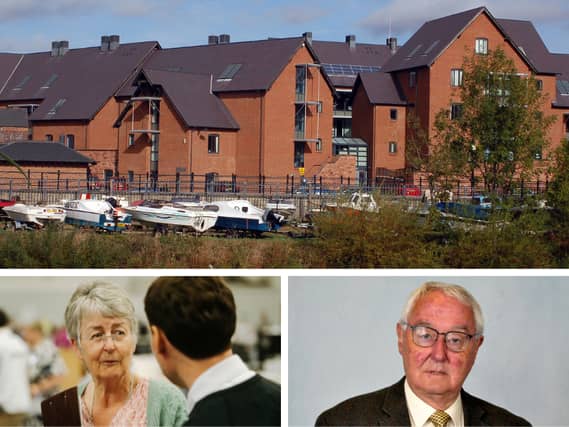


While that positivity still remains from the fledgling administration, the spectre of the authority's financial situation threatens to become a millstone around its neck.
This week has seen the council going to the Government with an 'urgent' request for financial support.
The request - which amounts to around £64m - is required to stave off the threat of the council equivalent of bankruptcy, the issuing of a Section 114 notice.
The consequences of Shropshire Council declaring a Section 114 notice would be significant. It would see government-appointed commissioners effectively parachuted in to run the council, with decisions taken solely to meet budgetary targets.
For a number of services currently provided by the council there would be difficult consequences, with all those outside of the authority's legal duty likely to be in the firing line.
The question many will ask is why the situation has deteriorated so rapidly since the Lib Dems took over.
One of the answers is that this has been coming for a long time, and whichever administration took over in May would have found itself wrestling with the same issues.
The council has repeatedly operated on a hand-to-mouth basis in recent years - frequently using the 'savings', known as reserves, to cover up multi-million pound gaps in the budget and limp past end-of-year targets.
There are some simple issues causing the huge overspends that are entirely beyond the council's control.
The costs of providing social care to both adults and children are a huge proportion of the council's budget - and must be provided by law.
It is a problem for councils across the country with no serious answer as to how adequately fund the provision.
Successive Governments have glanced at the brief before quietly filing it away with no real ideas of how to solve the growing crisis.
In the meantime both adult social care costs and children's social care costs continue to rise with no signs of the demand diminishing.
It is important to be clear about how these work too. Just one extra child with complex needs requiring support can cost more than £1m.
Earlier this financial year the council had another four such cases, costing a combined £1.3m
The difficulty is this demand is hard to predict, with the only real safeguard being to ensure there is enough to cover emergency cases - something the council evidently does not have.
While social care costs are beyond the council's control, the bigger issue is the failure to deliver on previous savings plans - reshaping the authority so that it simply costs less to run.
That can be through job losses, bringing in more money, cutting services, or making them more efficient.
What is clear is that those efforts (and no one is pretending they are easy: they are hugely difficult, long-term structural changes in a giant organisation) have not been successful.
The council's last Conservative administration spent the 2024/25 financial year warning of the impending financial crisis.
In the end it missed its savings targets by millions, requiring the use of reserves to meet the shortfall.
It had proposed a complex scheme to sell its car parks and the revenue they generate for an immediate influx of up to £30m - but those plans were shelved amid questions over whether it was legal or practical.
But, although the current problem may not be of the Lib Dems' making, the buck stops with them.
The authority is running out of road and there is no option but to make the savings required.
Because if it can't, then the Government's officials will do it for them.
Comment Guidelines
Iconic Media encourages reader discussion on our stories. User feedback, insights and back-and-forth exchanges add a rich layer of context to reporting. Please review our Community Guidelines before commenting.