
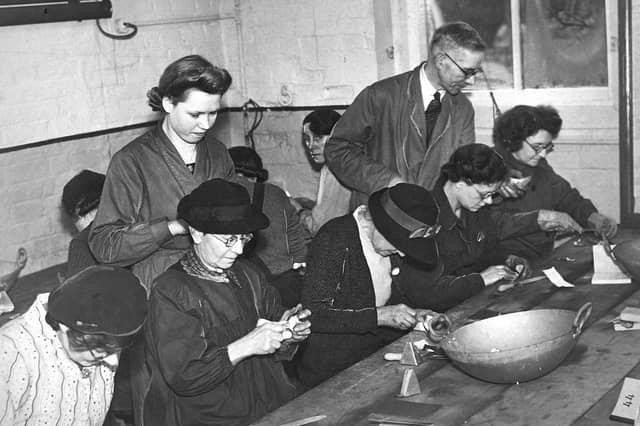

During the Second World War, as hundreds of thousands of men left to serve overseas, women across the West Midlands and Shropshire stepped into vital roles to keep the country moving.
From factory floors and railway sidings to farms, air-raid observation posts and munitions workshops, women took on jobs that had once been largely the preserve of men. They operated heavy machinery, helped build aircraft, transported goods and worked the land, playing a crucial part in the war effort.
This collection of pictures captures the determination, hard work and contribution of local women on the home front, showing how they helped keep industry, agriculture and communities going through some of the most challenging years in the nation's history.
Have stories been passed down through your family about women who played their part in the war effort? We’d love to hear them, so please share your memories in the comments below.
- For anyone curious about where their own family story leads, MyHeritage DNA kits are currently £19.90, excluding shipping. The test can help explore genetic origins and identify DNA matches who may share branches of your family tree.
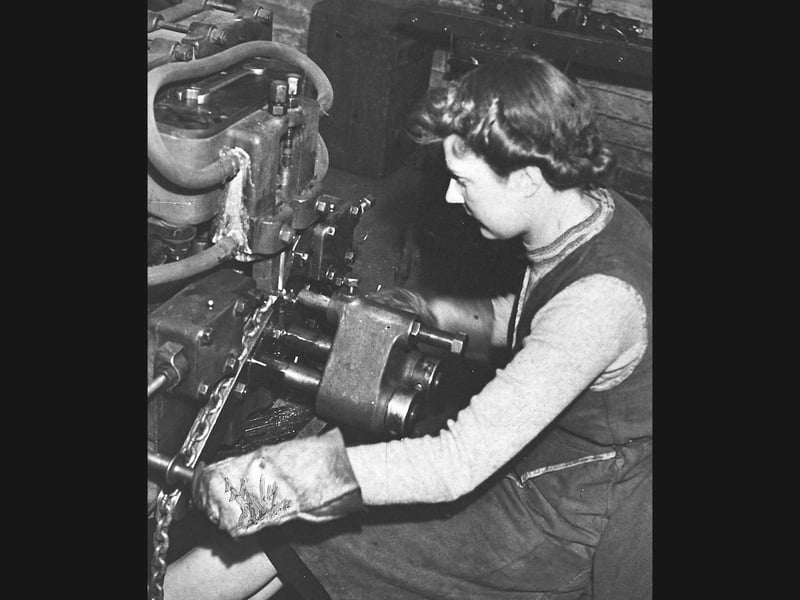
13. Electric chain-making in the Black Country
Sparks and machinery frame a young woman's steady hands as she feeds continuous chain through an electric resistance welding machine on 3 April 1944. While heavy hand-hammered chainmaking had historically been an exhausting domestic craft with fewer women remaining in the trade, the rapid expansion of mechanised electric welding saw young women take over nearly the entire output of small machine-made chain during the war years. Replacing male industrial workers dispatched to frontlines across Europe, these operators kept vital supplies of strong, dependable link chains moving to shipping docks, transport depots, and military supply columns. | Express & Star archive
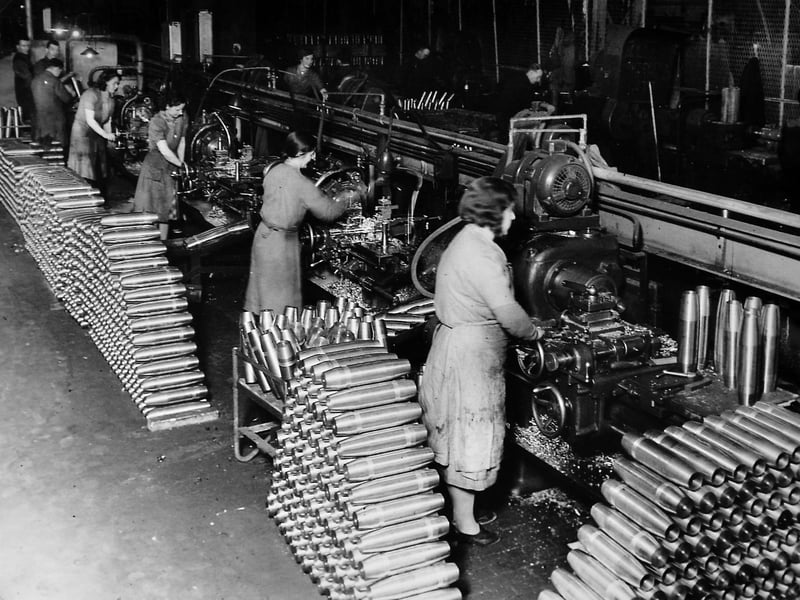
14. Shell production inside the Harlescott 'shadow factory' in Shrewsbury
Neatly stacked rows of artillery casings flank long banks of humming heavy lathes as young women turn out 25-pounder shells between 1942 and 1945. Staged inside the new dedicated shell bay at the Chatwood Safe Company Ltd in Harlescott, Shrewsbury, the covert operation functioned as a vital "shadow factory" operating within the firm's regular engineering works. Renowned in peacetime for high-security safes and vaults, the company retooled its heavy machinery and metal-shaping lines for critical war work, relying on recruited female machinists to maintain a steady flow of high-explosive ordnance for frontline artillery regiments while men served in combat overseas. | Picture courtesy of Robert Faulconbridge
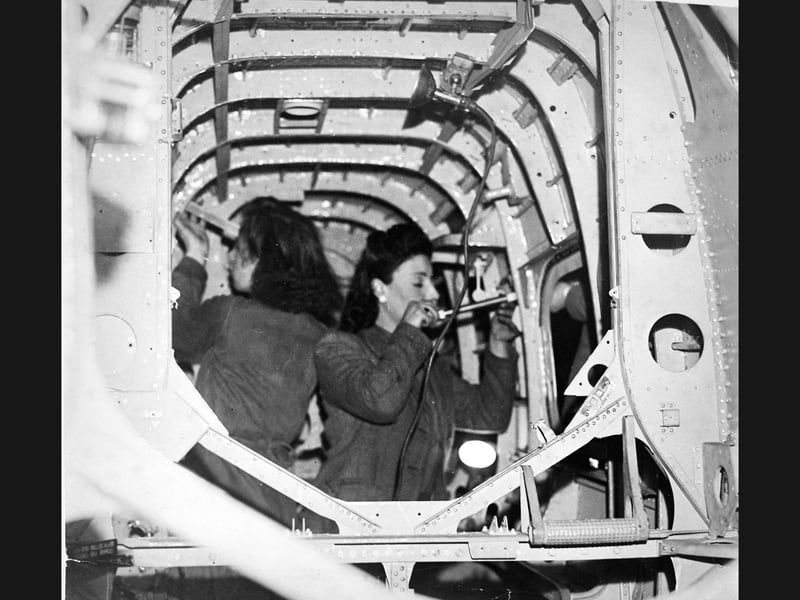
15. Riveting inside the fuselage at Boulton Paul
Illuminated by an inspection lamp within the cramped ribs of an aircraft frame, two women carry out precision riveting on a Fairey Barracuda torpedo and dive bomber. At the expansive Boulton Paul Aircraft factory in Pendeford, Wolverhampton, airframe production lines depended heavily on female tradeswomen who mastered metal forming, riveting, and assembly. Stepping into complex aeronautical roles as male aircraftsmen were mobilised for the front line, these factory teams built the very aircraft that protected maritime convoys and flew vital naval strike missions around the world. | Express & Star archive
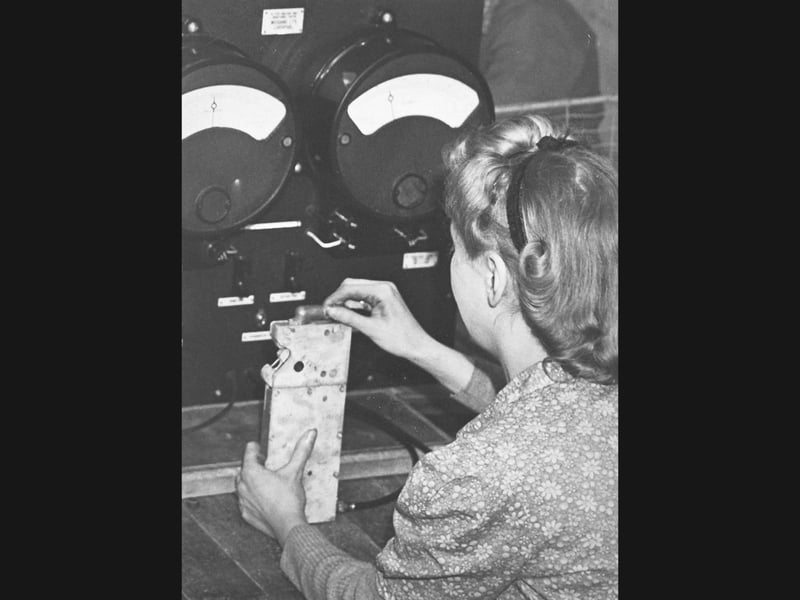
16. Testing bomb releases at Yale & Towne in Willenhall
Large dial meters monitor every fraction of resistance as a skilled assembler demonstrates the delicate calibration of a bomb release mechanism on 15 January 1945. Best known in peacetime as world-renowned lock and hardware manufacturers based in Willenhall, the Yale & Towne factory retooled its specialised lock-making machinery to produce highly sensitive release gears, latches, and fuses for RAF bombers. With male locksmiths serving on active duty in the final push across Europe, female technicians took charge of assembling and testing these life-or-death mechanisms, ensuring absolute mechanical precision before they reached Allied bomb bays. | Express & Star archive