
Behind the scenes at Whitchurch canal collapse site two months after major incident
Two months after the catastrophic breach of the canal at Whitchurch, crews are still working hard to stabilise the site, rescue displaced wildlife and prepare for a complex, costly rebuild.

With restoration prep well under way at the site of the Whitchurch canal collapse, the Shropshire Star was invited for a tour, two months after the catastrophic breach.
Emergency services were scrambled to an embankment along the Llangollen Canal at around 4am on Monday, December 22, to reports of a hole emerging along the waterway.
The breach caused an estimated 100 million gallons of water to escape the canal and pour into neighbouring fields in the Chemistry area of Whitchurch.
As a result two boats were pulled into the breach, another was left hanging precariously over the edge and several were stranded on the bottom of the drained canal bed.
Now, more than two months after the catastrophe, the boats have all been rescued and the Canal & River Trust has turned its attention towards the restoration.
But before the rebuild can begin in earnest, there are a few key obstacles.
In the next few days the team will launch a rescue operation to save the fish that may have been swept into the farmer's field next to the breach.
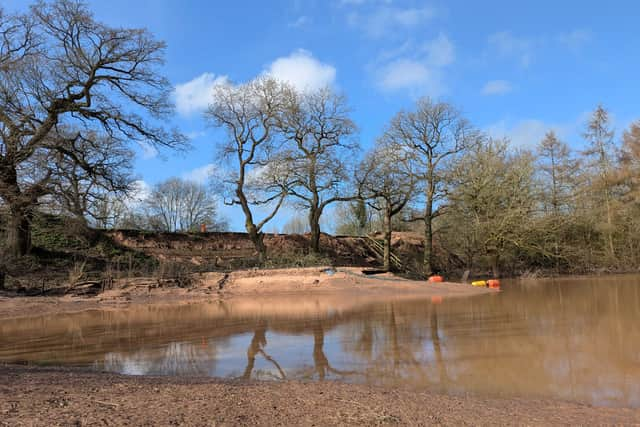

It's not known how many fish were washed out of the canal, nor if they all survived their abrupt and chaotic relocation - although the absence of dead fish floating in the newly formed lake has been a source of relief to the team.
Until recently the flooded field has been too deep for rescuers to access the fish, which are thought to include roach, perch and bream, but a pump has been working away for the last couple of weeks.
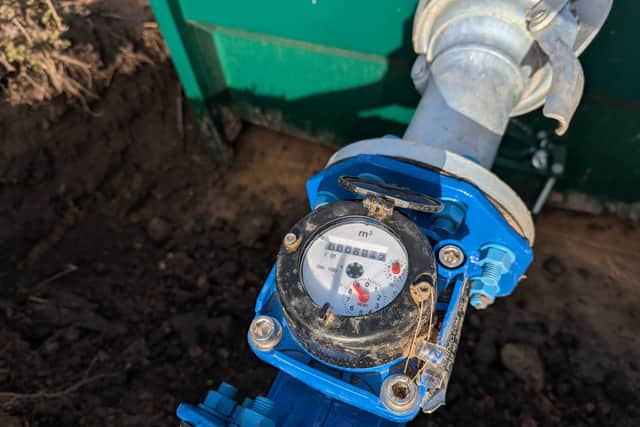
Since February 9, almost 7 million litres of water has been removed from the field - but it still wasn't quite shallow enough for the team to start the rescue on Tuesday as planned.
When it does go ahead, the team will use a variety of equipment and techniques to collect the fish - including transmitting a very mild electric current to temporarily immobilise them.
Keith Williams, a local fishery officer, explained why returning the fish to the mainline canal was so vital.
He said: "It's especially important this time of year, when it's coming up to breeding season, the fish need to join the main canal to recolonise.
"They're an invaluable part of the food chain for the canal and their continuity is vital to the ecosystem."
While rescuers await the opportunity to return the fish to their canal home, ground investigation work and vegetation clearance is underway to get ready for the rebuild as well as an access road being constructed off the A41.
Project manager Simon Harding said: "We can't just turn up and start building something. It's got to be designed; there are drawings and calculations, all of that is going on in the background.
"While that's going on, there's a lot of stuff happening here - at the moment there's a team on site working on clearing vegetation. That's got to happen before birds start to nest, so it's all being done with an ecologist on site who can also carry out bat surveys and things like that."
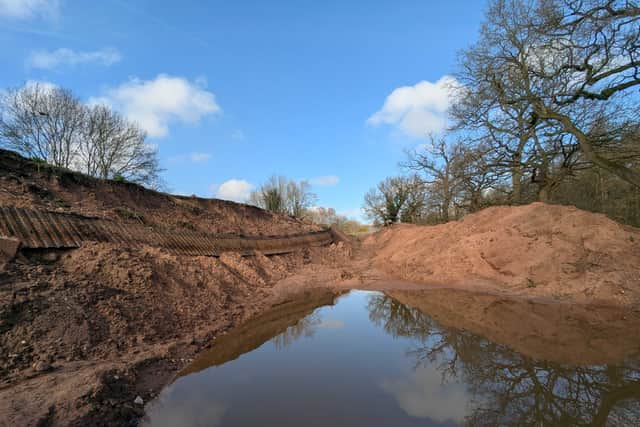
Dozens of pumps and pipes are also snaking their way around nearby fields, ensuring the canal's levels remain stable on either side of the breach.
All of this is coming with quite the price tag. At the moment, the cost of running, renting and storing the various equipment needed to keep the canal topped up is working out to be around £20,000 every week.
"If we're doing nothing, we're still burning £80,000 a month," said Simon.
The trust isn't able to say if one specific thing caused the catastrophic breach back in December, but, metaphorical gun to his head, Simon said it could likely be chalked up to age.
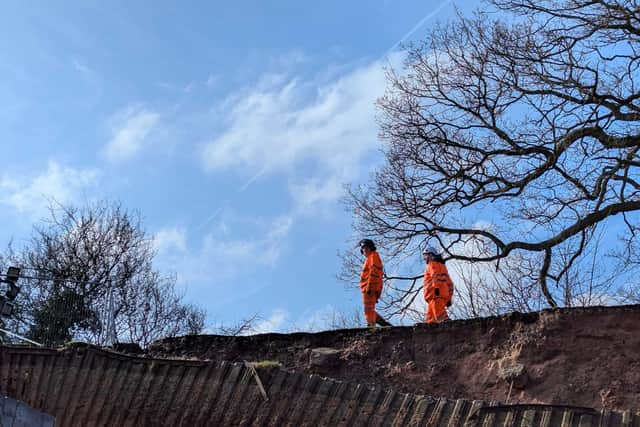
"This embankment has been here since 1805 - that's a long time. Today we design bridges to have a 120-year life; this has exceeded its life quite substantially," he added.
"And, back then, you didn't have the roads you have now, so it would have been built with locally sourced material - and that's largely sand. You wouldn't build an embankment out of sand these days."
With costs mounting and engineering challenges still to be uncovered, the trust acknowledges the road to restoration will not be quick or cheap. But the work is essential - not only to repair the breach, but to safeguard a historic waterway that has served the region for more than two centuries.
Comment Guidelines
Iconic Media encourages reader discussion on our stories. User feedback, insights and back-and-forth exchanges add a rich layer of context to reporting. Please review our Community Guidelines before commenting.