
Fascinating Shropshire history revealed as stunning Bronze Age ring and Roman coins unearthed in county
A stunning Bronze Age gold ring and a hoard of 21 Roman coins dating back to the reigns of several emperors are among the latest treasures to have been unearthed in Shropshire.

Fascinating details and history on the finds discovered by metal detectorists were revealed at treasure inquests at Shropshire Coroner’s Court, Guildhall, Shrewsbury.
- Sign up for our FREE weekly Nostalgia Newsletter - with scores of archive pictures and exclusive features on the history of Shropshire and Mid Wales - all sent to your inbox every Friday. Sign up here
The Bronze Age ring dates back to 1300 to 800BC - meaning it is between around 2,800 and 3,300 years old.
It was discovered by Paul Murphy while he was metal detecting in Stanton upon Hine Heath, near Shawbury, on October 20, 2024.
A report by Clara de Sousa Cunha, finds liaison officer for Shropshire and Herefordshire, described the ring as “a complete Bronze Age gold penannular ring with striped surface”.
The ring is 16.4 millimetres wide, 5.9mm thick and weighs 9.57 grams.
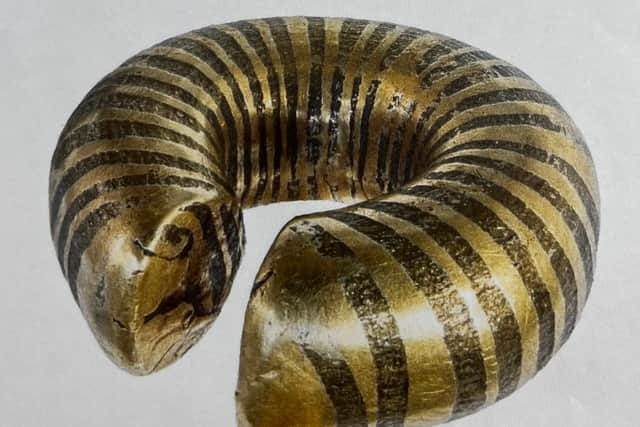

The report continued: “Penannular rings are fairly common finds. Despite this, their function remains mysterious.
“Many of the Portable Antiquities Database (PAS)-recorded examples are from central southern England.
“But five, including this example, came from Shropshire, with this being the first to have a banded or striped surface.
“Geographically, the closest next banded/striped example is from 30 miles away in Staffordshire.
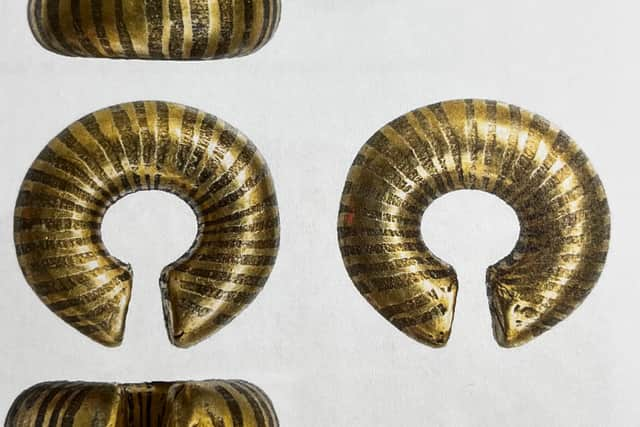
“A recent scientific analysis of penannular rings categorised the rings into four broad types based on their components and decoration.
“This particular example comes under the ‘Type 3d gold foil plated copper alloy ring, with silvery gold wire inlay’, and analysis of a similar one in the British Museum collections suggests that the technical skill involved in creating the silver-rich gold-striped effect on the surface was highly complex.”
The report also said that a number of similar rings have been declared treasure in recent years, and have been dated between 1000 and 800BC based on burials in Belgium, northeast France and the Netherlands.
“They may well have a longer chronology within the Middle and Late Bronze Age (1300 to 800BC),” the report said. “This is now supported by examples found with burials from Changis-sur-Marne, France, being radiocarbon-dated to the Middle Bronze Age.”
The coins in the hoard were found by eight different people - Paul Pritchard, Sarah Jukes, David Clarke, Michael Poole, Mark Hamilton, George Emlyn, Alister Roberts and Christian Horton - while they were on a metal detecting rally at Little Ness on October 9, 2022.
They date back to between 218 and 260AD during reigns of several different Roman emperors.
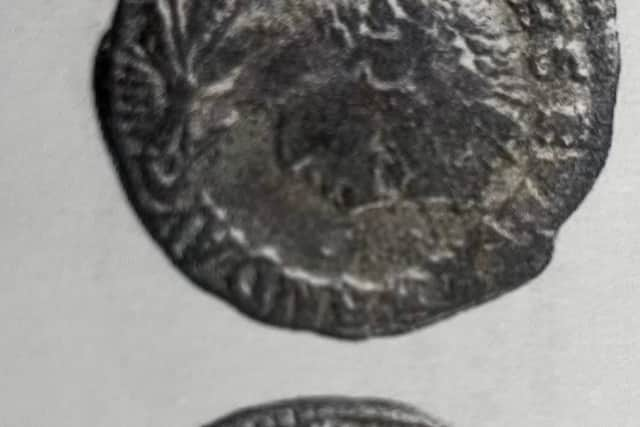
The coins were found within a landscape that has known Iron Age and Roman archaeology.
A report shedding more light on the history of the coins was prepared by Malcolm Adams, finds liaison officer for Warwickshire and Worcestershire, and Victoria Allnatt, finds liaison officer for the West Midlands and Staffordshire.
It said: “The most notable feature in the vicinity is Nesscliffe Hill Camp, or ‘Oliver’s Camp’, located 1.2 kilometres to the south west of the site.”
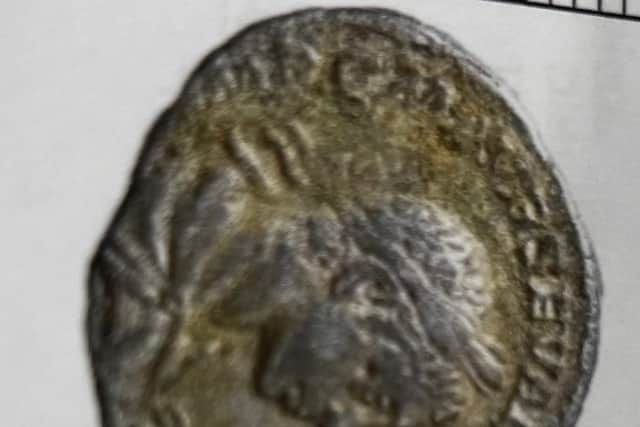
The report says that there were initially 43 coins found by 20 finders at the rally, although only these 21 coins have been deposited with the PAS.
The earliest of the coins are from the reign of Elagabalus (AD 218-222), whilst the latest identifiable coin dates back to 259AD, from the joint reign of Gallienus and Valerian (AD 253-260).
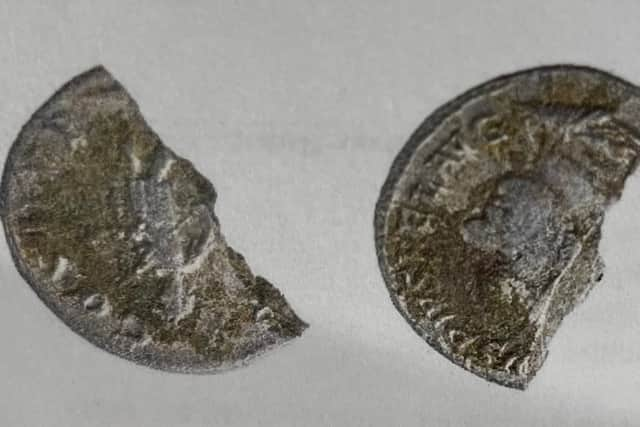
The bulk of the coins date back to the reign of Gordian III (AD 238-244) and the reign of Alexander Severus (AD 222-235), with five coins each dating back to the reigns of those emperors respectively.
A Roman Polden hill brooch dating to AD 80-120 was also discovered in the vicinity by Mr Hamilton, although it was not part of this inquest.
Due to the fact that the ring and the coins are all over 300 years old and contain at least 10 per cent precious metal, they were all declared treasure by John Ellery, senior coroner for Shropshire, Telford and Wrekin.
Comment Guidelines
Iconic Media encourages reader discussion on our stories. User feedback, insights and back-and-forth exchanges add a rich layer of context to reporting. Please review our Community Guidelines before commenting.