
An impossible task without a car
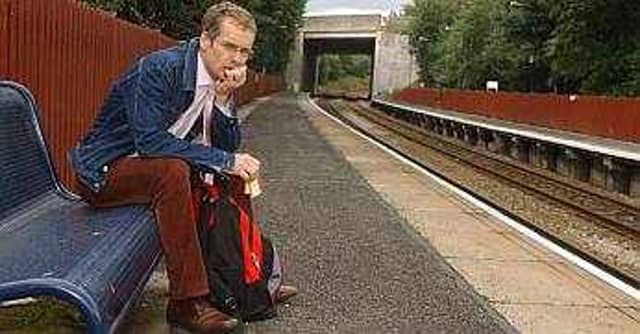

The Government wants to get us out of our gas-guzzling cars and on to eco-friendly public transport. And with the rising cost of fuel, there's more of an incentive than ever. But Andy Richardson discovers the numbers just don't add up.
One of the more famous quotations made by great British wartime leader, Sir Winston Churchill, was this: "Give us the tools and we will finish the job."
The sage riposte was made to President Roosevelt during a radio speech in 1941. But, in these times of rocketing fuel prices, environmental meltdown and economic austerity, we thought we could reinvent Churchill's sanguine observation.
Our free-wheeling, resource-saving, consumption-reducing motto, for a few days at least, would be this: "Take away our tools and, bally heck, we'll still finish the job."
The journalistic tool in question was a car. We need them to travel to the people we interview and write about. In a typical year, we may complete 15,000 business miles. But, given the ever-increasing cost of fuel, congestion, global warming and the persuasive efforts of public transport providers, we embarked fearlessly on a mission to live without a car for seven days.
The project ran into trouble immediately. Tomorrow , for instance, I'll be working at Weston Park compiling a video report of local gig goers at the V Festival, for ShropshireStar.com. The camera, tripod and associated kit weighs around 25kg.
I'd need the endurance of a Himalayan sherpa to lug that from my home, in Shrewsbury, before returning to meet production deadlines. Thus, was our plan amended. The trial would run for three days, from Monday to Wednesday.
 On Sunday night, I fretted about the assignments I needed to complete on Monday. There wouldn't be sufficient time for me to meet numerous deadlines having walked across Shrewsbury, caught a train to Telford and boarded a bus to the office, in Ketley.
Thus, on day one, I accepted a humiliating defeat and drove to work. The decision meant I had time to write 4,500 words for the Shropshire Star and its glossy publications, Shropshire Magazine and Telford 24 Seven. If I'd used public transport, part of that work would have gone unfinished.
No matter, Day Two arrived and, with renewed zest, it was time to start the trial in earnest. I had to interview the cricket commentator Henry Blofeld first thing before journeying to Ludlow to meet local foodies. After that, I needed to travel home, or to the office, where I would write a number of stories.
I made my breakfast telephone call to Blowers but, alas, my plans were undone. "My dear old thing," burred the voice of cricket. "I'm stark naked. I'm frightfully sorry. Would it be terribly inconvenient for you to call a little later."
Ninety minutes elapsed and, finally, the interview went ahead. Upon completion, I checked train times for later journeys to Ludlow. Sadly, however, my intended interviewee was unable to wait half a day for a train to deposit me in south Shropshire and, with good reason, the meeting had to be rescheduled.
Like the sixth form swot, I'd taken plenty of work home on Monday evening and so, undone by the inflexibility of my car-free regime, I sat at my computer and diligently worked until the early evening. When I needed provisions, I walked to the shops. When I went to the gym, I walked the mile-and-a-half to get there.
By Day Three, I was determined to board a bus or train. I'd have happily hired one of the rickshaws that circle through Shrewsbury's Quarry Park to get me from A to B. Shortly after 7am, I walked the 20 minutes to Shrewsbury's train station, no buses being available, where I joined the long queue for tickets.
 The sleek journey through Shropshire countryside was far more appealing than the usual grind along the M54. I used the time creatively, reviewing a CD that I'd cunningly downloaded onto my iPod. A walk through Telford town centre brought me to the town's bus station and I boarded the X44, which took me to Telford. Eventually, I arrived at work.
The journey had cost £6.80, far more than the comparative fuel cost of around £1.50. It had taken me 90 minutes, far more than my usual 25. I'd lost an hour's worth of writing time.
The morning train was packed with people wielding quick bicycles, which whisked them to and from home, work and train stations.
The environmental arguments against car use are overwhelming. And, having joined the county's proletariat on the daily commute, I well understood the the philosophy of British sci-fi writer HG Wells who said: "Every time I see an adult on a bicycle, I no longer despair for the future of the human race."
It was, however, counter-productive.
The journey was 353 per cent more expensive, 260 per cent more time-consuming and I wrote much, much less.
Appointments that would quickly have been rearranged were postponed, writing time was replaced by travelling time and the evil nexus of multifarious public transport timetables served only to obfuscate and annoy.
My train journey home on the end of Day Three gave me further time to ruminate on Churchill's persipacious comment: "Give us the tools and we will finish the job."
He was right, you know.