
No ‘quick fix’ for Newport flooding problems, mayor warns

The 1950s network is struggling to cope with modern issues
There will be “no quick fix” to Newport’s flooding issues, the town’s mayor has warned.
Newport's ageing drainage infrastructure and increasingly intense rainfall are combining to create persistent flooding problems across parts of the town, according to Newport’s mayor and local councillor, Thomas Janke.
Several streets in the town flooded amid heavy downpours last month, leaving several roads impassable to vehicles and some residents battling to keep water out of their homes.
It wasn’t the first time the area was hit with flash floods amid heavy rain either, with more than 20 calls placed to the fire service the previous summer as the water network became “overloaded”.
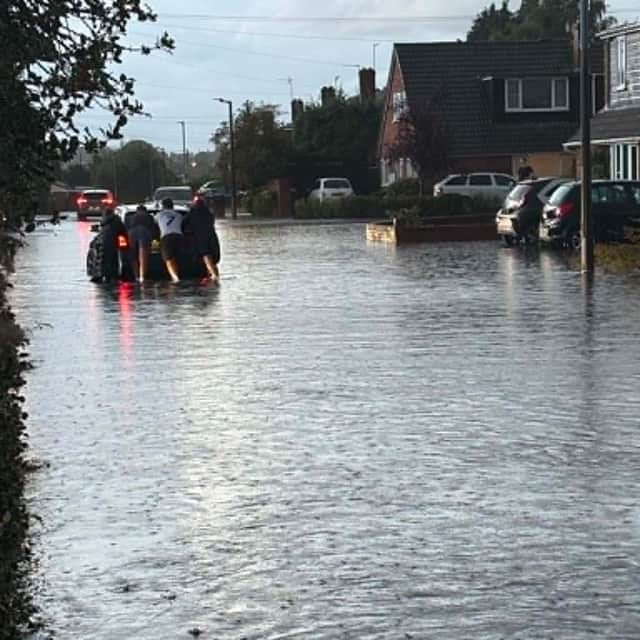

Now, following a meeting with Telford & Wrekin Council's Drainage and Flood Risk Team, Councillor Janke said that the issues are more complex than many residents may realise.
While some point to recent house building, Councillor Janke stressed that the situation cannot be attributed solely to development, pointing instead to wider challenges within the town's drainage network.
“Much of the worst affected areas have a drainage network that dates back to the 1950s, when it was designed around very different assumptions about rainfall and climate,” he said.
“Over the decades, parts of the system have also passed between different local authorities, service providers and public and private ownership.
“This has created a situation where records are incomplete, infrastructure is ageing and, in some areas, maintenance and responsibility have not always been straightforward.
“The result is a system with a number of pinch points and capacity problems, which can become overwhelmed during significant rainfall events.”
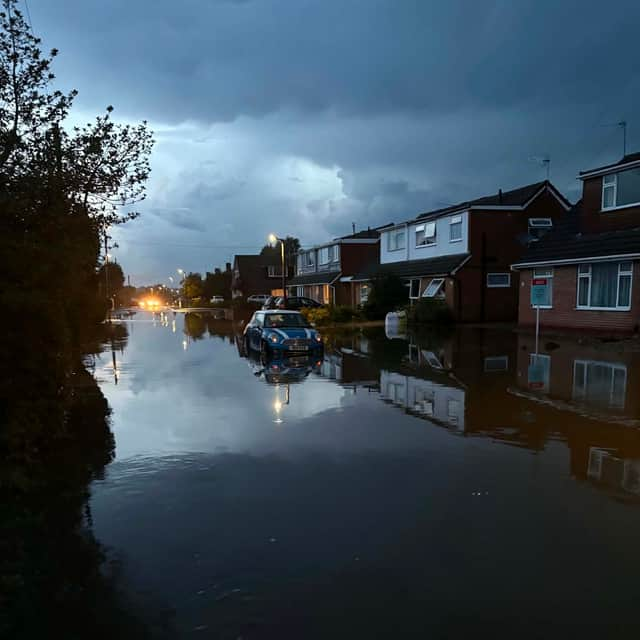
Councillor Janke said that Telford & Wrekin Council is working to develop a long-term strategy alongside Severn Trent, the Environment Agency, as well as landowners and other relevant organisations.
The aim is to build a comprehensive understanding of how the drainage system operates, identify major constraints and develop solutions that could be supported through future funding applications.
Councillor Janke said that the work is likely to be both costly and time-consuming, with “no single intervention that will solve everything”.
“Getting the right organisations around the same table and having the evidence and modelling to support future funding is an important step,” he added.
While long-term solutions are explored, residents are being encouraged to continue reporting blocked gullies and flooding incidents, which will help authorities identify recurring problem areas and determine where maintenance resources are most needed.
"There is a lot of work going on behind the scenes to get Telford & Wrekin Council, Severn Trent, the Environment Agency and landowners working together on the wider problem," Councillor Janke added.
Acknowledging residents' frustrations, he said immediate action is not always possible when dealing with a drainage network that has evolved over many decades.
"This isn't about finding someone to blame. It's about fixing a system that is no longer coping with the conditions it is being asked to handle."
Comment Guidelines
Iconic Media encourages reader discussion on our stories. User feedback, insights and back-and-forth exchanges add a rich layer of context to reporting. Please review our Community Guidelines before commenting.