
Nikki's fight to keep assisted dying illegal
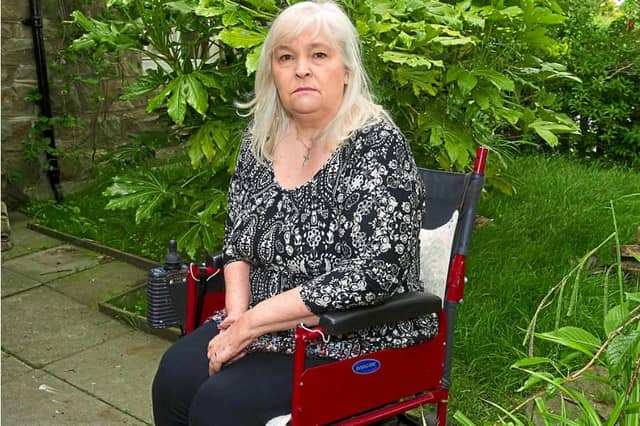

Nikki Kenward was once so paralysed she could only wink her right eye.
The former theatre manager was struck down by Guillian-Barre syndrome in 1990 when her son, Alfie, was then just one.
The 62-year-old was initially fully paralysed for more than five months and has been in a wheelchair since.
She's spoken openly about how she wanted to end her life at the time.
But now she's embroiled in a struggle, along with her husband Merv, to make sure assisted suicide remains illegal.
She has recently won permission to bring a legal challenge against the director of public prosecutions over plans to relax laws on assisted suicide. It is expected to be heard back in London's High Court in the autumn.
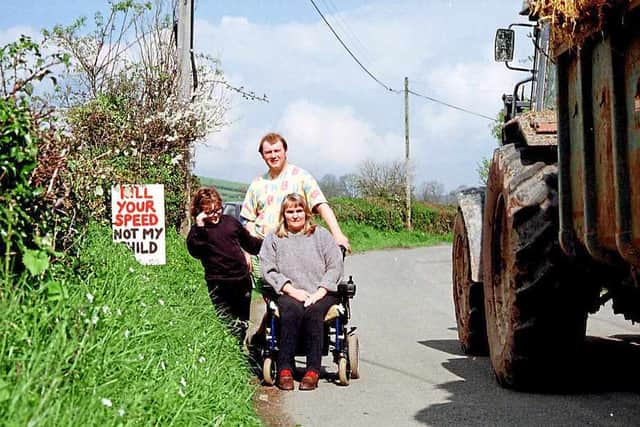
Nikki said: "If you'd asked me then, I would have said I'd rather not live. Just one of my eyes would open and I think if my family had been asked by the hospital they'd have opted to end my life.
"I hadn't seen Alfie for a year and the thought of him being without me broke my heart more than what was happening to me."
Their family soon hit a financial crisis after losing Nikki's wages and they soon found themselves without a home.
But years later she lives a happy life with Merv in Aston-on-Clun – and Alfie is all grown up.
Nowadays, the couple spend their time campaigning against euthanasia and for disabled rights through the Distant Voices campaign group.
The couple said they were determined to bring awareness to the cruel attitudes and prejudices towards disabled people in our communities. And they claimed many disabled lives were ended each year in hospital as it was deemed that they had no quality of life.
Nikki says this needed to stop and she was living proof that people should carry on living.
What would the world be like if assisted suicide was legal? That's the question Nikki wants people to ask themselves.
She said: "There are no human rights for killing yourself.
"I think it would be very ugly and very scary world if euthanasia was legal in the UK.
"It would create a new meaning of death. I faced death, I lay for many hours and I thought I could die.
"People are afraid of pain, afraid of loneliness and they see euthanasia as a way out. But we are not asking the right questions. What's really happening in Oregon and Holland where it is legal? Do people know that in Belgium a child of any age can request euthanasia? Do you know in Holland if aged over 12 you can request it without parents' permission?
"Holland can't keep a track of people dying through use of euthanasia. There are mobile units going around ending people's lives – life should not be treated in this way."
The couple, from Aston on Clun, have launched legal action against Alison Saunders, the director of public prosecutions and the attorney general over the DPP's current prosecution policy in relation to the law on assisted suicide.
The Suicide Act 1961 makes it a criminal offence to assist or encourage suicide.
The DPP has a discretion on whether to prosecute according to the published policy. Last October, the DPP amended the policy, making the prosecution of healthcare professionals in assisted suicide cases less likely.
In April, Mr and Mrs Kenward were given permission to challenge the DPP's actions, arguing that the DPP had in fact "changed" the policy and made it more "liberal".
They argue that the significance and legality of the change should now be properly assessed.
Mrs Kenward says the DPP's actions are "unconstitutional". She said: "The message from these new guidelines is that society thinks you are in the way. The best thing you can do is to agree to die."
The issue of euthanasia has come to the fore with a series of cases in which Brits travel to the Swiss clinic Dignitas to end their life. Last month Jeffrey Spector decided to die despite not being terminally ill, admitting: "I am jumping the gun." Mr Spector, who had a tumour on his spine, died at the Zurich hospital because he feared he would become paralysed.
MPs will soon consider allowing some terminally ill people in England and Wales to end their lives in a fresh effort to pass 'right to die' laws, but Nikki and Merv said they will continue to fight against assisted suicide.
Labour peer Lord Falconer's bid to introduce legislation ran out of time before the general election.
Now Labour MP Rob Marris will attempt to steer a bill through the Commons.
The Wolverhampton South West MP won a private member's bill ballot earlier this month guaranteeing time in the chamber for backbench legislation.
But the bill's chances of becoming law received an instant setback when Downing Street said it would not be given government time in the Commons.
David Cameron's view on assisted dying had not changed, said the PM's official spokesman and he was "not convinced that further steps need to be taken".
Few private member's bills become law due to the lack of time in the parliamentary calendar and the annual ballot is always fiercely contested.
One of the most difficult parts for Nikki has been the prejudices, attitudes and hurtful words cruel people say and think about those with disabilities.
Her husband has been asked: "How do you do it?"
Other hurtful questions have been over her ability to care for her son and why she wanted to live.
Nikki added: "There is a lack of disabled presence on the street: business and councils still aren't getting access right, all this says to me is 'we don't want you here'.
It all began when she made an appearance on the Fourth Plinth in Trafalgar Square where she spoke about the growing threat of euthanasia and in particular the deaths of many disabled people, which she said continues to this day.
It was on this day that she met campaigner Elspeth Chowdharay-Best and the it was then Distant Voices was established.
The couple has also campaigned against the Liverpool Care Pathway, which she believes is a form of euthanasia.