
Shropshire's 'Foreign Legion': The soldiers who rarely saw home

An author’s striking theory seeks to explain why Shropshire’s Victorian soldiers kept being sent to far-flung hotspots
Join the army and see the world, the saying goes.
For Victorian soldiers of the Shropshire regiment, it was especially true, as they found themselves repeatedly sent to far-flung hotspots by officialdom and would not see home for years on end.
Taking part in largely forgotten campaigns at places you'd be hard-pressed to find on a map, some gave their lives in battle and others through disease amid the sweltering heat.
Author Barney Rolfe-Smith describes the regiment as Shropshire's "Foreign Legion" and has a theory as to why they spent more time away from Britain than most.
"I do suspect that the higher percentage of Catholics in the regiment than most units contributed to their service abroad, but I have no written proof," he said.
However, he added: "There is every indication that the suspicion of some was misplaced and that there was overwhelming loyalty from all in the regiment."
In 1850 the regiment comprised about 560 Catholics and 300 Protestants - the result of successful recruiting in Ireland.
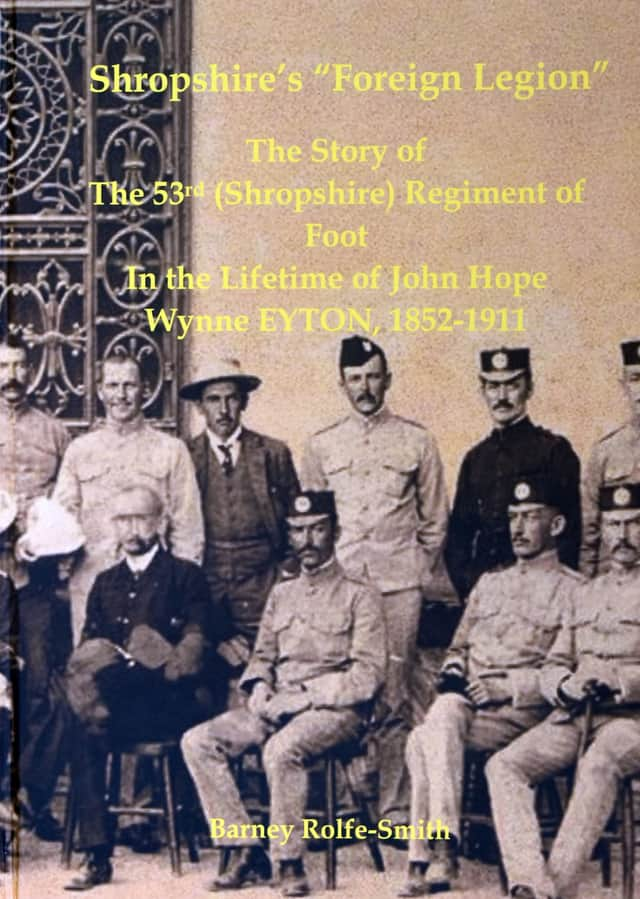
Barney's new book Shropshire's “Foreign Legion” tells the story of the 53rd (Shropshire) Regiment of Foot in the lifetime of one of its officers, John Hope Wynne Eyton, who lived from 1852 to 1911.
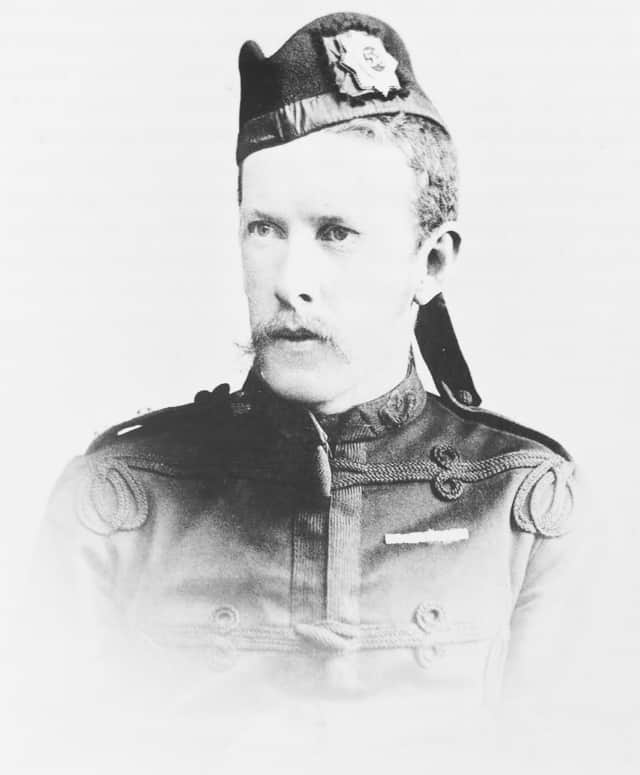
The regiment became the 1st Battalion of the King's Shropshire Light Infantry in 1881.
"The book is dedicated to the Soldiers of Shropshire Museum. Any profits will go to them. It is on sale at Castle Bookshop, Ludlow," said Barney, who was commissioned into the Parachute Regiment in 1968 and retired with the rank of Lieutenant Colonel in 2003 having served in all three battalions.
During his time in the army he served in several locations at which those Victorian Shropshire soldiers were posted, and he has visited others on holiday during his retirement.
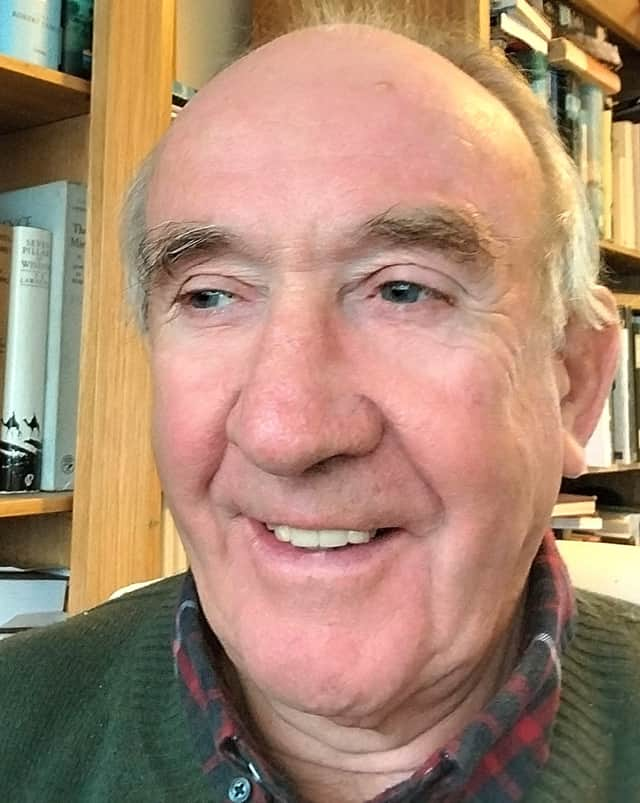
"The two places I deliberately visited for the book were Malta and Bermuda. In both, barracks and forts still remain in which the Shropshires lived. But the physical evidence remaining are the gravestones I show in the book.
"I had already visited the military sites of that period in both Barbados and Hong Kong and some in Ireland. I had as a child swum in the sea at Port Suakin and had always wanted to return there, but considered a visit to the Sudan unwise."
Suakin, a baking, godforsaken spot on the shores of the Red Sea, had been the focus of an inglorious and unsuccessful British campaign in the 1880s in which the Shropshires had taken part.
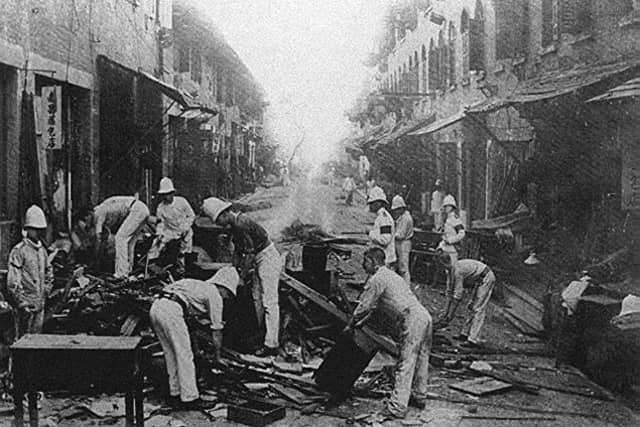
As well as the various battle honours and campaign medals during the period, the regiment would also gain plaudits for its work fighting an outbreak of plague in Hong Kong in 1894, when soldiers dubbed the "whitewash brigade" removed bodies and cleaned infected houses.
It came with obvious dangers, and the adjutant, Captain Vesey, who was in charge of the party carrying out house-to-house work, fell ill and died.
A special medal was struck for those involved, but military authorities banned them from wearing it on their uniforms.
Major Eyton, whose career Barney follows, appears not to have received the medal, and he speculates that as his wife and three-year-old daughter were in Hong Kong with him, it had been thought unwise to expose him to the risk of catching the disease and spreading it to his family.
Barney, who lives near Ludlow, explained why he had chosen Eyton’s service through which to tell the regiment’s story.
"Research showed he had spent all of his career with the regiment and, apart from the earlier period when he was a boy and the regiment was in Canada and the Caribbean, he had served in all the other locations.
"I was also pleased to discover relatives of his still living in the house he lived in at The Tower, near Mold in Flintshire."
Eyton retired and returned home in 1898, but on the outbreak of the Boer War would return to service, albeit in the Imperial Yeomanry.
As for the Shropshires, the battalion returned to England from India in 1903. They had been abroad for 21 years.
Eyton died in 1911 aged 59, while in London for the regimental dinner.
During his lifetime the regiment had spent 41 years, or 70 per cent, of its time abroad, often in the most inhospitable places.
Comment Guidelines
Iconic Media encourages reader discussion on our stories. User feedback, insights and back-and-forth exchanges add a rich layer of context to reporting. Please review our Community Guidelines before commenting.