
Milestone or millstone? Mayor has taken a huge risk in buying struggling bus company

West Midland mayor Richard Parker has taken a big gamble in buying bus operator National Express. Time will tell whether it is a stroke of genius or a financial millstone.
The ‘single biggest act of public control’ since coming into office. A ‘very big day for the region’ and ‘the first major milestone’ in a push to give communities more control over public services.
No-one could accuse the Prime Minister, or indeed the elected mayor for the West Midlands, of underplaying the significance of their announcement that West Midlands Combined Authority had bought struggling bus operator National Express West Midlands during a visit to Wolverhampton on Tuesday.
No-one saw it coming. The previous day mayor Richard Parker had invited tenders for his rail-style franchising plan, and it seemed reasonable to assume the PM’s presence was just a routine appearance to promote this. Then, less than an hour before Andy Burnham’s arrival, the mayor dropped the bombshell that the combined authority had bought the West Midlands’ main bus operator in a deal which effectively turned the clock back to the 1980s, all but ending 40 years of privately run bus services in the region.
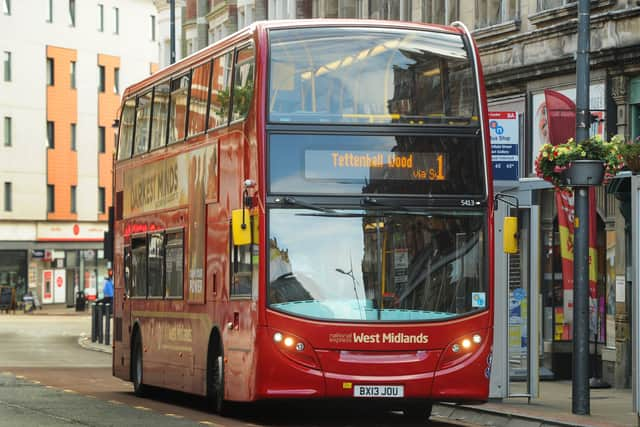

Mr Parker says he had little choice but to step in, saying that National Express - itself a descendent of the publicly run bus companies of the 1970s and 80s - had decided it no longer wanted to operate services in the region. Had he not stepped in, 94 per cent of bus services in the West Midlands - not to mention 4,800 jobs - would have been left hanging in the balance. By acting decisively, he had avoided a catastrophic collapse.
The news has been welcomed by bus drivers’ union Unite, and it seemed to be well-received by the select group of passengers who were invited to meet the Prime Minister during his visit to Wolverhampton bus station. But for most people - passengers and taxpayers alike - the question is much simpler: What will it mean for us?
In the immediate term, the answer is not a lot. National Express will continue to run the services until the takeover is complete in the autumn, and then for a short period West Midlands Combined Authority will take direct responsibility until the mayor’s franchise scheme is up-and-running. Then, other operators will be invited to compete with the publicly owned bus operator for the right to operate routes on terms set out by the combined authority. Until then, the mayor has said it will be very much business as usual.
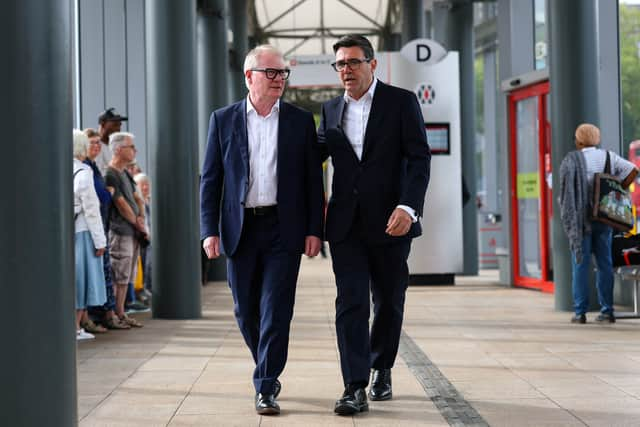
The mayor’s Tory opponents have been quick out of the blocks to question the cost to the taxpayer of the deal. In reality, the up-front costs are relative small-fry in the context of running a regional bus service. The mayor has frequently bemoaned having to pay £50 million in subsidies to the existing private operators, and the £29.5 million the combined authority will pay for National Express is roughly the cost of a large bus station.
But National Express’s sudden exit from the West Midland bus industry does pose two important questions for the mayor: What are the implications for the franchise model, and why will the combined authority succeed where National Express has struggled? If Mobico, with its decades of experience in the bus industry, could only break even with the aid of £50 million a year in subsidies, it remains to be seen how the West Midlands Combined Authority will be able to run a leaner, more efficient service
But the real test will now come for the franchise model.
It is interesting to note that Mobico’s statement, amid all the conciliatory language about the takeover being a fair deal for all concerned, was the telling line that ‘the uncertainty of future franchising in the area presented a significant headwind for the group’.
In other words, it was the move towards a franchise model that precipitated National Express’s decision to throw in the towel.
Mr Parker’s great hope is that the franchise model is that the politically accountable combined authority, rather than bus company executives, will set the agenda on timetables and costs. But this week’s events show that is only true if the operators want to play ball.
The worst-case scenario is that the private operators clamour for the profitable routes, but shy away from the less lucrative ones. Meaning that either the combined authority will have to continue subsidising the private sector, or the publicly owned National Express will be left to pick up the slack. Neither of which are what the mayor intended.
Mr Parker says there has already been considerable interest from private operators wanting to take on the new bus franchises, and is confident there will be plenty of takers. We must all hope that optimism is well-founded
If the mayor can square this circle, and turn an unprofitable monopoly into a leaner, more competitive industry providing a reliable service at a lower cost, this week’s announcement will prove to be a genuine watershed moment, and set a template for other regions to follow.
But if he can’t, and the bus network continues to haemorrhage millions, this week’s milestone could yet prove to be a millstone.
No pressure there, then.
Comment Guidelines
Iconic Media encourages reader discussion on our stories. User feedback, insights and back-and-forth exchanges add a rich layer of context to reporting. Please review our Community Guidelines before commenting.