
Brave Shrewsbury teen left unable to speak after brain cancer surgery sits GCSEs against all the odds

His symptoms were initially believed to be linked to stomach problems or anxiety.
A 16-year-old from Shropshire is taking on his GCSEs after a rare and aggressive brain cancer left him unable to walk or talk.
Alex Costa-Veiga, from Shrewsbury, endured brain surgery, radiotherapy, chemotherapy and months of rehabilitation.
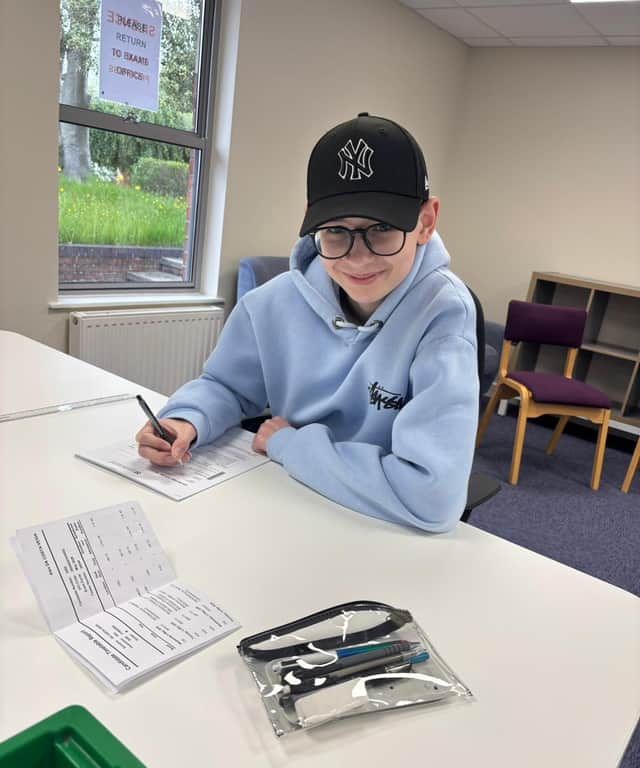
After missing a year of school and facing gruelling rehabilitation, the teenager is back in the classroom and sitting his GCSEs, a milestone his family once feared he may never reach.
Alex was just 14 when he was diagnosed with a medulloblastoma brain tumour in late 2023 after suffering unexplained morning sickness for more than a year.
Despite repeated medical appointments, blood tests and ultrasounds, his symptoms were initially believed to be linked to stomach problems or anxiety.

Alex’s mother, Melanie Costa-Veiga, said: “For over a year, they were looking into food intolerances and stomach issues. Nothing pointed to anything serious.
“It wasn’t until Alex mentioned double vision and we went to the optician that everything changed.”
An urgent referral following the optician appointment led to a CT scan at Princess Royal Hospital in Telford, where doctors discovered a mass on Alex’s brain.
He was immediately rushed by ambulance to Birmingham Children’s Hospital.
Melanie said: “As soon as the consultant said the word ‘mass’, I knew it wasn’t good. We had to wait for a doctor to accompany Alex in the ambulance when he was transferred to Birmingham. That’s when I knew it was serious.”
Alex first underwent emergency surgery to fit a shunt to relieve pressure on his brain before enduring a gruelling 10-hour operation to remove the tumour, which had already begun to spread, from his cerebellum.
The teenager then faced a year of intensive treatment including radiotherapy and chemotherapy, causing devastating side effects including Posterior Fossa Syndrome, speech difficulties, left-sided weakness and severe fatigue.

Originally Alex had to use a wheelchair, but he can now walk short distances with a walker. He also had to wear a prism to help his vision and has since had corrective eye surgery. Alex has also begun hormone therapy, after the treatment damaged pituitary glands that impacted his growth hormones.
The diagnosis came just after Alex had completed the first term of Year 10. He was forced to miss the remainder of the school year while undergoing treatment and rehabilitation, including an eight-week neuro-rehabilitation programme at The Children’s Trust in Surrey.
Only able to return to school on a reduced timetable due to exhaustion and the ongoing effects of treatment, Alex made the difficult decision to repeat Year 10 and reduce the number of GCSE subjects he would study.
Now, against extraordinary odds, he has almost completed Year 11 and is currently sitting GCSEs in Maths, English Language, Biology, Geography and Religious Studies.
Alex also hopes to continue his education by studying A-level Biology and Geography, as well as Computer Studies.
When asked about his future ambitions, Alex said: “I would like to be a marine biologist or work with animals.”
Melanie said: “Alex has worked so hard and we are incredibly proud of all he has achieved. It’s been challenging balancing school work with his continued rehabilitation but he has made fantastic progress.
“It’s been a difficult journey with a few bumps in the road, but Alex has stayed positive and determined to achieve, better days will come.”
Brain tumours kill more children and adults under 40 than any other cancer, yet since records began in 2002, just 1 per cent of the national spend on cancer research has been allocated to brain tumours.
Alex’s family has donated his tumour tissue to research and taken part in fundraising events including 10k Steps a Day in February for Brain Tumour Research.
Melanie said: “People think once the treatment ends it’s over, but it’s not. There’s still a long road ahead. We’ve met children on that ward who are no longer here. We count our blessings every day.
“We still need more answers and more research. There are only three options - surgery, radiotherapy and chemotherapy - and they are far too harsh for children. Other countries are developing kinder treatments and the UK must catch up.”
Brain Tumour Research community development manager Letty Greenfield said: “Alex’s story is a stark reminder that brain tumours are not rare. We stand with Alex and his family in demanding more research, more funding and better treatments for every child facing this devastating diagnosis.”
Comment Guidelines
Iconic Media encourages reader discussion on our stories. User feedback, insights and back-and-forth exchanges add a rich layer of context to reporting. Please review our Community Guidelines before commenting.