
Long-forgotten Shropshire boatbuilder to be honoured with a blue plaque on his Bridgnorth home

William Oakes was a master boatbuilder in the 18th century
One of Shropshire’s most significant yet largely forgotten craftsmen is to be recognised with a commemorative blue plaque on the home he lived and worked in almost 300 years ago following a campaign by a local historian.
For several years, Bridgnorth historian Clive Gwilt has been investigating the history of a distinctive house at 46 Underhill Street, identified by the carved inscription "WO 1741" above its doorway.
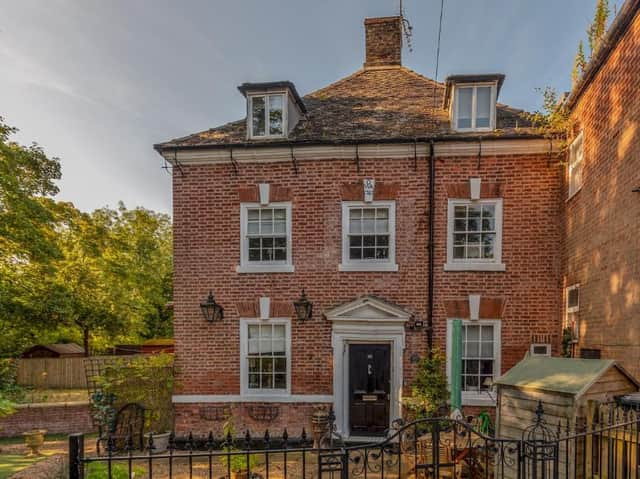

The initials belong to William Oakes, Bridgnorth's last traditional boatbuilder and one of the town's most important industrial figures. His family lived in the house for over 120 years.
Mr Gwilt said that before the arrival of the railway in 1862, Bridgnorth was an important river port, with Severn trows carrying coal, iron, timber and agricultural produce between towns and cities along the river.
Boatbuilding became one of the town's defining industries, with William Oakes and his family playing a leading role in its success. Built in 1741, the Underhill property served as both the Oakes family home and the centre of a thriving boatbuilding business on the banks of the River Severn.

The Oakes family owned the house and adjoining boatyard from the 18th century, and built and repaired vessels that helped sustain trade across the Severn for generations.
“At least 10 vessels were built at the Underhill Street yard, including several large sea-going ships - an extraordinary achievement for an inland boatyard,” said Clive. “Perhaps the most remarkable achievement came in 1850 when William Oakes built The Brig Severn, believed to have been the largest vessel ever seen above Worcester Bridge.”
He said contemporary reports described the ship as measuring 96 feet in length and capable of carrying around 290 tons.
He added that the success of the Oakes’ business came to an abrupt end in 1856 when William Oakes suffered financial difficulties and failing health after several employees were charged with plundering the yard.
However, 10 months ago, Clive was approached about the possibility of installing a national-style blue plaque at 46 Underhill Street to commemorate William Oakes's contribution to Bridgnorth's history.
Blue plaques recognise people of lasting historical significance and are generally awarded where a person lived or worked, provided the building survives substantially as they would have known it and can be viewed from a public highway.
Clive said that although an initial application was unsuccessful and declined by the Bridgnorth Civic Society, the evidence was presented to the Bridgnorth Historical Society, demonstrating William Oakes's importance to the town's industrial heritage.
The Historic Society agreed that the criteria had easily been met, recognising his major contribution to Bridgnorth through the construction of numerous vessels, including a large sea-going ships of more than 300 tons.
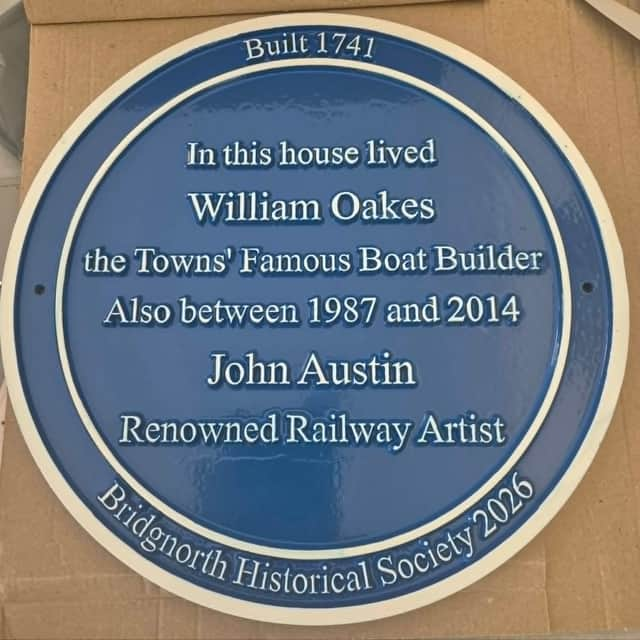
“The society has welcomed the opportunity to support the plaque, describing it as an important recognition of a significant chapter in Bridgnorth's history,” said Clive. “The plaque will ensure that visitors and residents alike are reminded that behind the timber-framed frontage of 46 Underhill Street lies the story of one of Bridgnorth's greatest craftsmen — a man whose boats carried the town's reputation far beyond the River Severn and across the world's oceans.”
He said the plaque also commemorates celebrated Bridgnorth artist John Austin, who lived at the property between 1987 and 2014. During his time there, he used the house's sitting room as his studio, producing many of the railway paintings for which he became well known.
Residents and visitors are invited to attend a special plaque unveiling ceremony at the property on Sunday, August 23 at 12pm noon, celebrating the history and significance of the building.
The commemorative plaque will be officially unveiled by Chris Aked, Bridgnorth mayor, and John Austin the famous artist.
Following the unveiling, there is a guided tour of the building, offering a unique opportunity to learn more about its fascinating history and the important role it has played over the years.
Refreshments will also be available, with a selection of nibbles on offer, and there will be a special treat for younger visitors, who can enjoy traditional Victorian sweets.
The organiser Yvonne Ryan said she warmly invites people of all ages to come along, discover the building's story, and join in the celebrations. Admission is free, and everyone is welcome. Parking is available at an adjoining car park.
Comment Guidelines
Iconic Media encourages reader discussion on our stories. User feedback, insights and back-and-forth exchanges add a rich layer of context to reporting. Please review our Community Guidelines before commenting.