
‘It is a magnificent piece of history’ - Shropshire-born expert urges visitors to historic Bayeux Tapestry

This article contains affiliate links. We may earn a small commission on items purchased through this article, but that does not affect our editorial judgement.
The Bayeux Tapestry is currently on display at the British Museum in London until next July.
One of the world’s leading experts on the “enigmatic” Bayeux Tapestry, who hails from Shropshire, from is urging residents of his former home county to go see the Bayeux Tapestry while it is in the UK as he reveals the story of the man who commissioned it.
Get the latest headlines delivered straight to your inbox with the Shropshire Star’s free newsletter
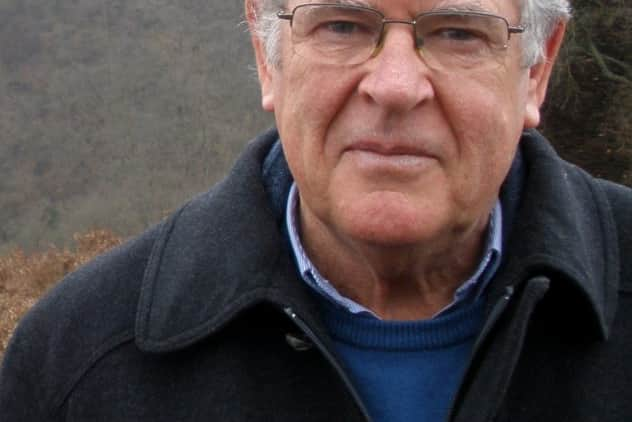
Oxford Professor Emeritus of history and archaeology, Trevor Rowley, who was born in Shrewsbury and educated at the Priory Boys Grammar School, has been studying the Bayeux Tapestry for decades.
The 70-metre tapestry, which Mr Rowley said is actually embroidery not a tapestry, is currently on display at the British Museum in London, until next July.
While most people are familiar with the tapestry’s telling of the Battle of Hastings and invasion by William the Conqueror, Mr Rowley, said very few people were aware of the man who commissioned the tapestry.

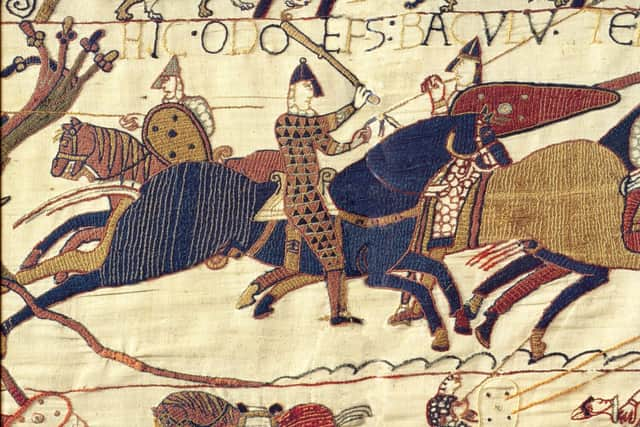
He said: “Very little was known about Odo, William the Conqueror's half-brother, which led me to write about him.
“It is generally accepted that he sponsored the tapestry, and Odo was most certainly part of the invasion force as he features in the tapestry brandishing a club, as he was a bishop and was therefore not allowed to spill blood - but bludgeoning is fine.”
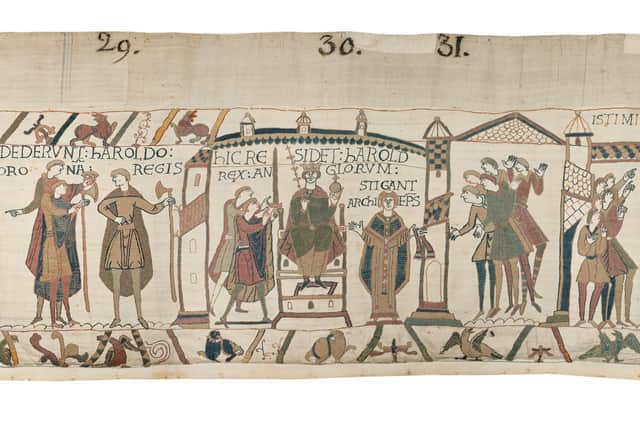
He said following the invasion, Odo was made Bishop of Bayeux as well as Bishop of Kent, and it was in south east county where Professor Rowley believes the Bayeux Tapestry was created.
“It was most likely created at Canterbury abbey in a specialised needlework workshop.”
In his book The Man Behind the Bayeux Tapestry, Professor Rowley explains how Odo went on to become the first Chief Justice of England and on occasion also acted as regent when the king was in Normandy.
After allegedly defrauding both Crown and Church, however, Odo was disgraced and his plans to raise an unauthorised army for a campaign in Italy, possibly in order to gain the papacy, saw him imprisoned for five years. He was released by the dying William in 1087and died in Italy towards the end of the 11th century.
However, while few people have heard of him, his commissioned tapestry has become one of the most famous historical artifacts from the period.
“It is a fascinating piece of history,” said the professor. “It shows people fighting, riding, working and doing all the things people back then so it does give you insight into life 1,000 years ago.
“There’s also a lot of jokes in it, and Aesop’s fables. So from that point of view there’s a lot to it.”
He continued: “It does not really portray Harold as a villain or William as the hero, and it does show the story of the Norman invasion, so from that point of view it is very accurate.
“But whether it is propaganda or not is difficult to say. It is certainly enigmatic.”
He urged anybody who is able to see it to visit it while it is in the UK, although he added a “highly accurate” replica is available to view in Reading.
Professor Rowley said his current project is a reviewed edition of his 1970s book on “Shropshire Landscapes”.
Comment Guidelines
Iconic Media encourages reader discussion on our stories. User feedback, insights and back-and-forth exchanges add a rich layer of context to reporting. Please review our Community Guidelines before commenting.