
Rising fuel and fertiliser costs due to Iran war leaving Shropshire farmers in ‘jeopardy’

The cost of red diesel and fertiliser has “rocketed” since the closing of the Strait of Hormuz.
Shropshire farmers have said they are being hit by rising fuel prices and spiralling costs of fertiliser due to war in the Middle East which have made farming a “gamble”.
The cost of red diesel used in tractors and other machinery has increased over the past weeks, due to war in Iran and the closing of the Strait of Hormuz.
Kate Mayne, Shropshire NFU chair who farms in Ruyton-XI-Towns just outside of Shrewsbury, said this is a real concern for local farmers.
“The rising cost of red diesel is a real concern, it was at around 68 pence per litre at the end of last year but is now up to over 120 pence per litre - although the price does keep jumping around,” she said. “When ordering many of us are also only getting a price on delivery, so some real clarity is needed there.
“Planting season is happening and across all our other farming sectors we are using red diesel daily to help rear livestock and grow crops, so while the price is a real concern we also need to ensure that it is available.”


She said that as well as increasing prices, farmers and growers are also citing price transparency as being a key issue as many farmers are only being given a price once fuel has been delivered to the farm, making it difficult for farmers to decline or challenge the price.
“Transparency and fairness over fuel prices is critical and the Competition and Markets Authority has listened to our concerns, which the Defra Secretary of State put forward after a meeting with NFU president Tom Bradshaw, and is monitoring the sale of red diesel,” said Kate.
“In the long term, it all comes down to resilience. We need to find ways to help Shropshire farm businesses and those further afield deal with the impact of market shocks and global volatility.
“This is about ensuring we have a stable homegrown food sector which can withstand that huge cost pressure and continue to produce high-quality food for the 70 million people of the UK.”
Andrew Williamson, who farms at Upper Overton in south Shropshire, said red diesel was a “significant cost” and farmers were suffering just like everybody else at the pump.

“Red diesel is a significant cost for a business and the prices are now around 50 per cent higher.” he said. “It is not something that you can buy yearly so you tend to buy it when you need to, and when we approach peak season, which we are doing now, you use a lot more of it.
“But everyone is being impacted by the rising price of fuel and the rising cost at the pumps.”
But he added that the “rocketing” cost of fertiliser was creating real “jeopardy” for farmers, particularly as the UK no longer has any domestic fertiliser production.
“It makes planning impossible,” said Andrew. “We bought our fertiliser last May for February and March’s crop and are now looking to buy for next year’s crop.
“But when the Strait of Hormuz was closed, prices rocketed.”
Mr Williamson, who is also Midlands NFU combinable crops chair, said suppliers of fertiliser are also restricting the amount farmers can buy.
“They won’t release enough to cover your year, so while I’m getting wheat prices for March 2028, I’ve no idea how much that crop will cost to produce as I don’t know how much the fertiliser will cost. I could be heading for a loss and not know it.”
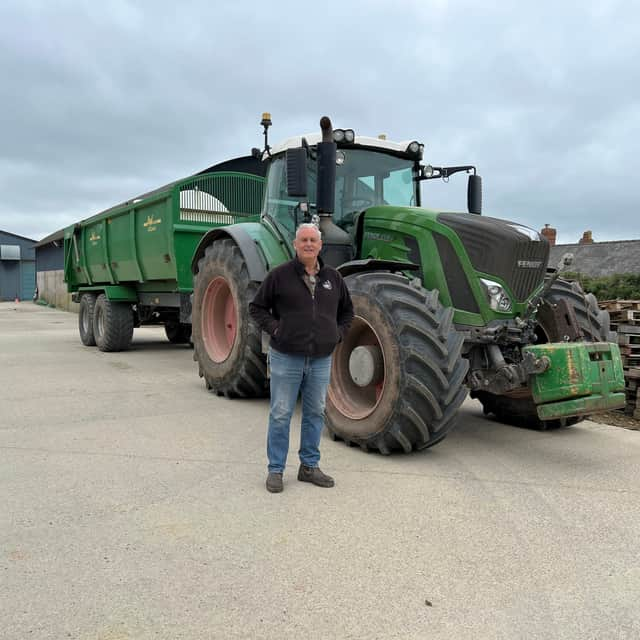
He added that he fears that some farmers will simply call it a day. He said: “Farming has always been a gamble but is more and more volatile now.
“With every decision you make, there is jeopardy involved. I think some will put some serious thought into the future of their business.
“It is a very difficult time.”

Stephen Povall, who farms at Corfton near Craven Arms and is the NFU Shropshire deputy chair, said the union has called on the government to do more.
“If margins are tight, which they are at the moment, it does make it difficult but some are in a better position than others,” he said. “The big issue will be planning after harvest.
“A lot of arable farmers buy fertiliser in the summer, which comes into store over harvest for the 2027 season, if we don’t know the price or it’s not available that could have a real impact.
“We need the government to understand that farm planning is long term and the impact on markets and availability of fertiliser, as well as fuel, is critical for us to grow food.
“The NFU remains busy speaking to the government at the highest level to try and work out solutions and build resilience into the industry.”
Comment Guidelines
Iconic Media encourages reader discussion on our stories. User feedback, insights and back-and-forth exchanges add a rich layer of context to reporting. Please review our Community Guidelines before commenting.