
Historic 'P45' tile unearthed in Staffordshire reveals 200-year-old sacking
A 200-year-old roof tile found in Rugeley could be the world's oldest P45, revealing a Staffordshire worker's dismissal from two centuries ago.
A Staffordshire reclamation yard has stumbled upon a truly extraordinary piece of local history: a 200-year-old roof tile that appears to be the world's oldest P45.
The handmade clay tile, discovered at Cawarden Reclaim in Rugeley, bears a handwritten message seemingly recording a boss named Thomas Austin firing an employee, John Lewis, in the early 19th century.
Richard Parrott, 63, chairman of Cawarden Reclaim, expressed his astonishment at the find. "We've been going for 40 years and I've never come across anything like this before - a 19th century P45!" he said.
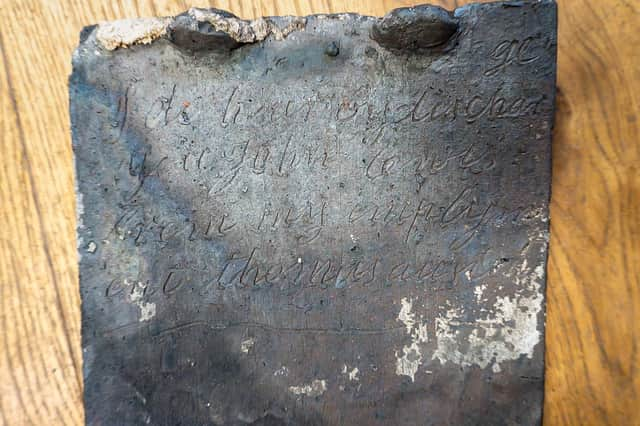

The bizarre dismissal notice, scrawled in elaborate handwriting, reads: "I do hereby discharge you, John Lewis, from my employment, Thomas Austin."
The message was scratched into the soft clay before the tile was fired, preserving the words for around two centuries. It would have remained hidden on the underside of the Staffordshire Blue roof tile until the building it covered was demolished.
The discovery was made by a yard operative sorting through old stock. Richard explained: "One of our guys found the tile and thought, wow, what's this?"

Staff at the company have since researched the mysterious message and believe the tile originated from a former farm site where new homes are now being built. They've also uncovered a clue about the identity of the boss, with records showing a Thomas Austin operated as a brick and tile maker at Clay Hills in Stoke-on-Trent in 1820.
While the reason for John Lewis's dismissal and the unusual method of recording it remain a mystery, Richard reflected on how much industrial relations have changed. "Things have definitely moved on since then, probably for the better. It shows that industrial relations have improved tremendously!" he commented.
Richard believes the inscription survived because it was protected from the elements once placed on a roof. "The only time it would have been disturbed after that would have been when the building was taken down, so that's probably why it's in such good condition," he added.

This isn't the first remarkable find for Cawarden Reclaim. Over the years, they've uncovered other fascinating relics, including centuries-old fingerprints, animal paw prints, and hobnail shoe marks small enough to have belonged to a seven-year-old child.
These treasures, including the historic 'P45' tile, are set to be displayed on a special 'Wall of Interest' at the company's showroom. The exhibition, which will be open to visitors, is expected to be ready by January.
Comment Guidelines
Iconic Media encourages reader discussion on our stories. User feedback, insights and back-and-forth exchanges add a rich layer of context to reporting. Please review our Community Guidelines before commenting.