
'Worst in England': Shocking ambulance handover delays brought into focus after death of beloved Shropshire mum who waited two hours and 20 minutes when critically ill
The death of a beloved mum who waited two hours and 20 minutes for paramedics to arrive has brought shocking ambulance waiting times in Shropshire into sharp focus.

The daughter of “kind and fun” childcare worker Nichola Sach-Brian said her family has “concerns about the state of the NHS” including staff shortages and underfunding after her death at Princess Royal Hospital (PRH) in Telford.
- We have launched free newsletters for Shrewsbury, Telford and Mid Wales. Sign up to the newsletter for your area here: https://www.shropshirestar.com/news/local-hubs/shrewsbury/2026/02/06/sign-up-now-to-our-new-shropshire-star-newsletters-all-for-free/
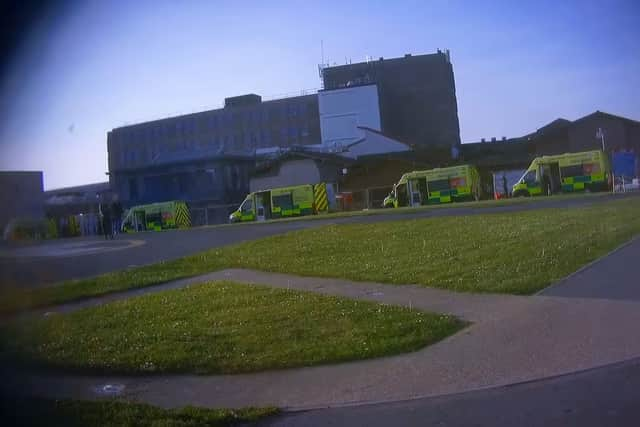
Seven ambulances were stuck in queues outside the hospital shortly before the 58-year-old was collected as she struggled with breathlessness, confusion and severe pain in her neck and abdomen.
Five ambulances were lined up outside the hospital trying to offload patients shortly before her husband called 999.
He told the call handler that Mrs Sach-Brian, who was born in Windsor, Berkshire but lived in Wellington, was struggling to breathe and was “the worst I’ve seen her in 30 years”.
Meanwhile, West Midlands Ambulance Service call navigators were trying to juggle more than 230 cases at once, with only one ambulance available at the time of the call. Out of those cases, 88 were considered in the same category of seriousness as Mrs Sach-Brian's.
On the day that Mrs Sach-Brian was taken to hospital, 89.5 hours of time were wasted due to ambulances being stuck in queues at both PRH and Royal Shrewsbury Hospital (RSH).
And it has been revealed that between April 1 last year and the end of January this year, 334,000 hours of time were lost to queuing across the whole WMAS region, which includes Shropshire, the West Midlands, Worcestershire, Herefordshire, Staffordshire and Warwickshire.
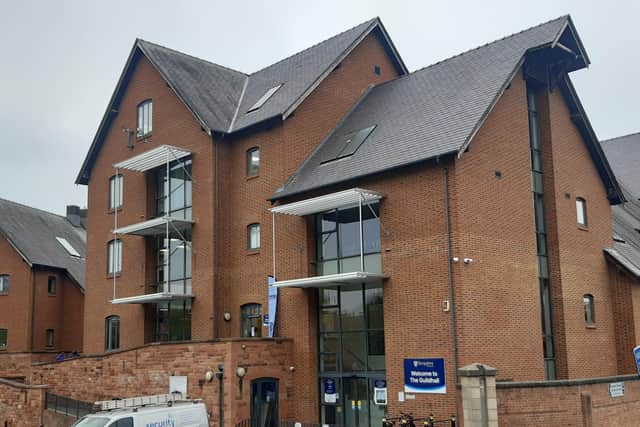
An inquest at Shropshire Coroner’s Court at Guildhall, Shrewsbury, was told that Mrs Sach-Brian’s husband called 999 at 6.49pm on September 19, explaining her symptoms.
Her case was placed in category 3 by the call handler - the urgent but not life-threatening category.
According to current targets, ambulances should be aiming to get to such cases within one hour, or at worst reaching 90 per cent of patients within two hours.
More information came to light after an assessment at 7.54pm and her case was upgraded to category 2 - for serious conditions like burns, strokes, heart attacks and sepsis.
The target for such a case is to get an ambulance to a patient within 18 minutes, or at worst within 40 minutes in 90 per cent of cases.
An ambulance didn’t reach Mrs Sach-Brian until 9.09pm - an hour and 15 minutes after her status was upgraded and two hours and 20 minutes after her husband first phoned 999.
When the ambulance arrived at hospital, Mrs Sach-Brian was rushed straight into A&E and then into intensive care. Sadly, she died the following morning at 7.35am.
A pathologist gave her cause of death as multiple organ failure, contributed to by streptococcus pneumoniae and septicemia. She had multiple health issues including Type 2 diabetes and hyposplenism, which is reduced or absent function of the spleen, an important part of the body’s immune system.
'Recruited staff we can't afford'
Leaders from WMAS were at the inquest and helped paint a picture of the pressures that paramedics are under.
Robert Till, the organisation’s head of integrated urgent care services, said that from April 1 last year to the end of January this year, WMAS lost 334,000 hours of ambulance time to handover delays. That was far more than places like the North East, Yorkshire and London.
“Nobody else is coming anywhere near 300,000,” he said, adding that the trust has “recruited extra staff we can’t afford”.
Rose Poyner, clinical duty manager for WMAS’s emergency clinical validation team, said that on the day Mrs Sach-Brian was taken to hospital, 89.5 hours of time were lost due to ambulances being stuck queuing outside PRH and RSH.

She said: “We conveyed 94 patients and 80 of those were delayed at handover.”
Ms Poyner added that seven “rapid release” requests were made during the day - which are made for example to release a crew to a nearby emergency or for paramedics to swap shifts. Only four were accepted.
To try and aid efficiency, some 999 calls are passed to WMAS’s clinical validation team - which is made up of specialised nurses and paramedics.
They review answers to questions by or on behalf of the patient to determine whether an ambulance is necessary.
Mr Till said that if the system was not in place, patients could face five-, six- or seven-hour response times.
'Worst handover delays in England'
Dr John Jones, executive medical director at the Shrewsbury and Telford Hospitals NHS Trust (SaTH), gave more context about what was going on at the hospital on the day Mrs Sach-Brian was taken in. He also set out what Sath has been doing to try and create capacity to help speed up ambulance handovers.
Dr Jones said that at 4.30pm, just over two hours before Mrs Sach-Brian’s husband called 999, there were five ambulances queued up outside PRH, with four of them waiting to offload patients. The average wait time was 50 minutes.
Later on, shortly after 9pm, there were seven ambulances lined up, with five awaiting handover and an average wait time of one hour and five minutes.
The national target is to hand patients over within 15 minutes.
“Hospitals in the West Midlands have the worst handover delays in England,” Dr Jones said.
He said the current “maximum” handover time at SaTH hospitals is three hours.
“We are working with NHS England and we would like to get to a point where we can make a 45-minute maximum handover,” he said. “We’re not close to 45 minutes,” he admitted, "but we’re trying to gradually get it down.”
He said that work has recently been done at PRH to increase the assessment space for another 40 patients. He also said inpatient beds at RSH have increased by 50.
Dr Jones said it was “a bit early to say” how the changes have impacted patient care at the trust given they were only implemented in the last couple of months, but the focus has been on “creating capacity”.
“We were using parts of the main corridor at PRH,” Dr Jones said. “That stopped about 18 months ago.”
John Ellery, senior coroner for Shropshire, Telford and Wrekin, asked Dr Jones whether “bed blocking” is still a thing - in other words, lots of patients taking up beds when they’re either safe to go home or could be cared for in the community.
Dr Jones said there were often as many as 100 to 180 beds taken up by patients where there is a delayed transfer of care. SaTH has about 850 inpatient beds across its Shrewsbury and Telford hospitals.
Mr Ellery recorded a conclusion that Mrs Sach-Brian died of natural causes.
He has asked for reports from SaTH and WMAS leaders within a month before deciding whether to write a Section 28 Prevention of Future Deaths report.
'She loved people. She loved animals. She loved life'
A statement was read in court from Mrs Sach-Brian’s daughter Hannah.
She said: “To some people she was Nichola. To us she was mum and Niz. To others she was Nicky.
“She was kind and fun. She was the person who held us all together.
“She was a devoted wife for 35 years and a proud mum.
“She served in the Royal Air Force before dedicating her life to caring for children.
“She loved people. She loved animals. She loved life.
“She carried us through our struggles and celebrated our successes, no matter how small.
“We are not only grieving her loss, we are grieving the future that has been taken away from us. We struggle daily with the pain of losing her.
“The only reason we can keep going is because of the strength she gave us.
“We have concerns about the state of the NHS, and the impact staff shortages and under-funding is having.
“We believe her death could have been prevented.”