
Meet the visual artist who uses her experience of being partially sighted to inspire change
From supporting museums and galleries to meet the needs of disabled visitors to training architects on building design, Zoe Partington is helping to make art accessible to all.
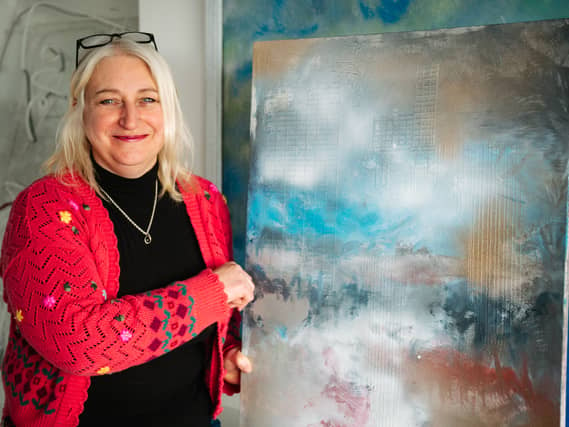


The contemporary visual artist uses her experience of being partially sighted and living with a chronic condition for 50 years to inspire positive change in the arts, heritage and culture sector.
As a creative consultant and international advisor, she works with cultural attractions to develop their skills and experience for meeting the needs of disabled visitors.
Working from her studio in Cleobury Mortimer, Zoe's own artwork encompasses multi-media visual arts, light and sound installations and sculpture.
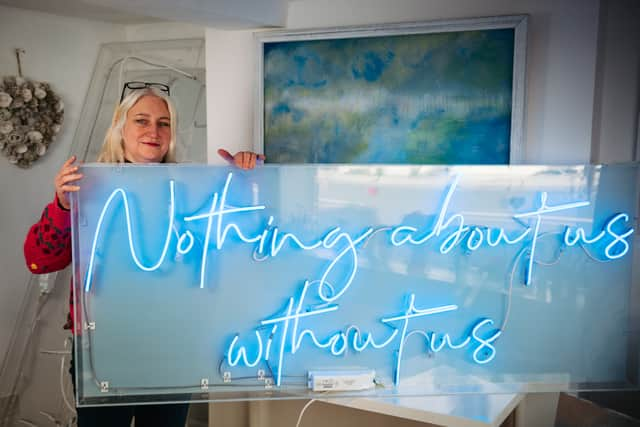
She specialises in disability art, which is creating art unique to herself as a disabled person with her life experiences. "It can be quite political as well," says Zoe.
"My job is getting people to think differently and it’s about reframing how they think about disability and disability art. It’s done in an equality framework, which means it ensures that you are treating people in a proper manner and you are supporting their human rights too," she explains.
Being creative has always been something that has come naturally to Zoe, who studied at Ludlow Sixth Form College. "I had a really fantastic art teacher there who taught me to paint."
"Then I did an Art Foundation course and I was completely bowled over by their History of Art teachers, because they had such huge knowledge of the history and heritage of art and architecture."
Zoe went on to study for a BA (Hons) degree in media and design at the University of Portsmouth. "That’s when I started thinking about my uniqueness in a disability art perspective," she explains.
"Then I saw the work by Jo Spence, an artist who had quite a serious health condition, and we met and she talked about how she mapped experiences she was going through. Looking at gender issues, part of my dissertation was about women and representation in the media, but my final art piece was about being a disabled female."
Her art journey then took her to Birmingham City University when she studies for a Post Graduate Diploma in the history of art, design and architecture.
"We had incredible lecturers, who took us on museum and gallery visits all over the place, including New York.
"My tutor, George Nzlopy, was very highly trained in the world of visual art and he wanted you to have spoken to the artist to get their honest story. He wasn’t happy about you just using a reference out of a book. It made me question and challenge and he taught me those skills."
Mother of three Zoe, who has diabetes, was in her early 20s when she lost her sight.
"The 20s are usually a significant time when you’re developing your life and networks," she says. "It was challenging for me because I worried that was all taken away and it took me some time to catch up," she explains.
"I thought I’d never be able to work in the arts, because I believed all the myths that you are taught (that it’s the end of the world to be disabled). This is one example where my instincts to challenge perceived wisdom and conventional ideas, have stood me in good stead.”
Zoe says she was inspired to pursue a career in the arts after immersing herself in the disability art movement.
This included the work of disability activist and equality trainer, Barbara Lisicki, who has become a good friend.
"She’s told me a lot about the history of the disability movement and disability arts, and she was a comedian originally, so she lay the path for other disabled comedians that are there now," says Zoe.
"She has given me strength and courage to empower my identity as a disabled person and not to reject it."
Since then Zoe has become a specialist in creative audio description and inclusive approaches in the arts as well as working as a curator, writer, researcher and creative equality trainer.
Her previous projects have taken her to consult in Australia, Tasmania, Singapore, Azerbaijan, Armenia, Italy, Germany, Italy, Denmark, Norway and Netherlands. She also advised Brazil and Japan on the inclusion of disabled audiences prior to the Cultural Olympiads.
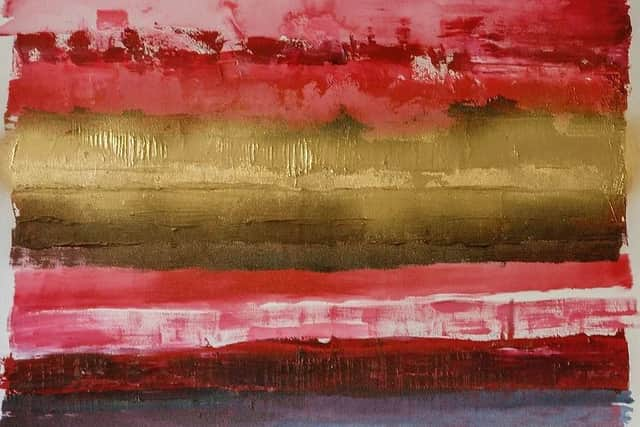
Zoe has been supported on her journey by Arts Council England and has also advised them on equality provision.
Part of her work involves working with arts organisations to improve their audio description offer so that it's a richer and more engaging experience.
"When I work with cultural and education teams, I ask them to describe themselves to me when I meet them so I know what I look like. Describing yourself is probably the hardest thing to do."
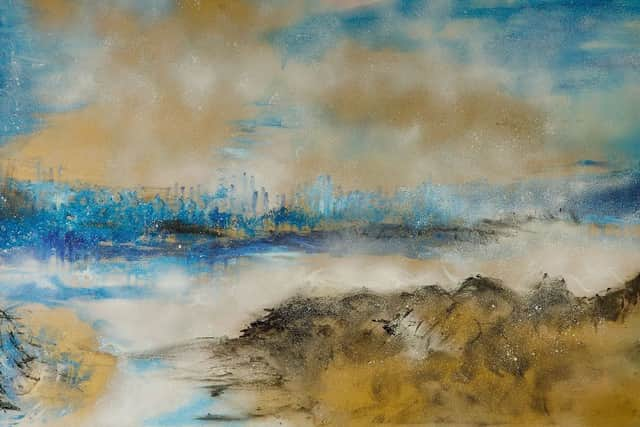
When it comes to describing works of art, Zoe says: "It's about describing it in a way that makes sense to a blind person. It's thinking about the composition and what is the 'wow factor' in the painting. It's the type of language used. It can be very atmospheric and emotive. If it's an industrial landscape of the Black Country, it might have a fiery red sky."
In 2008, Zoe founded the DisOrdinary Architecture Project alongside researcher and educator Jos Boys.
They have brought disabled artists together with architects to find new ways of improving building and urban design practices so that spaces accommodate and engage with everyone.
Zoe says they want to improve the design of the built environment to accommodate the needs of those with the disability right from the start.
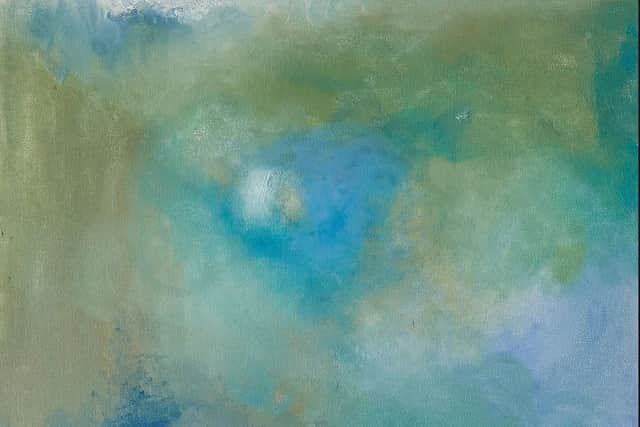
Much of her own artwork uses sound and light, including her visceral installation artwork Decoding Difference, which was selected for exhibition at London Design Biennale 2023 last month.
The biennale is the global gathering of the world's most ambitious and imaginative designers, curators and design institutes and took place at Somerset House.
Decoding Difference sees light and sound mirror the physiology of Zoe’s glucose levels and heartbeat, as live captured data is transmitted directly from a sensor implanted within her arm.
"With Decoding Difference, I reflect on how my inner health may fluctuate daily, but the technology empowers me to continue navigating my own full life alongside the discriminatory barriers I experience to everyday life.
"As a disabled artist I have always known that having a rich creative and inner life was not dependent on being able to see or to navigate the world in a conventional fashion. During the pandemic, non-disabled people began noticing this too, with a fresh appreciation of their own physiology, and of the emotional impact of non-visual experiences, such as birdsong or the scent of cut grass,” she explains.
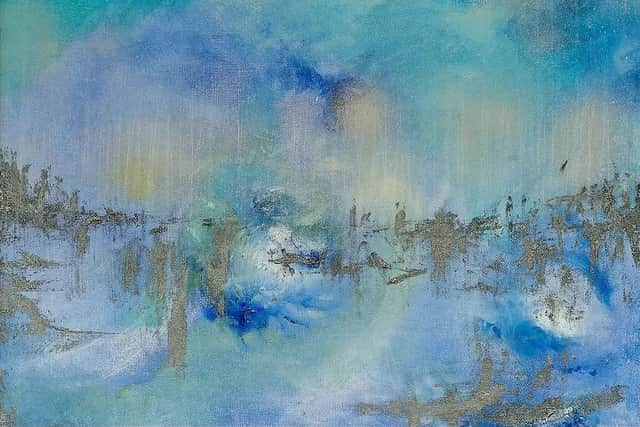
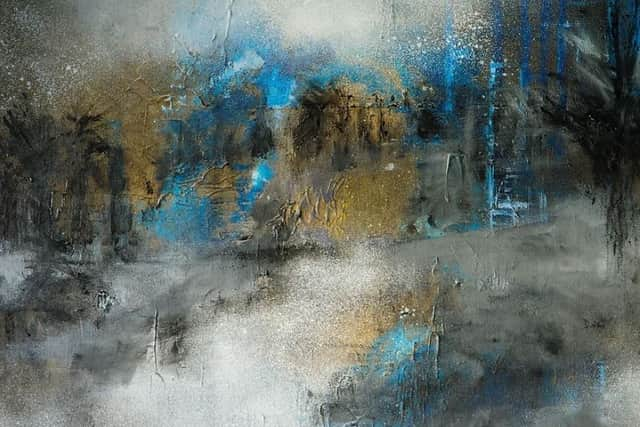
When she needs to relax and unwind from her busy working schedule, Zoe also enjoying painting landscape. "It's an escapism and it focuses your mind. You don't have to think about anything else," she says.
Earlier this year Zoe was also one of three female disabled artists featured in a series of Tate Modern Late Talks exploring tactility and connection as part of the London gallery’s celebration of women in the arts.
She was joined by printmaker Fae Kilburn and tactile painter Bianca Raffaella to talk about artworks created by and for visually impaired and blind audiences, and artworks that centre disability rights at their core.
"Being invited by Tate Modern to talk about my work as a female disabled artist is something I feel really proud of. I have spent 30 years supporting and exploring the work of other disabled people and disabled artists, trying to change practice in the arts, creative and architecture sectors. Now I’m getting more positive reactions which suggests that the times are ready for change," says Zoe.
For more information about her work, see zoepartington.co.uk.
Comment Guidelines
Iconic Media encourages reader discussion on our stories. User feedback, insights and back-and-forth exchanges add a rich layer of context to reporting. Please review our Community Guidelines before commenting.