
'I dread saying what job I do': GP on 'overwhelming' pressures facing doctors - and what could help
"None of it is about us wanting to have more money" – a Shropshire doctor says only investment will help General Practice cope with rising demand and increasing complexity.


This week a study published in the BMJ Open Journal revealed startling figures about the state of the demands on General Practice in England.
The data shows the number of people registered with a GP has risen by more than six million in the decade up to 2023.
It comes while the number of GP practices has fallen from 8,044 to 6,419, and the number of GPs fell from 27,948 to 27,321 – a 15 per cent drop in the amount of doctors per 1,000 patients.
The team from University College London (UCL) and the London School of Hygiene and Tropical Medicine suggested that on the current trajectory the country is approaching a 'tipping point' where the majority of General Practice appointments are no longer delivered by GPs.
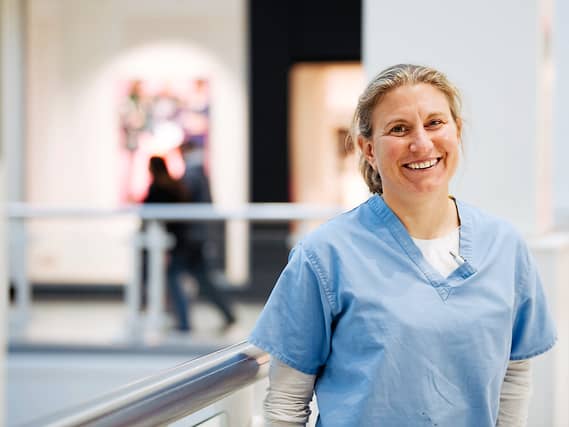
Dr Jess Harvey, a GP partner at Much Wenlock and Cressage Medical Practice, said General Practice was still struggling to adjust to major increases in demand – and the complex nature of that demand.
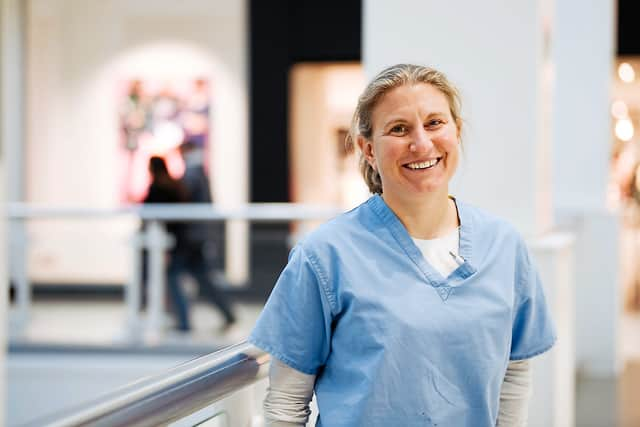
She spoke of the strains on GPs trying to deal with increasing caseloads, burnout, and said that appointments with non-GP staff, such as physiotherapists and pharmacists, could benefit patients.
She said: "Looking at the study, what one would hope is that it starts to create some realistic expectations for patients because the days when, 50 or 70 years ago, when you had your doctor who would go and see you at your house, you called them in the middle of the night and they would come and see you, those days are gone.
"The number of people we are seeing is far greater, the complexity of conditions experienced by our patients is far, far greater. If you think about what you would have treated people for 50 years ago and what we can treat people for now, it is completely different."
Dr Harvey said that she understood the embedded desire from patients to see a GP – but stressed that the additional roles could offer better, and quicker answers for patients.
She said: "The physios and the pharmacists, I think that is really good because they all offer a really good skillset that is really applicable in General Practice.
"Seeing a physio when you first twist your knee makes sense. That person has spent three years in university studying joints so they are an expert in that area and can give some really useful and helpful physiotherapy advice."
Dr Harvey, who has been a GP since 2016, said that one element of the change was about making sure patients understood the benefits offered by additional roles.
She said: "We need to play a part in helping to educate and encourage the change in behaviour.
"That is something being done on a national level, regional and local level and I think we are starting to make inroads."
GP dispute with Government over funding
Dr Harvey spoke of the current dispute between General Practice and the Government over funding, saying that the focus was not on increasing wages for partners but ensuring there is enough money to run a practice, which has to cope with very modern demands.
She explained the last GP contract from the Government was awarded in 2018, and the current offer is for a two per cent increase in that agreement.
The offer comes against a backdrop where costs across society have significantly increased – as anyone budgeting a business or even a household will know.
She said: "None of it is about us wanting to have more money, it is about having enough money to run practices properly."
She added: "Those costs include electricity, putting the heating on, making sure the roof doesn't leak. Also it is employing all the nurses, receptionists, the doctors, everyone; that all comes out of the funding."
Dr Harvey said the current pressures, and media discourse around General Practice, are having a significant impact on GPs.
'I dread saying what job I do'
She said: "To be a GP in the current climate you have to have a thick skin because you are constantly facing negativity in the press. There is a constant negative stream.
"If I go to a dinner party I dread saying what I do as a job.
"It is such a shame, you go through god knows how many years of training and you feel ashamed of what you do. You want to say 'come and spend the day with me, see what we do' and if you still think we are swinging the lead then I don't know what more I can do."
Dr Harvey said the profession was being pinched from two sides, with more doctors choosing to retire, and fewer young people joining from medical school.
She said: "It is not simply that doctors are leaving the profession, it is that not as many young people are joining General Practice from medical school.
"It used to be that the majority of doctors that came through medical school would go into General Practice, now it is secondary care."
She added: "It is really sad because you want to sell General Practice as a great career, and it is a great career, it's hard work, but it is lovely, challenging and you can make it what you want. But is it also really hard when you are trying to see more and more people, deal with more and more things, and it just gets overwhelming and people get burned out."
She said that without the prospect of improvements, more GPs would choose to retire early.
She said: "I think for colleagues approaching retirement age, that's what they are saying.
"They are faced with either retiring now, or they can work for another five years - but will it get any better?"
General Practice does 90 per cent of the work for less than 10 per cent of the NHS budget
She added: "It is tragic because none of this needs to happen. General Practice does 90 per cent of the work for less than 10 per cent of the NHS budget. It just needs to be recognised much higher up that it needs the finance.
"What you need is money given to you to run practices and employ people, and that's what keeps it going – not having something dreamt up by someone who does not have a clue.
"I genuinely believe there is a really good future for General Practice but we have to act if we want to have it.
"If you want to have it you need to recognise it and give us the money to run our practices – we have nowhere we can squeeze things anymore."
Comment Guidelines
Iconic Media encourages reader discussion on our stories. User feedback, insights and back-and-forth exchanges add a rich layer of context to reporting. Please review our Community Guidelines before commenting.