
'Help us avoid winter A&E crisis' - Shropshire hospital bosses
More than 60 per cent of patients visiting Shropshire's A&E departments could have been treated elsewhere last year, health bosses say.
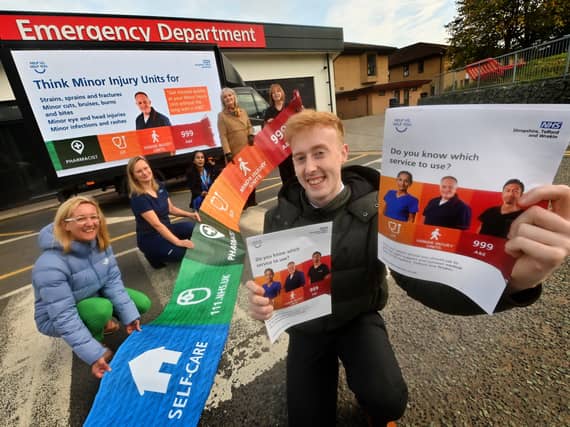

New data from NHS Shropshire, Telford and Wrekin has revealed around 63 per cent of A&E patients could have been effectively treated elsewhere in the healthcare system last year, such as a minor injury unit or by a pharmacist.
The survey conducted by healthcare leaders revealed that 26 per cent of people were aware that community pharmacists can provide urgent care.
But when asked about A&E usage, 50 per cent of participants said it would be either their first choice or a ‘key consideration’ for urgent care.
The survey highlighted gaps in people's knowledge about what other healthcare services can offer and a general awareness of which services to use when urgent advice or treatment is required.
More than 130,000 people visit A&E each year in the county and healthcare leaders are encouraging people to help stretched A&E and GP surgeries this winter by re-thinking which service they opt for when unwell.
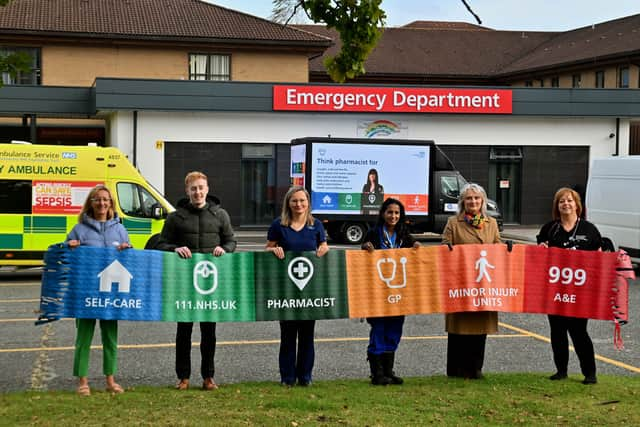
They say this will help free up beds in the county's acute hospitals and ease ambulance waits for those in need of potentially life-saving treatment.
Alison Bussey, chief nursing officer for NHS Shropshire, Telford and Wrekin, said: “In our area, we have some of the most stretched A&E departments in the country, impacting on waiting times and ambulance delays.
“The 'Think Which Service' campaign aims to encourage people to self-care to help them stay physically and mentally well and highlights the various services available to our residents so they can consider if there is another way to get the treatment or advice they need.
“Of course, if it is an emergency then you should absolutely head to A&E or dial 999 but, unfortunately, we are seeing a high number of people turning up with illnesses or injuries that could be treated in a minor injury unit, by a pharmacist or, in some cases, with self-care at home.
“We are calling on local people to get behind our campaign and try to ‘think which service’ this winter to help alleviate pressures on our NHS workers.”
Waiting times at Shropshire's A&E departments are amongst the worst in the country.
Data released for August showed that just 61.5 per cent of patients in the Shropshire, Telford & Wrekin Integrated Care Board area were dealt with within the Government's four-hour target to be admitted, transferred or discharged.
Last winter, the region also saw some of the longest ambulance wait times in the West Midlands, with patients in the county waiting an average of 11 minutes and 31 seconds for the most serious calls (category one responses).
The national standard sets out that all ambulance trusts must respond to category one calls in seven minutes, and category two calls in 18 minutes on average.
Ms Bussey added: "We know we have got some of the longest waits on the back of ambulances and that's not good for those who are really desperately unwell and we are asking the public to think carefully."
Health bosses revealed the most common reasons that someone attended A&E in Shropshire in the last year were:
- Soft tissue injuries, such as sprains, cuts and sprains
- Infectious Disease
- Cardiovascular
- Fracture/dislocation
While many of these patients need to be at A&E, some can be seen at an MIU, pharmacy or GP instead.
For example, for cardiovascular patients, 81 per cent of cases are classed as ‘urgent’ or ‘very urgent’. However, for soft tissue injuries, only 34 per cent are ‘urgent’ or ‘very urgent’.
Patients who get characterised as ‘very urgent’ had chief symptoms of circulation/chest, trouble breathing, gastrointestinal, neurological, and serious injuries.
"I think go to a pharmacy service if you have a cold, you're congested, maybe a few breathing problems which haven't disappeared after 24 hours," Ms Bussey added.
"Community pharmacists can prescribe, they can give great advice, it's not all about coming in to an A&E department which is for the most seriously ill people.
"I think for the minor injuries units it's those sprains, you might have twisted your ankle, you might have got a bit of a cut which isn't significantly bleeding but it might need some suturing or butterfly strips.
"A minor injuries unit again is a great place to go because they can give you that advice and put you together again."
Magdalena Kolodziej, clinical pharmacist said: "Clinical pharmacists work as a part of general practice to help patients get the best out of their medicines.
"We are experts in medicines so we can help in a number of ways, we do medication reviews and educate people on the best use of their medicines.
"We treat conditions such as hypertension and diabetes, we improve patient safety by ensuring more appropriate treatment, we look at medicine-related issues such as side effects or medicine shortages.
"So having clinical pharmacists in GP surgeries it helps the GPs, it gives them a little bit more time to diagnose and treat more complex conditions."
Dr Melanie Thompson, a GP at Woodside Medical Practice in Telford, added: "It's recognising and understanding that there are services out there other than just A&E and the GP.
"And there are two reasons for that – not just to reduce the burden and pressure on the NHS but actually to make sure you get the most efficient care as quickly as possible.
"So on one hand, it will help reduce the waiting times and it will help reduce how long you have to wait – not just to see the individual – but actually in that department itself.
"What we're aiming for is to get a message out there that there are other services available and it's to make sure that we can keep everyone as physically and mentally well over this winter as much as possible.
"The other message that we're trying to get out is self-care so updating your medicine cabinet, making sure you've got things like rehydration sachets and simple paracetamol, anti-diarrhoeal and anti-sickness.
"Looking after yourself, making sure you get out and about but dress appropriately, keep your house nice and warm, really what seem common sense measures but we don't always think about."
Residents can also call NHS 111 which is open 24/7, 365 days a year, which can help re-direct people to the most appropriate service.
For further information about Think Which Service, visit thinkwhichservice.co.uk
Comment Guidelines
Iconic Media encourages reader discussion on our stories. User feedback, insights and back-and-forth exchanges add a rich layer of context to reporting. Please review our Community Guidelines before commenting.