
We visit the volunteer-run museum shining a light on Bridgnorth's heritage
Founded in 1951, the museum is entirely run and managed by Bridgnorth and District Historical Society.


It’s an Aladdin’s cave of treasures shining a light on Bridgnorth’s fascinating past and our nation’s heritage.
But many visitors to the town – and even some of its residents – may not realise it even exists.
Now the team of dedicated volunteers who run and manage the attraction are spreading the word and encouraging people to pay Bridgnorth’s Northgate Museum a visit.
Founded in 1951, it is entirely run and managed by Bridgnorth and District Historical Society and attracts an average of 2,000 visitors a year, including many visiting from abroad.
“Museums like this are few and far between,” says Andrew Cooper, who has been the manager for the past eight years.
“We are completely self-funded so we rely on donations and the museum is staffed by volunteers,” he adds.
The museum, which opened for the new season on Good Friday, has more than 6,000 items in its collection relating to family life, community life, welfare and wellbeing, education, entertainment, sport, industry and war and defence to name just a few along with a wide array of postcards, photographs and paintings.
Andrew’s favourite item in the collection is a turret clock which dates from c.1666.
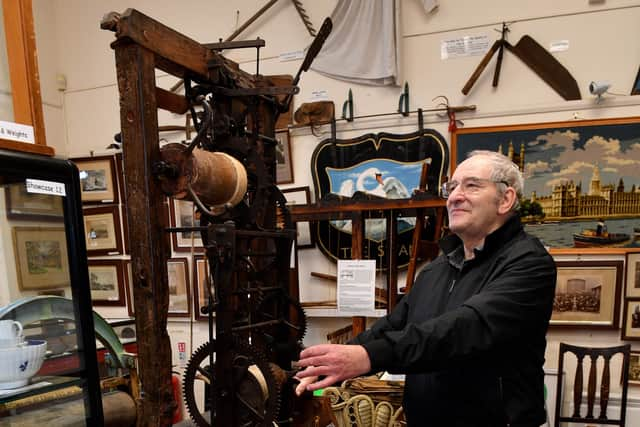
It has no hands or face and simply strikes the hours. The clock was originally installed in Larden Hall, the home of the Moore family.
“It was used to regulate time on the estate and tell the staff when to light the fires,” explains Andrew.
“I like mechanical things and it’s amazing that it still works after all these years. It’s quite accurate too.
“It’s of national importance because there aren’t many turret clocks that are still working,” he adds.
The currency display includes one-pound and two-pound notes from Bridgnorth Old Bank.
There are also items relating to home and family life such as a Victorian bassinet from the Bridgen family, of Bridgen Hall, Listley Street.
Built around 1730, Bridgen Hall was on the site of what is now the public car park behind the library.
The property, which was once the home of William Bridgen, was demolished in the mid 1950s.
Another item in the collection is a large mangle used for squeezing water out of clothes and sheets on washday.
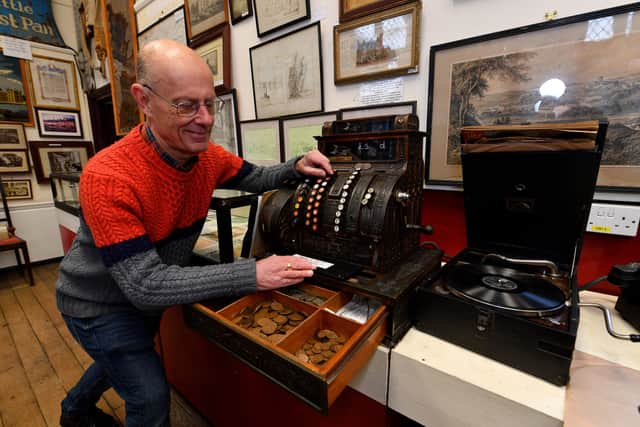
“Children are always fascinated by the mangle and they love the Edwardian till and the old coins,” says Andrew.
There are areas dedicated to the Second World War and RAF Bridgnorth.
The displays feature medals, gas masks, ration books and identity cards. “We have shrapnel from a bomb dropped on the town in 1941,” says Andrew.
There are many Roman items including a collection of 69 denarii coins, known as The Albrighton Hoard. They were declared treasure in 2005 and later acquired by the museum.
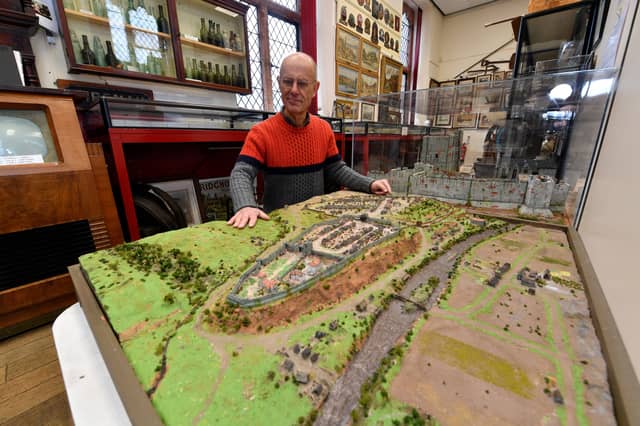
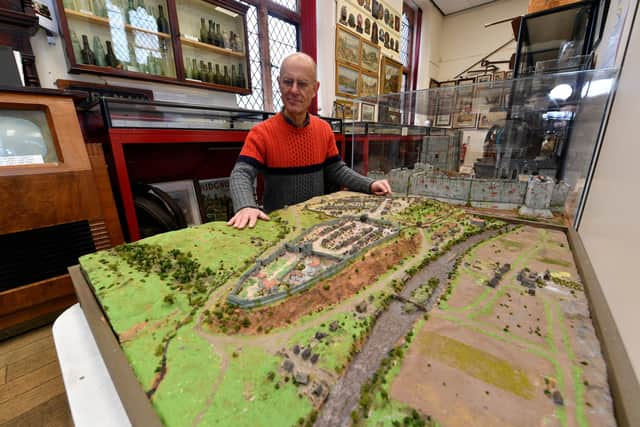
Another highlight is the model of how Bridgnorth Castle and fortified town may have looked in 1275.
The model was made by Bridgnorth and District Historical Society treasurer and museum volunteer Gerry West.
At the time, there were four main gates used to enter Bridgnorth: Cougate in Cartway, Hungary Gate at the end of St Mary's Street, Whitburn Gate at the end of Whitburn Street, and the main entrance, Northgate. This may originally have been in timber but has been rebuilt since.
“First in brick and then in the 1900s the brick was covered in sandstone.
“The castellation was later put on the top to make it look like a castle,” says Andrew. Listley Gate, near the Library, was added later.
The museum is keen to attract more people through the doors especially after visitor numbers dipped last year following the temporary closure of part of the Severn Valley Railway line.
After a landslip caused substantial damage to tracks, services between Bridgnorth and Hampton Loade were unable to run until repairs had been carried out.
“Visitor numbers were down by 40 per cent while the Severn Valley Railway was closed,” says Andrew.
“That has a big impact on a small museum like this.
“The museum is important to me because I’m a Bridgnorth lad and I don’t want to see it disappear,” he adds.
The team of friendly volunteers is always on hand to answer any questions and help guide visitors around the exhibits.
Andrew, along with society member, historian and author Clive Gwilt, is always on the lookout for interesting historical items with a connection to Bridgnorth or the local area to add to the collection.
“I get alerted when anything related to Bridgnorth is put up for sale on eBay. I like looking for war medals that are connected to Bridgnorth,” says Andrew.
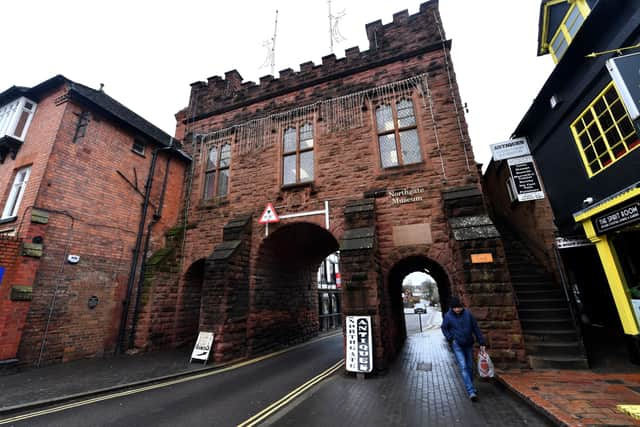
Bridgnorth’s Northgate Museum is open from now until October.
The museum is completely free of charge to enter for all visitors although donations are very welcome.
It is open on Saturday, Sunday and Wednesday afternoons, and on Bank Holidays, from 12pm to 3.30pm.
Anyone who is interested in volunteering at the museum can find out more about joining Bridgnorth Historical Society by visiting bridgnorthmuseum.org.uk/bridgnorth-historical-society.
For more information, see www.bridgnorthmuseum.org.uk or www.facebook.com/bridgnorth.museum.
Comment Guidelines
Iconic Media encourages reader discussion on our stories. User feedback, insights and back-and-forth exchanges add a rich layer of context to reporting. Please review our Community Guidelines before commenting.