
West Midlands green belt land has second highest potential for homes
Green belt land in the West Midlands has the potential for 11.9 million new homes, a new report has revealed today.
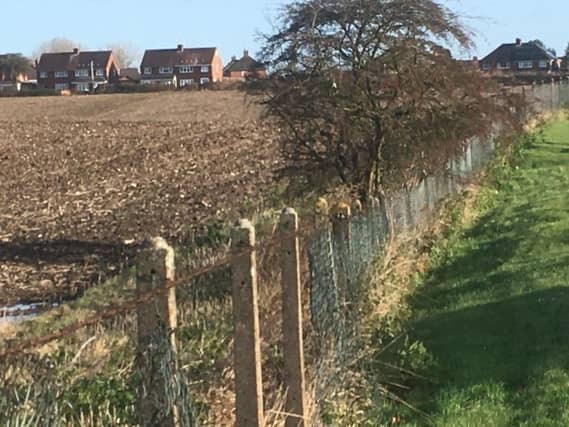


The protected status accounts for more than 20 per cent of land in the West Midlands region.
But it has become increasingly under pressure as the need for new housing grows.
Experts today reveal that the West Midlands has one of the largest areas of potential development green belt land.
While a fifth of land in the West Midlands is green belt, figures reveal the figure for the whole of England is 12.5 per cent.
Woods Hardwick, the independent architecture, engineering, planning and surveying consultants, says green belt for the whole of England has the potential for 73.7 million homes.
Green belt is a 'spatial planning tool' first introduced in the 1950s as a national policy that aims to to prevent urban sprawl and keep land permanently open. It is seen as particularly important in the West Midlands as it protects green corridors between urban development.
Woods Hardwick says it accepts that green belt has a use, but says giving up just 1.4 per cent the total protected land would allow the Government to meet its target of one million new homes by the next election.
It analysed the size of the green belt across each area of England, what this equates to as a percentage of the total land area and how many homes it could facilitate if fully utilised to address the housing crisis.
The research shows that England's green belt is estimated to cover 1.637m hectares.
Bromsgrove, including Hagley and Romsley, has the highest percentage of green belt in the West Midlands at 88.9 per cent – 19,292 hectares.
South Staffordshire is at 78.8 per cent (32,096 hectares) with Cannock Chase at 61.1 per cent (4,821), Wyre Forest 57.4 per cent (11,209) and Lichfield 45.8 per cent (15,166)
For Walsall it is 37.9 per cent (3,942), Stafford 18.6 per cent (11,107), Dudley 18 per cent (1,765), Wolverhampton 11.5 per cent (799) and Sandwell 9.6 per cent (822).
Shropshire has 7.7 per cent – 32,096 hectares.
Planning director at Woods Hardwick, Russell Gray, said: “Sensibly planning the release of green belt land will directly address the housing crisis and local property shortages. That doesn’t mean concreting over the entire countryside as many incorrectly assume and there are swathes of green belt that have been incorrectly classified and contribute little to the intended purposes of green belt in national policy.
"Green belt development has been continually rejected by politicians for landscape or habitat reasons when that should not be the case.
"Our research highlights just how much land is classified as green belt across England and how difficult this makes the delivery of much needed housing, particularly in areas where space is already finite.
"England’s entire green belt could deliver almost seventy four million new homes - three times as many homes we already have - and it would take reclassifying just 1.4% of green belt land for the government to meet its target of one million homes by the next general election.
"Instead, they’ve set their sights on brownfield redevelopment, a task that is far more complicated, costly and, quite frankly, doomed to fail due to there simply not being enough of such land. It also typically fails to provide the level of affordable housing we desperately need as a country.
"As a result, we expect that come the next general election, we will be hearing yet more excuses why we haven’t met or built the government’s one million new homes target to address the crippling housing crisis felt across the nation.”
The thin green line between Shropshire and the urban West Midlands
Green belt land in Shropshire exists to the east of the county – as part of the boundary preventing it merging into the West Midlands.
While much of Shropshire would be considered typical beautiful countryside, it is only the section to the east which is granted the strong legal protection of green belt status.
The calls from planning consultants Woods Hardwick for more green belt across the country to be released for housing, come as the future of a number of protected spots of Shropshire Countryside are up in the air.
Shropshire Council itself has set out plans to use 160 hectares of green belt across 14 sites in Albrighton, Bridgnorth, Shifnal and Alveley, for development.
Those sites are contained in the authority's local plan – which is yet to be approved by planning inspectors.
Shropshire Council's plans for green belt release in Bridgnorth include 11.4 hectares which will be used for the expansion of Stanmore Business Park.
The council had originally put forward a large piece of green belt at Stanmore for an 850-home garden village.
But the project was withdrawn and replaced by proposals for more than 1,000 homes on land at Tasley – which is not in the green belt.
The decision has proved highly contentious with many local residents opposed to the plans, saying the land is just as valued as that which is contained in the green belt on the east side of the town.
The largest sections of green belt affected are in Shifnal, with 121.4 hectares included in the council's plan – 39 hectares for employment development, and 82.4 hectares of land 'safeguarded' for future development.
The issue has sparked major opposition in the town, with the Shifnal Matters group actively opposing the council's plans.
For Albrighton another 19.9 hectares is to be 'safeguarded', while Alveley will see 7.4 hectares release – 1.4 for housing, 2.4 for mixed use, and 3.6 to be 'safeguarded'.
Controversy also remains over a potentially significant green belt development dubbed 'Weston'.
The proposal, from the Bradford Estates, is for land to the north of Junction 3 of the M54, and to the west of the village of Tong.
The overall ambitions are to build 2,900 homes on the land, along with an 80 hectare Midlands Tech Park, which it says would create more than 9,000 jobs.
Shropshire Council had declined to include the development in its local plan proposals – seemingly ending the chances of it going ahead.
However, solicitors representing the Bradford Estates last month threatened legal action over the process – a move which could pave the way for the project to be reconsidered.
If it were added to the local plan it would require the release of a major section of green belt land.
Comment Guidelines
Iconic Media encourages reader discussion on our stories. User feedback, insights and back-and-forth exchanges add a rich layer of context to reporting. Please review our Community Guidelines before commenting.