
The full story behind 'unacceptable' strange smell affecting residents in parts of Telford - and what's being done to stop it
The strange and unpleasant odour affecting residents of parts of Telford has been the subject of speculation and investigation in recent weeks.
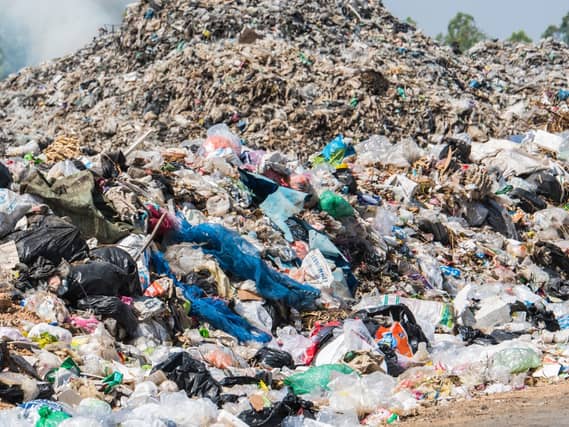


At the start of the month the Environment Agency confirmed it was 'liaising' with the operators of the Granville Woodhouse Landfill site at Redhill, off Grange Lane.
Fast forward a few weeks and the watchdog has confirmed it has been conducting 'odour monitoring' around the site – operated by Potters Midlands – and accepted that the situation has "escalated" and is '"unacceptable".
The EA has delivered an update on the work taking place, the work that is planned to take place, and the background of how the site is licensed and operated.
The situation has also thrown a spotlight on the the amount of waste households generate and throw away, with the issues a timely reminder that everything we throw away goes somewhere – and just because it is out of sight does not mean it has disappeared for good.
How long has the landfill operated – and who licences it?
The Environment Agency has explained what can be buried at the site – non-hazardous and biodegradable waste – and how the operation is governed by a licence.
A spokesman said: "Granville Woodhouse Landfill has been operational at this location since 1991.
"The Environment Agency regulates the landfilling activities by way of an Environmental Permit.
"This permit contains conditions that control the operations carried out on site, ranging from the construction and design of a landfill cell; the types and volumes of waste that can be accepted; the emissions and their limits; and the frequency and type of environmental monitoring that is required.
"Environmental Permit conditions are in place to ensure operations at the site are carried out in a way that prevents or minimises emissions and impacts on the environment, using appropriate management systems.
"The Environmental Permit allows the site to accept a wide range of non-hazardous and biodegradable wastes."
What other limits are placed on the site – and who gave it permission?
There are a number of conditions about the operation of the site and what happens after it stops accepting waste.
The Environment Agency said that when it closes, restoration and re-profiling of the land will take place.
A spokesman said: "The local Planning Authority, Telford and Wrekin Council, gave approval for a landfill at this location.
"The planning permission restricts vehicle movements, operational hours, the area that can be infilled and the operational life of the site.
"It also requires the operator to comply with a previously agreed restoration plan to complete the landfill to a specific height and profile after it has been closed to accepting waste."
How does the landfill work?
The EA update explains where the waste goes – into 'individual cells' – and what happens once it is placed inside those cells.
It says: "Granville Woodhouse Landfill is heavily engineered and formed from individual cells.
"Each cell is constructed with a clay and geomembrane liner to protect the ground around and below that cell.
"Once the cell is full of waste, it is then capped.
"Initially this is temporary capping using a layer of clay over the surface of the cell.
"This is to help prevent rainwater entering the waste, stop the waste inside being disturbed and to enable the gases being produced to be captured.
"When the cell is complete then permanent capping is installed.
"As with the base of the cell, the capping must be designed to an engineered standard."
What are the likely sources of smell from a landfill site?
The EA has explained what can cause odours from any landfill site – but warns it is not always possible to get rid of every smell.
Its update said: "Odour sources from a landfill will be predominately from landfill gas created from the decomposition of the waste, as well as newly deposited materials on top of the waste mass, and delivery vehicles carrying waste to the site.
"Typical measures to minimise odour at landfills include, but are not limited to, the following:
"Capturing landfill gas and combusting it using a landfill gas engine or flare.
"Keeping the tipping area as small as possible.
"Covering waste as soon as possible.
"Installing capping over the waste when operational areas have been completed.
"Ensuring the landfill gas management system is operating effectively and installed once gas is being produced.
"Avoiding over-tipping older areas of waste.
"Our officers ensure the operator correctly identifies the source of the odour and that the subsequent action plan is appropriate and focused.
"However, even if an action plan is completed as expected, sometimes a residual odour may persist."
What is landfill gas?
The EA has explained what comes out of landfill – and how the unpleasant smell can actually be caused by a tiny percentage of 'trace' gas.
It said: "Landfill gas is the main emission to air from landfill sites.
"It is produced by biodegradable waste in the landfill as it breaks down. Landfill gas composition varies.
"It contains mostly methane (around 60 per cent to 65 per cent by volume) and carbon dioxide (around 35 per cent to 40 per cent by volume), but also a number of other 'trace' gases present in very small quantities (around one per cent in total).
"These trace gases can be extremely odorous and can be detected by the human nose at extremely low concentrations.
"One of these trace gases is hydrogen sulphide which has a smell like rotten eggs."
The current situation
In its update the EA asks the public to be assured that it is working with the owners to resolve the problems – accepting the situation has become worse in recent weeks.
The watchdog added that a meeting had taken place last week to discuss the situation.
It said: "We recognise that odours coming from the landfill have escalated over the last few weeks.
"We have undertaken odour monitoring in your community to link it to the site and identify the likely actions needed to resolve this unacceptable situation.
"We have required the operator to take action to improve gas and odour control on the landfill.
"We met the operator on 22 March 2024 to discuss plans to reduce odours from the site."
Action taken so far and planned for the coming weeks
The EA has said that a number of measures are being carried out to try and limit the smell.
They include sealing pipework and making sure that areas of waste are covered with suitable material.
It added that 'new gas collection infrastructure' has been added – with more to come.
The EA said: " The operator is taking positive actions to ensure pipework is sealed and areas of deposited waste are covered with suitable materials.
"New gas collection infrastructure has been installed with further scheduled to be in place by the last week of April 2024.
"The operator will continue monitoring to identify any areas that need further protection measures and they will be actioned swiftly by the operator."
What is planned for the future – and will monitoring continue?
The EA says that 'capping', which allows gas to be collected, will start to take place over 30,000 square metres of waste later this year.
The watchdog said the operator was looking to make sure 'large areas' of the site are capped before winter.
It also said that it would continue monitoring the site to check progress – along with checking on the smell.
The EA update said: "The permanent sealing of waste (known as capping) is scheduled to begin on the 3 June 2024.
"This will cover more than 30,000m2 of waste and will allow the gas to be collected and used.
"This capping cannot be completed when conditions on the ground are too wet.
"The operator is reviewing its plans for the phasing of future areas to ensure large areas of the site are capped prior to the winter.
"We will continue to monitor odours, track progress against the agreed plan and review the operator's management plans to ensure it is working in accordance with its permit"
What is capping?
To most of us the process of 'capping' will mean very little, but the EA has revealed how the process is used to prevent gas, and potential smells, getting out.
The update said: "The Landfill Directive refers to capping as the ‘top sealing layer’.
"This layer prevents rainwater flowing into the site through the surface and prevents gas escaping.
"Capping is either a clay or welded plastic membrane with a topsoil layer.
"The design of a landfill cap must be submitted to us for approval before the construction work commences.
"We inspect the works to ensure the construction is completed to the required standards.
"Temporary capping can be used to cover areas for defined periods of time, however permanent capping is required to last for the life of the site and its integrity must be demonstrated as part of the process to surrender a landfill permit."
Smell ratings and public reporting
The EA has also asked residents to keep them abreast of any odours from the site – and has given them a scale to rank the smell on.
It has asked people to ring them with updates to "build a picture of the issue" but has also reminded people that no landfill is ever likely to be smell free, saying it will only take action if the odour is "offensive" and the operator is not following "appropriate measures".
A spokesman said: "Please continue to report any issues linked to this site, such as odour, to our 24-hour incident hotline on 0800 80 70 60.
"Your reports help build a picture of the issue, inform our investigation and allow us to feedback to the permitted site the effect any measures being implemented are having.
"It is important that you report any odour issues you are experiencing.
"When reporting odour incidents to us, we will ask you to assess the strength of the odour on a scale of 0 to 6.
"To help with your assessment, an explanation of this scale is as follows:
"0 – No odour
"1 – Very faint odour (need to inhale into the wind to smell anything)
"2 – Faint odour (you can detect an odour when you inhale normally)
"3 – Distinct odour (there is clearly an odour in the air as you leave your car or enter the area)
"4 – Strong odour (a bearable odour but strong, you could stay in the area for some time)
"5 – Very strong odour (unpleasantly strong, you will want to leave the area quickly)
"6 – Extremely strong odour (likely to cause nausea and a strong need to remove yourself from the odour immediately)
"No landfill will ever be completely odour free. However, the level and type of odour from such operations should not be causing offence. The permit conditions require an Environment Agency officer to make a judgement about whether an odour is offensive. We can only take enforcement action where it is deemed offensive and the operator is not using all appropriate measures."
What next?
The EA says it plans to keep people updated on the situation – with the next expected before the end of April.
Comment Guidelines
Iconic Media encourages reader discussion on our stories. User feedback, insights and back-and-forth exchanges add a rich layer of context to reporting. Please review our Community Guidelines before commenting.