
Flooding impact on Shrewsbury businesses 'underestimated by millions of pounds'
The impact of flooding on Shrewsbury's economy has been underestimated by millions of pounds, according to a new report.
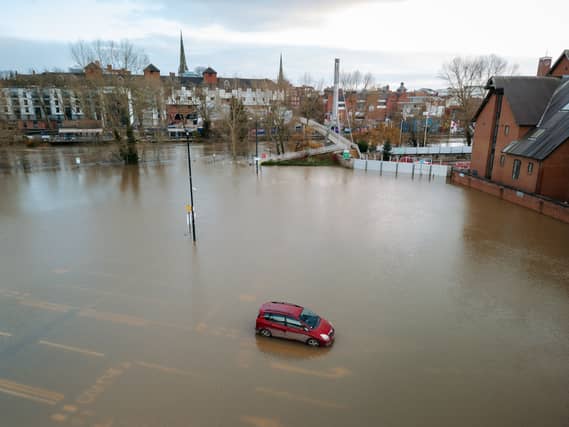


A detailed analysis published by the National Flood Forum says Shrewsbury's economy faces twice as much flood loss and damage to businesses as previously recognised.
The paper, produced by flood-risk specialists GeoSmart Information, says that the estimate of loss used by the Environment Agency misses the mark by as much as £14 million.
It says the recognised figure of £25.8m of loss does not factor in £14.25m identified in the new report - with a total estimate of a £40.5m economic hit to the town.
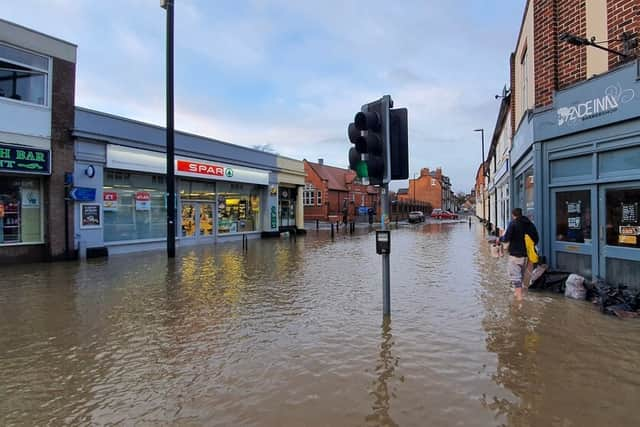
It adds that the burden is disproportionately borne by the smaller, independent businesses for which Shrewsbury has become recognised and celebrated.
The paper, which was published as part of a partnership between Shropshire Council, Shrewsbury Business Improvement District (BID) and the National Flood Forum, makes the case for greater investment to protect Shrewsbury from flooding with fresh defences.
The town currently has two sets of flood defences, in Frankwell and Coleham, but has been frequently blighted by flooding in recent years.

Flooding leads to parts of the town becoming inaccessible, with a major knock-on effect for not just businesses and residents directly flooded, but also those impacted by people who divert away from the town to avoid the disruption.
Tracey Garrett, chief executive of the National Flood Forum, said: "This report highlights what local businesses have known for years: the real costs of flooding go far beyond what national funding models account for. We need to see an approach that recognises the damage to local economies, not just buildings, if we want to protect the communities at the heart of our towns."
Stephanie Mansell-Jones from Shrewsbury BID said the report, which was funded by the West Mercia Local Resilience Forum, offers "clear evidence" of the impact on the town's businesses.
She said: “Flooding is one of the biggest threats to Shrewsbury’s town centre economy. Our mixture of national and independent businesses are carrying the brunt of repeated disruption, damage and lost trade, with the indirect impacts to all businesses - directly flooded or not - often overlooked.
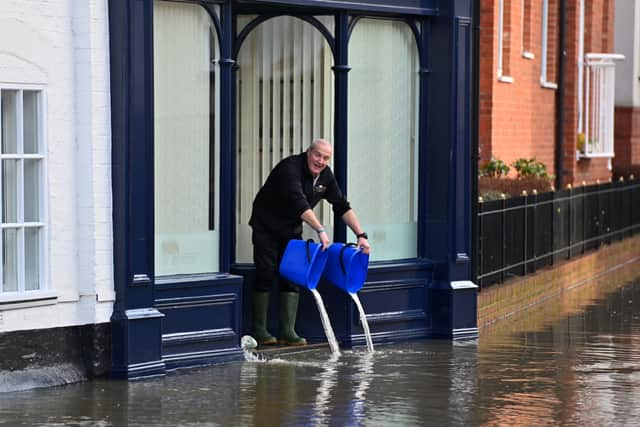
"This report provides the clear evidence we need to start showing the real cost to businesses has been underestimated for too long. It strengthens our case for fairer investment in flood protection that safeguards jobs, livelihoods and the character of Shrewsbury’s town centre.”
John Bellis, flood risk manager at Shropshire Council, said the paper makes the case for future discussions over investment in flood defences.
He said: "It’s fantastic that we’ve been able to use this funding to better support the business community in Shrewsbury and I’m hopeful that this report will re-start discussions around future investment in flood defences the town.
"The establishment of the Businesses Flood Action Group has given agencies the opportunity to engage directly with those affected and given them a chance to input into how we respond to future flood events to keep Shrewsbury open for business.”
Mark Fermor, chief executive of GeoSmart Information, said: "We were pleased to support this work with our hydrological and economic expertise. Our analysis shows clearly that a different funding approach is needed. By using a more complete flood loss and damage analysis, towns like Shrewsbury can build stronger cases for future flood protection that actually reflect the risks they face."
GeoSmart's analysis was carried out using the Frontier Economics Toolkit - a government-backed method for evaluating local flood impacts, and a survey of local businesses capturing wider losses.
It said government models fail to capture the loss of trade, physical damage, and prolonged disruption that businesses experience during and after flood events.
 The report notes that current flood-defence funding models overlook local business losses, working on the assumption that if one business suffers, its customers will simply spend their money elsewhere in the national economy.
As a result, Shrewsbury and similar towns struggle to meet the threshold for central government investment.
A Department for Environment, Food & Rural Affairs spokesperson told the Shropshire Star: “The Government inherited flood defences in the worst condition on record and we’ve stepped in to stop them falling into further disrepair, immediately redirecting £108m of funds into repairing, maintaining and better protecting 24,000 properties since July 2024.
“We are investing at least £10.5bn by 2036 - the largest flood programme in history - constructing new flood schemes and maintaining and repairing existing defences across the country.
“This record investment will reverse the decline, protect nearly 900,000 properties and help stop further economic damage from extreme weather events.”
The Environment Agency was approached for comment. A spokesperson told the Shropshire Star: "The Environment Agency follows the government policies for economic assessments and business cases, and has a standard approach to calculating economic damages due to flood impacts to ensure a consistent approach across the country."
Comment Guidelines
Iconic Media encourages reader discussion on our stories. User feedback, insights and back-and-forth exchanges add a rich layer of context to reporting. Please review our Community Guidelines before commenting.