
'Few stink and simmer with pollutants like West Midlands rivers' – Mike Lockley on region's clean-up battle
They appear still a shimmering, magical and mesmerising part of England’s landscape. They are the arteries that bring liquid life to every corner of our country.
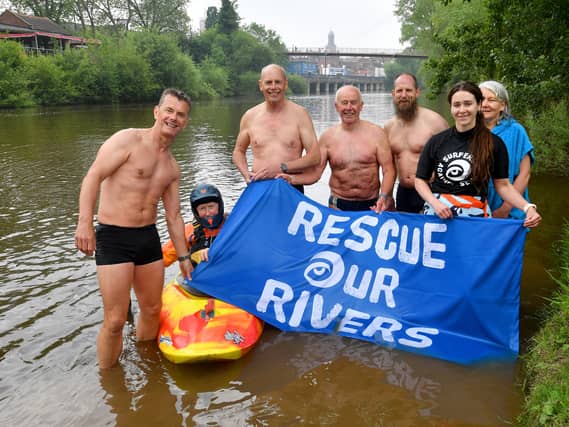


In some areas, waterway scenes still resemble Constable paintings. Yet looks are deceptive and the clear water disguises chilling tales of the stinking, chemical riverbank.
And few stink and simmer with pollutants like West Midlands watercourses, choked by a chemical cocktail of ammonia, phosphorous, nitrates and microplastics, soured by unchecked sewage spills.
Messing about in the rivers means potentially wading through a stew of pollutants. Those who indulge in “wild swimming” – the increasing popular pastime of plunging into them – risk diving into a sinister soup of substances.
There are stretches where Roderick the Water Rat would retch, Hammy Hamster heave.
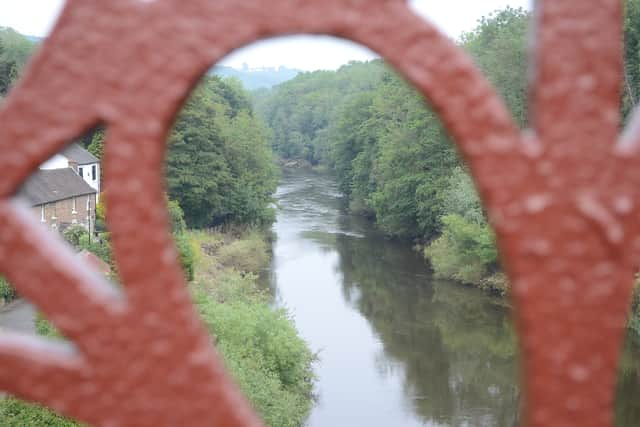
Our rivers are sick, experts warn – and the enormity of that sickness has not yet been grasped by the general public.
The Severn, Britain’s longest river that flows from its mid-Wales source through Shropshire, has experienced some of the nation’s highest levels of sewage discharge. In a two year period, there were a harrowing 33,667 sewage spillages spewing for a combined 265,881 hours, a report by the Angling Trust, published last year, states.
That is an average of 46 per day. And that constant flow, combined with agricultural chemicals that wash into water, has created mass blooms of choking algae.
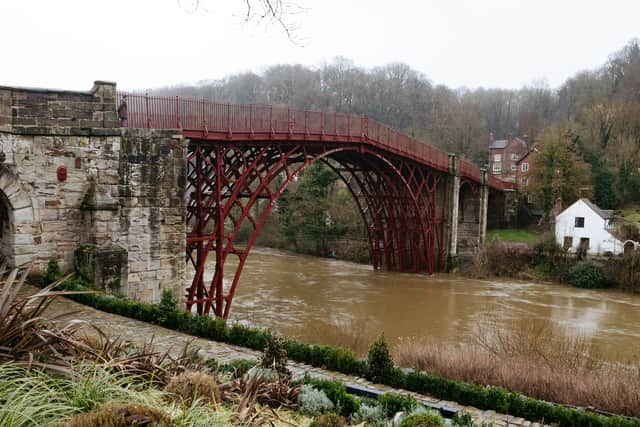
Consider those statistics when gazing at the Severn as it flows through Ironbridge.

Smestow Brook may be a mere minnow compared to the mighty Severn, yet it is of vital drainage importance to Wolverhampton, the wider Black Country and South Staffordshire.
According to pressure group 'Top of the Poops', which has, it says, based findings on Environmental Agency data, Smestow Brook was polluted by sewage 175 times in 2023, the incidents lasting 509 hours.
Think upon the River Trent, that begins life clean and babbling on Staffordshire Moorland then meanders through Rugeley.
In February, Severn Trent Water was fined over £2m for “recklessly” allowing the equivalent of 10 Olympic swimming pools of sewage to enter the river from its Strongford Treatment Works in Stoke five years ago.
Our rivers are sick. In general, they are not as sick as they once were, states the Environment Agency, but there’s no denying the patient is poorly.
That is clear from figures revealed in The Rivers Trust’s State of Our Rivers report 2024. Of the 3,553 stretches given a health check, only 151 had shown signs of getting better since the last survey in 2019. In all, 151 had declined and 85 per cent were below accepted good ecological standards.
The menace remains masked because the general public’s perception of pollution levels is based on what can be seen floating on water. That debris can be quickly cleansed, yet the long-term enemies are hidden and unseen.
A River Trust spokesperson said: “Some forms of pollution are obvious from the riverbank. Plastic bottles and crisp packets bobbing in the water, brightly coloured single-use vapes nestling on the riverbed, wet wipes tangled in overhead vegetation and streams of murky soil washed from fields or grey wastewater from combined sewage overflows.
“But looks can be deceiving. Even the cleanest looking waters can contain microplastics, industrial chemicals, hydrocarbons, fertilizers and pesticides and even pharmaceuticals.
“Untreated sewage spills blight most of our rivers and even treated wastewater still contains a cocktail of chemicals like pharmaceuticals, pesticides from veterinary flea treatments, nutrients and household cleaning products.”
Luke Neal, head of landscape recovery, at Shropshire Wildlife Trust, said: “The situation is serious, there are multiple challenges for rivers.
“Some of it is known, measured and monitored, like combined sewer overflows and agricultural run-offs.
“Then you have to consider the things that aren’t monitored and measured. We know rivers are full of microplastics and we know there are issues with road run-offs.”
Monitoring has been hampered by a 50 per cent cut in the environmental protection service budget.
The impact on river wildlife species is not fully known, but they are suffering.
“We know the populations of species are in trouble,” added Mr Neal. “Eel numbers are at a historic low, we know there is a crisis in the salmon fisheries. White claw crayfish are experiencing all sorts of problems not totally to do with water quality.”
The magnificent Severn has more of the nasty stuff than most, the Water Quality Monitoring Network has discovered after studying 26 sites. Eleven of them exceeded the Water Framework Directive, a government bill of health for waterways. Nine had more than the “trigger limit for nitrates”, eight exceeded phosphate and nitrate levels.
Kris Kent, Angling Trust campaigns and advocacy manager, said: “Even before this pilot was launched, we knew there were issues on the Severn caused by agricultural pollution, sewage discharges and urban runoff. The water quality testing has re-affirmed that pollution is damaging the Severn and urgent action needs to be taken now before it is too late.”
He added: “We need farmers to stop polluting by complying with the most basic regulations for nitrates, slurry, silage, and the Farming Rules for Water and for water companies to do more – and more quickly, introducing a ban on bonuses for directors and senior managers until raw sewage is no longer pouring into our rivers.”
No one wants to take a dip in water laced with flea killing products, but it’s liberated sewage that really gets us all hot under the collar.
And there is more liberated sewage than ever before, although it is a sticky and complex subject.
'Storm overflow spills', where sewage is deliberately released to prevent treatment works from being swamped by flooding and heavy rain, are perfectly legal under strict permit conditions. It’s done to stop houses and streets becoming awash with you know what.
With climate change bringing ever more severe storms, they have spiralled. There were 301,091 spills in 2022, 464,056 in 2023 – a 54 per cent rise, the Environment Agency has revealed.
It partly puts the spike down to the fact 2022 was exceptionally dry and there is now increased monitoring.
Allowed or not, smelly stuff is still entering our waterways. And at an alarming rate for a variety of reasons – what is known as Combined Sewer Overflows.
Top of the Poops claims the Severn was polluted by sewage 3,057 times in 2023. It describes our waterways as a Petri dish for E.Coli.
It warns grimly: “There is sewage overflowing into rivers in almost every constituency across England and Wales. Combined Sewage Overflows mix toilet sewage with rainwater and then discharge it into rivers, creating a horrible environment for fish and other creatures – it poisons them, and the rivers die. You'll find all sorts of unsanitary sanitary products floating downstream.”
It’s a stomach churning picture. Constables paintings do not include “unsanitary sanitary products”.
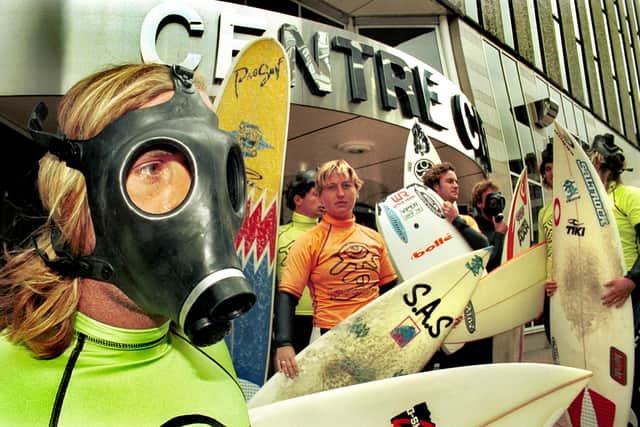
An organisation that delights in the title 'Surfers Against Sewage' – if you’re a surfer it’s a subject close to your heart – has unveiled truly startling figures: 464,056 sewage discharges in England’s waterways and seas last year alone.
It warns: “The UK sewage scandal is likely far more extensive than currently estimated.”
Locally, Severn Trent Water has been depicted as the villain of the piece, but may have become something of an Aunt Sally for a situation that has no easy solution, an industry that has many flaws.
It points out rivers are not made dirty by spills alone.
Severn Trent appears to be doing more than most to find a cure and this year received the Environment Agency’s highest possible rating – one of only three water companies to gain four stars.
Those four stars came despite this year’s £2m fine for the potentially catastrophic Trent incident and news watchdog Ofwat has opened an enforcement case into it.
Understandably, not everyone is happy with the accolade.
According to the Environment Agency, there were 239 actual incidents involving Severn Trent sewers.
But it is not all doom and gloom, the government body stresses. Since the dark days of the 1990s, major improvements have taken place.
Its State of the Water Environment Report points out: “Average ammonia levels reduced to about 20 per cent of their 1990 value. Improving biological trends are the opposite of those expected under a warming climate.
“The national loadings of ammonia from water company sewage treatment works to rivers also fell dramatically over this period…65 per cent between 1995 and 2010.”
A spokesperson for Severn Trent Water said: As a company we are working hard to improve river health and significantly reduce our impact on them, but there are other sectors that also have an impact as well.”
The government’s Environmental Audit Committee cites agricultural pollution as the greatest threat, affecting 40 per cent of water bodies. Sewage and wastewater is second (36 per cent) and run-offs from towns, cities and transport is third (30 per cent).
The spokesperson added: “This week it was announced that Severn Trent has again been awarded the highest 4-star status in the Environmental Performance Assessment (EPA) for a fifth consecutive year by the Environment Agency. The first time this has ever been achieved.”
In the company’s most recent annual report, Chief Executive Liv Garfield pledged: “We’ve made a clear promise to you that our operations will not be the cause for rivers not achieving good ecological status, and we’ve set out our detailed plans to get there. We’re already working hard to reduce spills from storm overflows, and we’re securing the major investment that’s needed to deliver on our promises and commitments.
“To accelerate our environmental plans even further our shareholders have recently invested an extra £1 billion so that we can bring forward necessary work and go even faster. We are spending £1.5bn over the next six years to halve the amount of spills on our overflows.”