
Crisis in Iran: What do we know and how does it impact us here in the West Midlands?

I recall the youthful idealism which undoubtedly provided the catalyst for the revolution - Dr Steve McCabe takes a deeper look at the crisis and what it means for the Midlands
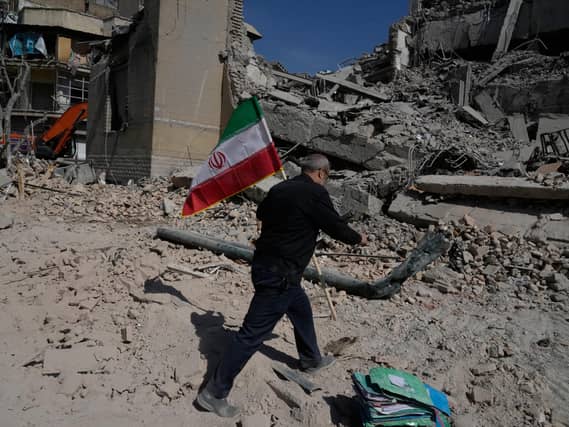
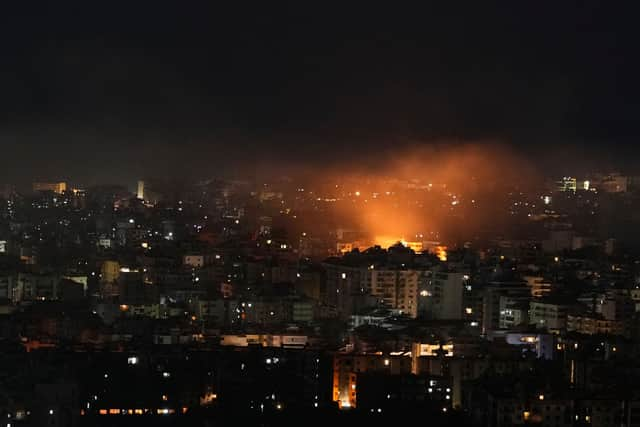
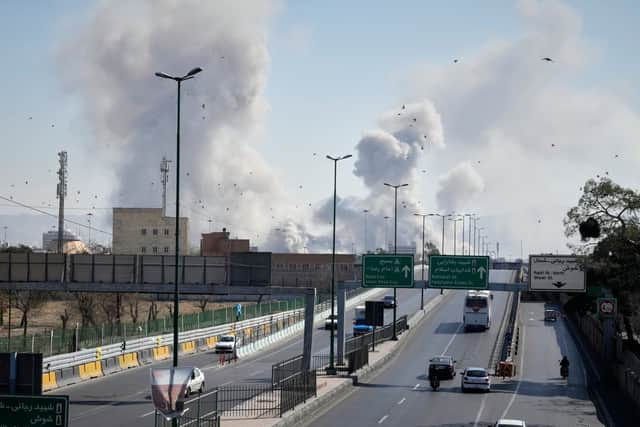
Since military action against Iran by Israel and the United States commenced on Saturday, 28th February, the news has been dominated by this story.
That Iran has responded with ballistic missiles and drones against Israel and US bases was probably to be expected.
However, that Iran is attacking neighbouring countries such as Dubai and the United Arab Emirates, meaning flights have temporarily ceased, is deliberately intended to undermine their economies dependent on tourism and, it may be speculated, create pressure on Israel and the US to cease.
Equally, the fact that oil and gas are being disrupted from the region that’s synonymous with resources we are utterly reliant on to sustain our standard of living means that, not for the first time, all of us are concerned with what the consequences of prolonged conflict will mean for every one of us in terms of higher fuel prices for gas and electricity, running our cars as well as the knock-on impact of higher inflation in terms of supply chains.
According to Goldman Sachs, Iran still produces “about 4% of global oil supply"; any prolonged disruption in supply will have a potentially detrimental impact on all economies still reliant on this fuel for industrial use and to create domestic energy.
I recall the direct impact of the ‘oil shock’ of 1973-74 when, because of support by western countries for Israel in the Yom Kippur War, OAPEC (Organization of Arab Petroleum Exporting Countries) responded by embargoing supplies which caused the price of a barrel to almost quadruple.
This created an inflationary spiral which, here in the West Midlands, had an immediate effect in that producer costs went up, which were inevitably passed on to consumers which, of course, made them uncompetitive when compared to alternative goods that could be imported.
Such a phenomenal rise in the cost of energy caused by a spike in the cost of oil was a factor in the traumatic reduction in employment in manufacturing experienced in this region in the 1970s and 80s.
As we discovered then and have rediscovered to our cost ever since, events in the Middle East, over which we have no control, are felt by us in our pocket and, in the case of wars involving our service personnel, result in young lives being cut tragically short or so many suffering catastrophic injuries.
Though not having such a major impact, there was a second oil shock in the 1970s, when a 4% decrease in global oil production led to a doubling in the price of oil.
This was caused because of the replacement of the Shah of Iran, Mohammad Reza Pahlavi, by the Ayatollah Ruhollah Khomeini, an Islamist cleric.
Khomeini, an Islamic cleric, had led opposition to Pahlavi’s leadership of what was then the Imperial State of Iran, believing it not to be sufficiently observant of the Koran and being too western-orientated.
As a student of economics in 1979, the impact of geopolitical events on the price of such a vital commodity as oil, sometimes referred to as ‘black gold, appeared very significant.
Following the fleeing of the Shah in January 1979, whose autocratic rule had been plagued by widespread demonstrations and civil unrest/strikes, the country underwent transformative change.
Ayatollah Khomeini, who’d been exiled to France, returned to Tehran on 1st February to oversee what would become an Islamic Republic on 1st April.
The establishment of a country explicitly dedicated to the pursuit of religious doctrine was, according to a referendum conducted 30th and 31st March 1979, overwhelmingly approved by 99.31% of those who voted, some 98.2% of eligible citizens.
It certainly appeared some 47 years ago that this was a universally popular outcome, in that the people of Iran had managed to replace a leader who’d established himself as the ultimate arbiter of power and exulted in the dynasty first created by his father, Reza Khan, who became Reza Shah Pahlavi in 1925.
Understanding of events in the Middle East, and Iran in particular, was undoubtedly assisted by the luck of working with students from the country who were on courses at Birmingham University and with whom I engaged whilst we were part of a group.
What they told me about life under ‘The Shah’ was horrific, most especially his use of a personal police force known as the SAVAK, which both the CIA and the French intelligence service, the Service de Documentation Extérieure et de Contre-Espionnage (SDECE), the predecessor of today’s DGSE, played a part in establishing.
Shah Mohammad Reza Pahlavi used SAVAK to arrest, imprison, exile, and torture his opponents, including the man who would eventually replace him.
Notably, when Mohammad Reza Pahlavi’s father was deposed by the Soviets and British in 1941, all political prisoners, primarily Communists, were released, and there was optimism a free and fair system of government would be possible in which, like this country, Iran would be a constitutional monarchy.
However, Reza Pahlavi sought to cultivate those politicians willing to support him in acquiring powers that would enable him to enjoy the sort of control his father was able to wield.
In his desire to be seen as a moderniser, Reza Pahlavi also engaged in relationships with Western powers who would allow him to develop an intelligence network by which he could ensure the ability to arrest his enemies.
The fact that there was an attempted assassination in 1949 allowed him to declare martial law and implement draconian laws to deal with such opponents.
Arguably, the coup d'état in 1953 by which the elected Prime Minister Mohammad Mosaddegh was removed was the catalyst for Reza Pahlavi to consolidate his control of Iran.
Mosaddeq, following a vote by the Iranian parliament, nationalised the then British-owned oil company the Anglo-Iranian Oil Company (AIOC).
This company, originally called the Anglo-Persian Oil Company, had been formed in 1909 when a large oil field was discovered, and the British government purchased 51% of the shares in 1914.
Following Mosaddegh's nationalisation, the new company would be called the National Iranian Oil Company.
In all matters involving what’s sometimes referred to as ‘black gold’, the control of oil means vast revenues which, of course, the owner can use to buy influence and power.
The coup against Mosaddegh on 19th August, led by retired army general Fazlollah Zahedi and with cooperation from the CIA and actively supported by Britain’s MI6, resulted in the arrest of a democratically elected prime minister for him to be succeeded by Zahedi.
Though Reza Pahlavi benefitted from having Zahedi, a vehement supporter, in power, he became so concerned that the new PM might eventually pose a threat to his authority through his influence in the military that, after two years, he sent him to serve as ambassador to the United Nations at its European headquarters in Geneva (1963).
As part of the consolidation of ultimate power, Pahlavi outlawed those considered to be representing political opponents and outlawed members of Mosaddegh's party, the National Front, and arrested most leaders.
Many thousands of others were arrested, including members of the armed forces, and, following trials, over 200 were sentenced to life, and over 40 were sentenced to death.
As the Iranian students I talked to in 1979 described, under Pahlavi, any dissent could be enough to ensure a member of your family could be arrested on the whim of an informer, and tales of brutality and torture at the hands of SAVAK were legion.
However, as is always the case, there were reforms led by Pahlavi in the 1960s by which electoral reforms were introduced with the right to vote given to women as well as the ability to have education and pursue professional careers.
These reforms, referred to as the White Revolution and funded by oil revenues, were intended to produce economic, social, agrarian and administrative reforms that would modernise Iran and improve the wealth of all citizens.
Using liberal pro-Western policies alienated Islamic religious and political groups, and as the wealth of Pahlavi and his family increased, combined with the use of draconian laws against his opponents who resented their implementation, the seeds were sown for his eventual downfall and replacement by Ayatollah Khomeini in 1979.
The Shah’s behaviour, which, though abhorrent, resulted in progress made to improve living standards and allow the emancipation of women to begin to cease.
Iran, an Islamic Republic, became a theocracy in that all laws and their policing should be influenced by the interpretation of the Koran by the supreme leader (Ayatollah) and trusted clerics.
This, of course, is what people would seem to have wanted in the referendum held almost 47 years ago in late March 1979.
However, as history now attests, it may be argued that those voting then may not have had any contemplation of the way in which Iran’s leaders would exult in becoming a pariah state, though the fact that revolutionary leaders, who seized control of the US Embassy in Tehran for 444 days, only releasing them after Ronald Reagan's presidential inauguration on January 20, 1981, may have been telling.
Nonetheless, in the last 47 years, many terrorist groups in the Middle East draw direct ideological and financial support, including the supply of weapons, from Iran through its Islamic Revolutionary Guard Corps (IRGC), which is the de facto military wing.
These include Lebanon's Hezbollah, Palestinian Hamas and Islamic Jihad, Yemen's Houthis (Ansar Allah), and various militias in Iraq and Syria.
Though Libya is blamed, some contend Iran was responsible for the terrorist bombing of the TWA flight over Lockerbie in which 270 people were murdered.
Following the utterly despicable attacks on New York on September 11th, 2001, Iran was named as part of the ‘axis of evil’.
More recently, drones used by Russia against Ukraine originated in Iran.
The list of allegations of wrongdoing by Iran is considerable, and, as Israel argues, its development of a nuclear programme represented an existential threat against it and other western nations.
This was the reason nuclear facilities were targeted by US aerial bombing nine months ago.
However, for reasons which are yet unclear, any hope of diplomacy has ended with the destruction of Iran’s political and military infrastructure.
Though there is hope by some that this may herald a move by people to take control and lead to a democratic state, the fact that protests have led to many thousands of unarmed civilians being killed and severely injured by the IRGC – over 30,000 believed to have died in early January – means that any popular uprising is unlikely in the foreseeable future.
Here in the West Midlands all we can do is hope that some good comes of the current situation in Iran and that we see a situation in which the majority of Iranians are able to live in peace and look forward to a more prosperous future for themselves and their families.
It’s worth noting that the population of Iran since 1979 has risen from around 40 million to over 90 million.
This means that the vast majority of Iranian citizens now alive were either not born or were far too young to have voted in the referendum establishing the Islamic Republic and giving total authority to the Ayatollah.
Reflecting on my conversations with the Iranian students 47 years ago, I recall the youthful idealism which undoubtedly provided the catalyst for the revolution which created the Islamic Revolution in Iran and swept the Shah from power.
If only for the reason we want our fuel prices to return to normal as soon as possible here in the West Midlands, we must sincerely hope that the latest ‘revolution’ in Iran, a country which can trace its history to 2700BC with the emergence of Elamite civilisation, leads to a better outcome than was the case 47 years ago.
Dr Steve McCabe
Steve is Professor and Pro Vice Chancellor, DoctorateHub.
Previously, having worked for Birmingham City Council, he spent the last 35 years as an academic at Birmingham City University teaching and researching economics, management and business. Additionally, he has written extensively for edited texts examining economics and politics.
He regularly writes and comments regularly in the national and international media on politics and the economy and has published texts on quality management, benchmarking, ‘Brexit’ and its economic and social impact, the green economy and manufacturing, house prices and India’s progress since independence.