
Murderer who slashed Shropshire inmate's face to remain in mental hospital that housed some of Britain's most infamous killers
A convicted murderer who repeatedly slashed an inmate's face with a makeshift blade will be detained in a mental hospital that housed some of Britain's most notorious criminals.
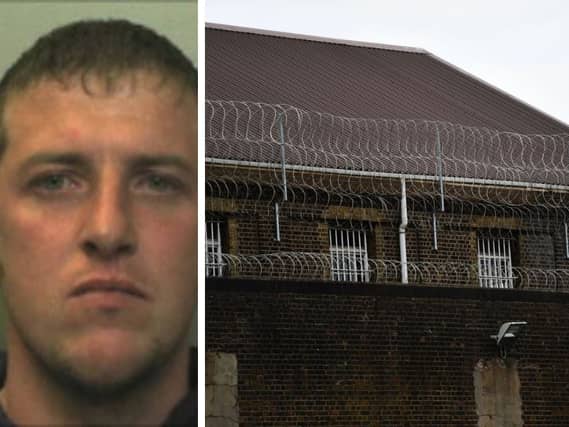


Michael Grocott, aged 42, attacked fellow convict Keith Perkins at Stoke Heath Prison, Market Drayton, leaving him with wounds on his face and hands after "fighting for his life".
Grocott was in jail at the time serving a life sentence with a minimum term of 14 years for murdering 36-year-old Robert Freeman in Stoke-on-Trent.
After his latest brutal attack at the prison in Shropshire, Grocott was moved to the high security Ashworth Hospital in Merseyside, the same mental facility which housed Moors Murderer Ian Brady, Manchester killer Dale Cregan and Charles Salvador - considered one of the UK's most violent men.
At Shrewsbury Crown Court, Judge Laura Hobson ruled that he will remain at the North West facility, granting a hospital order after a psychiatrist said Grocott had been diagnosed with paranoid schizophrenia.
Summarising the prison attack, prosecutor Suzanne Francis told the court that Grocott could be seen going in and out of his cell 33 times in ten minutes before launching his attack on Mr Perkins on December 2, 2021.
Grocott's weapon was a razor blade which had been inserted into a pencil.
"He repeatedly slashed at the left hand side of his face," Ms Francis said. Mr Perkins eventually managed to escape Grocott and was treated by prison nurses before being taken to hospital for stitches.
Grocott, who joined the hearing via video link from Ashworth Hospital, was later found in his cell with the weapon, as well as another two razor blades concealed in his waistband.
Mr Perkins said in an impact statement: "Since the attack I have not slept well. I have flashbacks. I close my eyes and I see Grocott attacking me, and me fighting for my life. It is terrifying."
Grocott admitted wounding with intent at a previous hearing. He has 16 convictions for 39 offences, including battery, affray, assault occasioning actual bodily harm, burglaries, possession with intent to supply heroin and the 2010 murder.
In 2015 he caused more than £45,000 worth of damage to a historic hospital in a rooftop protest. Grocott broke windows and clambered on to the roof of Norton House, a building at St George’s Hospital in Stafford, while getting treatment there.
He smashed roof tiles, throwing some at hospital staff and emergency services, ripped off leading and pulled down an aerial to cause more damage.
He later pleaded guilty to criminal damage and had his 14-year minimum term extended by nine months.
John Weate, mitigating, told Judge Hobson that before Grocott committed the prison assault, he had been assessed for transfer and was due to be moved to a secure mental hospital.
He called Dr John Crosby, a psychiatrist from Ashworth Hospital, to give evidence.
Dr Crosby said that Grocott had been diagnosed with paranoid schizophrenia, adding: "My view is that there is no other reason I have seen to provide an explanation for his actions at that time," referring to the attack in prison.
He said one of the common traits of paranoid schizophrenia was that patients do not believe they have an illness, which may explain why Grocott stopped taking his medication.
"If he continues to be detained, there will be significant amounts of therapy he will be required to do," the doctor added.
Judge Hobson told Grocott: "You seriously injured him (Mr Perkins) when you slashed him with a makeshift blade.
"I have read two detailed reports about you and heard evidence from Dr Crosby,
"You were very unwell. You have a long history of paranoid schizophrenia.
"You need to be kept in hospital for treatment. I am going to make a hospital order under the Mental Health Act 1983."
She also made a restriction order, meaning he will remain in hospital until a time comes when a Secretary of State or mental health tribunal is satisfied he no longer poses a risk to the public.
If Grocott is referred for parole after his prison term has elapsed, he will be released from a medium security mental hospital.