
How corruption of police squad let justice down
Officers who rode roughshod over the law wrecked the good work of their colleagues and left a lasting stain on the force.
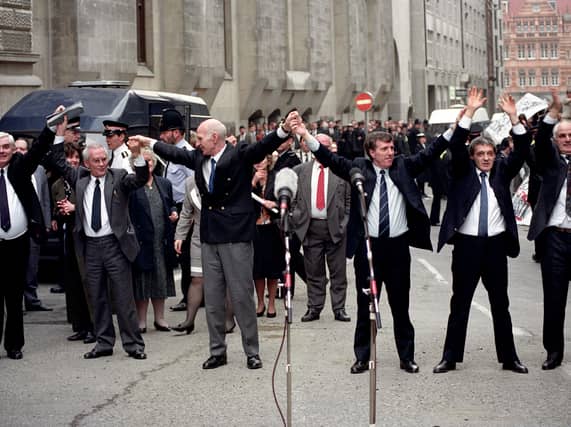


Serious Crime Squad – three now chilling words that still stain and undermine the good work and, at times, heroics of our police.
Disbanded in 1989, the hard-bitten West Midlands squad were damned by allegations of wringing confessions through bullying, falsifying statements, denying those detained access to solicitors and generally riding roughshod over rules and regulations.
The stories that followed the squad’s shame read like a script from 1970s’ cop drama The Sweeney. Lead characters in that show, Detective Inspector Jack Regan and DS George Carter, were not questioned and castigated for the strong-arm tactics they employed, those they collared were not freed because the pair bent and broke rules.
Members of the Serious Crime Squad were, and many of their most high-profile successes were later exposed as injustices, the victims freed, exonerated, and compensated. Around 40 convictions failed in the 1980s because of likely malpractice.
The Birmingham Six’s wrongful conviction for the 1974 pub bombings will go down as the squad’s darkest hour, but many more fell victim to its cavalier approach to police codes and conduct.
Contrary to popular belief, the Bilston-based Regional Crime Squad, which worked in tandem with the SCS as a sister organisation, investigated the Bridgewater Four, wrongly jailed for the 1978 killing of paperboy Carl Bridgewater in Stourbridge.
I interviewed a recipient of Serious Crime Squad interview techniques. He alleged a plastic bag was placed over his head and described the relentless grilling as terrifying.
We now know there was something rotten within the SCS, disbanded by Chief Constable Geoffrey Dear amid allegations of endemic misconduct.
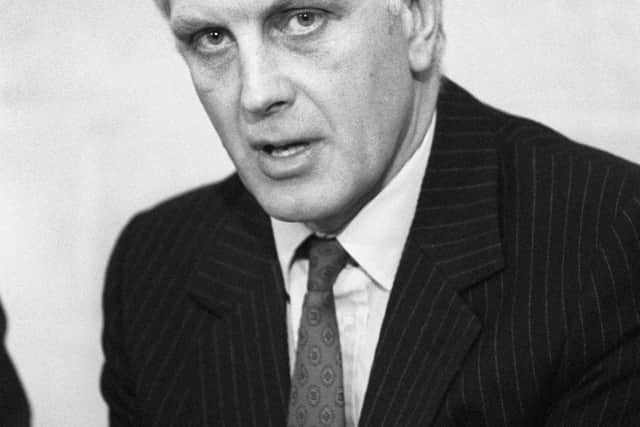
And the first stench of something terribly wrong was detected by an unnamed senior Wolverhampton solicitor.
On gathering information on the squad’s many ills, I discovered an intriguing Hansard record of a January 25, 1989, House of Commons debate. Claire Short, then MP for Ladywood, Birmingham, told the House: “A solicitor in Wolverhampton told me of a case he had handled in the Dudley Green Court and of another one in Stafford Crown Court. Three people were involved in each case. They all made supposed confessions, which they denied. As soon as he heard of a new forensic test, the solicitor obtained the approval of the court to obtain the original statements. Until that time he had been given only photocopies. The test can only be made with the originals that contain the imprints.
“There was a delay of six weeks before the papers were handed over.
“He made a number of demands that they should be handed over and then he was told that all the papers, involving six individuals in two separate cases, had been lost.
“That experienced solicitor, who handles a wide range of cases in Wolverhampton, said that the serious crime squad in the West Midlands is rotten, that that is known by solicitors throughout the West Midlands, that this practice had gone on for many years but that the recent new test had caught out the Serious Crime Squad. He also said that respected judges had complained on a number of occasions but that nothing had been done.”
History would prove the respected solicitor – and I think I know his identity – correct. He fanned a fire that would envelop and destroy the squad.
A very senior former West Midlands officer told me: “The Serious Crime Squad was a closed shop.
“There’s no doubt they dealt with some very serious and nasty criminals, but they didn’t follow procedure and without following procedure, what is the point?
“You end up releasing people and paying them a lot of money. In the end, a lot of money was being paid in overtime for very little result.”
Far from being a super-force that infiltrated and smashed organised crime syndicates, the squad had, in the handful of years before its demise, become a whimper rather than the intended whirlwind.
Resented by others in the West Midlands Force who felt there was arrogance displayed by SCS officers, arrests had declined to under 200 a year – and many of those were for less than serious crimes.
Yet the lame figures came during a sharp rise in reported incidents.
What’s more, the SCS’s reliance on ‘super-grass’ statements – a policy that gathered pace in 1984 – was failing to pass muster with courts.
In 1994, a Police Complaints Authority inquiry found the squad had abused prisoners, fabricated admissions and planted evidence. No officer was prosecuted.
Those who still refuse to accept the nefarious tactics employed by the Serious Crime Squad should study its actions in the wake of Aldridge policeman Tony Salt’s death.
The 30-year-old was found collapsed in an alleyway while monitoring, with a colleague, an illicit Small Heath, Birmingham, drinking den, a ‘shebeen’. In a press conference held on the day of the tragedy, April 17, 1989, the media was told the father-of-three, had been attacked while breaking cover to check on a suspected stolen car. He was dragged into the alley by individuals with martial arts skills and beaten to death.
Tabloid newspapers carried stories of the officer suffering a lethal karate chop to the neck. That, Parliament was later informed, was not the case.
There were claims Pc Salt and his colleague had abandoned their observation post to drink at a nearby pub. Raising the matter in the House of Commons, Chris Mullins, then MP for Sunderland South, said they sank “seven or eight pints of beer, one short and half a can of super strength lager”. At around 2am, Pc Salt walked towards the illegal party he was tasked with watching. He tried to get in, but was turned away. What happened that night remains a mystery, but details that emerged left observers pondering whether the constable was indeed the victim of foul play.
He was three times over the drink-drive limit and two pathologists believed the most likely explanation was Pc Salt fell and struck his head on the bucket of a parked JCB. One thing is beyond doubt. Three wholly innocent men – Peter Gibbs, Mark Samuels and Tony Francis – were the victims of a miscarriage of justice orchestrated by the Serious Crime Squad.
Gibbs and Samuels were coerced, while under intensive interrogation, into admitting stealing from the prone officer, Parliament heard. They were then framed for murder.
Campaigning MP Chris Mullins brought the travesty to the attention of the House of Commons on December 12, 1991. He stated: “Mr Gibbs describes how, once he had agreed to admit the theft, he was carefully rehearsed in what he was to say once the recorder was switched on: “They were saying ‘you can either do it peacefully or we can do it rough.’ I’ve been beaten up before in police stations and it’s not very nice. I wasn’t prepared to go through all that again.”
Mr Francis, doorman at the illicit drinking den, reportedly said: “I was intimidated, slapped around. Threats were made against my family.”
In his address to the House, chronicled and made public by Hansard, Mr Mullins spoke of what the three innocent men said they endured.
Mr Samuels: “I was there in Sparkhill for nine-and-half hours, with nothing on half the time and they try telling me, ‘you’re going to get done for murder if you don’t own up to this theft’. I just took the easy way out.” A 17-year-old witness alleged she was persuaded into making a statement describing how she saw one of the men hit Pc Salt, and the others rob him.
She, according to the MP, later claimed: “There were more than five men and one woman in the room with me. They were all shouting and I was crying.
“They were saying, ‘you did see it’, and putting things into my head… I just couldn’t take no more, so I said to them, ‘just write down what you want to write down, OK?”
The charges, downgraded to manslaughter, against Gibbs, Samuels and Francis, were dropped after they had spent months on remand. They each received substantial compensation.
The charges should never have been brought. According to Mr Mullins, a taxi driver had stated he’d driven two of the suspects from the party some time before Pc Salt’s death. The officer’s widow had revealed a martial arts weapon called a cubiton – allegedly taken from her husband during the attack and used to beat him – was not missing. It had been found on the floor of their car. And the ‘confession’ that £30 was taken from Pc Salt was incorrect. He only had £5 on him that evening, his widow had said.
Mr Mullins said: “The fate of Mrs Salt’s statement is of particular interest. It was not among the documents later disclosed to the defence by the Crown Prosecution Service.
“Its absence was noticed only because there were gaps in the numbered pages of the evidence that was disclosed.”
In a withering attack, Mr Mullins rounded on those who had allowed the miscarriage to take place. He said: “The case demonstrates that, despite the safeguards provided by the Police and Criminal Evidence Act 1984, West Midlands police officers are still able to persuade people to confess to crimes that they did not commit and even to tape-record those false confessions.”
There’s an irony about the Serious Crime Squad’s reign.
Those within it believed they had carte blanche to dole out no-nonsense justice, Sweeney style. Yet justice undoubtedly suffered as a result of their actions.