
Heroin – and the war against drug crime in the West Midlands that can never be truly won
It is a long, winding and perilous journey from the suffocating heat of the Golden Triangle’s poppy fields, a near hypnotic carpet of bright red petals, to the wet cement of fire-fly backstreets in the West Midlands.


It is a secret journey – punctuated by stop offs, swapped couriers and juggled transportation – paved with, and paid by, misery.
From starting point in the beautiful, if battle scarred, parcel of land that nudges Thailand, Laos and Myanmar, to the grime of our region’s underbelly, it is a journey taken by the first mules to bring heroin to our doorsteps on an industrial scale.
It is a journey of some 6,000 miles and, by the end, the deadly cargo will have been teased into very different commodities from the white latex that drizzled down bloated poppy seed pods, each drop saturated with pure, raw opium.
Jungle laboratories turned the soporific sap into a granular grey substance that has the pungent smell of vinegar. This is the brown sugar Mick Jagger sang about. Known simply as Number Three by those that cultivated the poppies, it is coarse and for smoking.
Number Four – cooked to the colour and smooth texture of talcum powder – is even more profitable. It is China White. It is pure enough to flow through veins.
And it feeds the habits of those who need it in our urban towns and cities, as well as supplying the county lines operations that take drugs into the likes of Shropshire and Staffordshire.
The then Custom and Excise’s first major blow in the war against heroin – a war that can never truly be won – was struck in Walsall, a town once famed for its saddle-making industry.
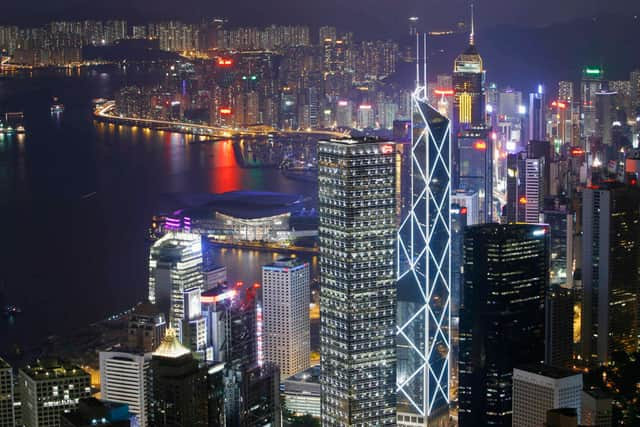
And it was a bust that spanned both the West Midlands and Far East, with specialist officers sent to Hong Kong to prevent hundreds of local people becoming hooked on the highly addictive, synthetic drug’s barbs.
It was struck only months after the 1971 Misuse of Drugs Act was brought into force – a slice of legislation that provided positive proof heroin was no longer just ruining the lives of rock stars. Ordinary people were becoming poppy impregnated addicts drawn, in increasing numbers, to the flame of drug fuelled destruction. First, they shed their dignity, then their good name, then their family. Disease and death followed.
It is a long, winding and perilous journey from the Golden Triangle to a Walsall restaurant.
Li San Shun and Li Ma Fat, a worker in his eatery, almost made it, weighed down by a staggering 50 packets of brown sugar: a near cargo of the Class A drug. The biggest haul to date.
The pair were lifted in June, 1972, after returning home following a trip to Hong Kong, the drug cache hidden in a heavy quilted bedroll. They denied everything. They even denied knowing each other.
Their lack of co-operation spelt a long journey for Brian Clark, Her Majesty’s Customs and Excise intelligence officer, sent to Hong Kong on an evidence gathering mission. There he liaised with fellow Customs officers and hard-nosed narco squad members.
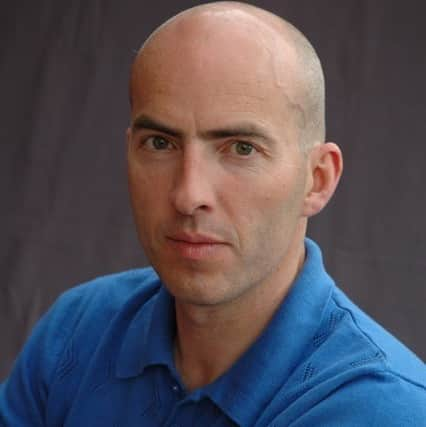
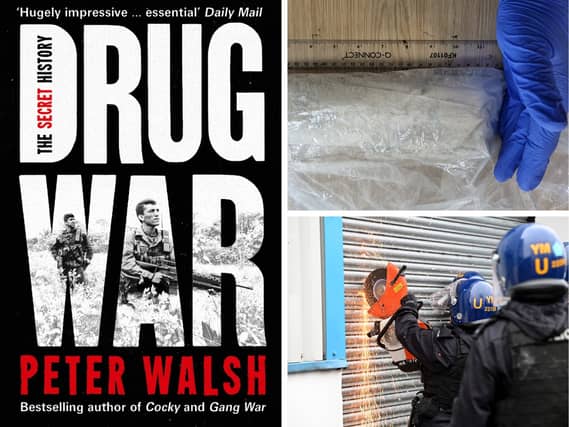
“They were all colonials,” he recalled in best-selling books Drug War: The Secret History by former Coventry Telegraph reporter Peter Walsh.
“Aussies, tough Canadians, Northern Irish – very hard men. They thought I was a soft Englishman.”
Peter may not have had their rough-edges, but he was meticulous and gathered the vital details needed to sever the supply line to Walsall. Lin San Shun, aged 53, was jailed for nine years, 36-year-old Li Ma Fat for eight.
Mr Clark said: “It was the first seizure, the first charge, the first successful prosecution. I was just pleased I pulled my weight.”
The first heavy artillery shells in the dirty war on heroin importation had been fired.
It is a war that continues and the cost and casualties have been immense.
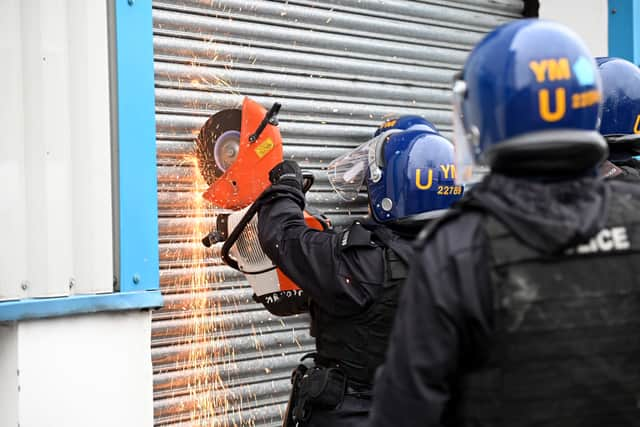
A 2017 report by the West Midlands Police and Crime Commissioner revealed a string of shocking statistics:
It says there were 22,500 heroin and crack cocaine users in our region who cost the area an estimated £1.4billion each year. The average Class A addict – not in treatment – commits £26,074 worth of crime each year. And, in 2016 alone, 701 used, discarded needles were recorded by local councils in the West Midlands.
There are victories. A raft of initiatives spearheaded by Wolverhampton Council led to the number of local drug deaths fall significantly from 26 in 2020 to only 12 a year later.
There are victories, but the war will never truly be won. Heroin by whatever name – H, blow, dope… – is a very old, resilient enemy.
Long before the white and the brown, there were opium dens where patrons would inhale the sticky substance’s vapours until swathed by narcotic numbness.
Then the raw material became synthesised, courtesy of a German pharmaceutical firm which gave its wonder drug a name, “Heroin”. It was, said the manufacturer, a non-addictive alternative to morphine.
It was hailed by those World War One troops on The Front. Yes, hollow-eyed, unwitting junkies stumbled through the trenches.
By the time the terrible truth was known – this non-addictive drug was as addictive as you can get – the scars on society ran too deep.
Banning heroin didn’t remove the constant craving, it simply switched the source from chemist to criminal.
And the criminal fraternity eager to grow fat on addiction while victims became yellow and emaciated by addiction included brutal Chinese Triad gangs.
They operated without conscience, they possessed an appetite for brutality their British counterparts did not. They tortured, maimed and murdered.
They are still with us.
Back in the 1970s, Customs and Excise’s internal magazine, “Investigations Review”, stated: “They see it (heroin) as a means of injecting capital into their interests, rather than an injection into the veins of addicts.”
Brian Clark, bolstered by his big Walsall win, was given a roaming brief to scythe down the cartels who, in the 1970s, were enjoying a very high life through heroin.
He recalls being told: “Damage the buggers!”
“That’s precisely what we did,” said Clark. “We caused them more grief than we made arrests, but that was the nature of the early days.”
Brian and his team identified a pattern. Birmingham Airport had become an important debarkation point for couriers who first used Amsterdam as a halfway house.
This information muddied the water somewhat. An increasing number of young people were travelling to the Dutch sin city to party hard and score.
Many were reckless enough to return with small amounts of heroin. They had to be processed by police, yet they were small fry.
Detectives wanted the big fish spreading death and destruction.
Importantly, Brian’s team identified two major forces in the heroin smuggling trade.
One had a direct link to the 14K Triad Gang, the most powerful and feared underworld firm in Hong Kong.
Back then, in the Black Country, every syringe that sucked up China white, every spoonful of brown sugar that simmered on spoons came from 14K.
Surprisingly, this arm of the Chinese mafia had also gained a stranglehold on the quiet market town of Hereford where addiction rates spiralled.
The second force, which had its HQ in Manchester’s Chinatown, had an unusual West Midlands distribution hub. The nerve centre was a Birmingham barber’s shop.
And it was Birmingham that would provide Customs and Excise with one of its biggest successes.
In 1975, Custom’s intelligence development division were tipped off that a significant amount of a “rare, morphine base” opiate was being touted on the Black Market.
Drug squad detective Tony Rich was given the job of snaring the sellers. Tony draped himself in bling, donned shades and took the wheel of a flashy white Mercedes to act out the part of a major player in the heroin underworld.
The ruse worked like a dream. Two brothers, one the owner of a Birmingham chop suey bar, were cornered on an East Midlands stretch of the M1.
There are many members of law and enforcement agencies who believe Government attempts to destroy the cancer of heroin addiction by providing treatment and methadone – a substitute for the drug – only added to their problems.
Peter Walker, tasked by Customs with gathering heroin intelligence, said: “You were starting to see the effects of the 1971 Misuse of Drugs Act.
“They were creating addiction clinics, addicts were going in there and being pronounced cured and then sent back out without being given their drugs.
“Well, they weren’t cured, so a black market started to grow.”
That black market continues to grow, now armed and made more complex by new technology.
One undercover Customs officer revealed the moment he realised total victory in the heroin war was not an option.
“They had arrested two men on suspicion of bringing heroin to these shores,” he said. “I went down to a small town in Devon called Bovey Tracey.
“One of the men was a floor layer, the other a roofer. They were about 21. They had been to Amsterdam, bought some heroin.
“I thought, if it’s in Bovey Tracey, it’s everywhere. We haven’t got this licked at all!”
* Drug War – The Secret History is published by Milo Books and available on Amazon.