
Unhelpful conspiracy theories surrounding pensioner's brutal murder at hands of teenager
When the man who murdered Hilda Murrell was finally sentenced to life imprisonment, one investigating officer announced with a degree of smugness: “I won’t even say I told you so.”
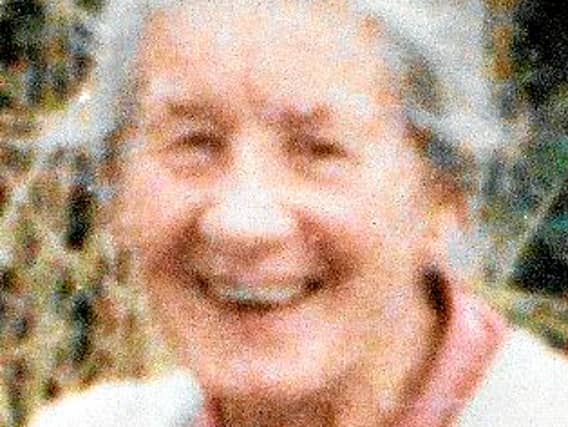


The satisfaction was understandable. Hilda’s death spawned an avalanche of stories about secret service skullduggery. Today, the case would have ignited an internet firestorm of conspiracy theories, each lavish tale of Big Brother hit squads swallowed by many as truth.
She was silenced because of her vocal opposition to nuclear power and weapons, they say. She was silenced before delivering a withering condemnation of government policies regarding radioactive waste management, they say. She was under surveillance.
The reality appears more straight forward. The 78-year-old was sexually assaulted and stabbed during a bungled burglary at her Shrewsbury home.
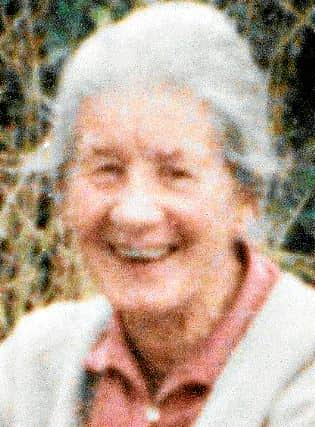
Andrew George, just 16 and in care at the time of the crime, then bundled Hilda into her car and dumped the poor woman in woodland.
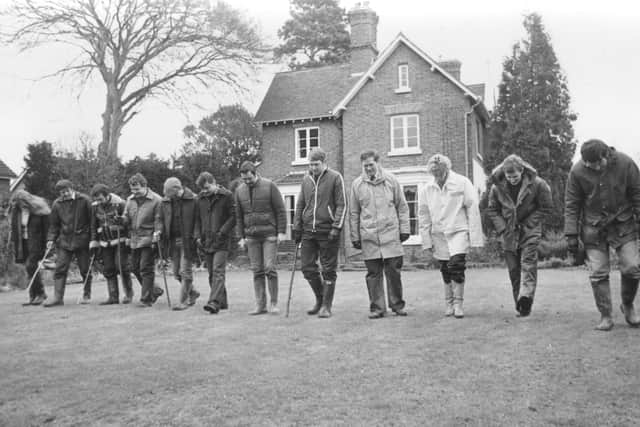
Her body was found three days later. Hilda had died from hypothermia.
The conviction of George some two decades after the 1984 crime that gripped a nation should have buried the tales of shadowy, sinister forces.
Only two questions should remain:
Firstly, why did it take so long to collar George, a man snared by DNA advances? He was identified as a suspect early on in the investigation. He was arrested on another matter within a week of the crime, but released after telling officers he had been in a local branch of Woolworth at the time of the abduction.
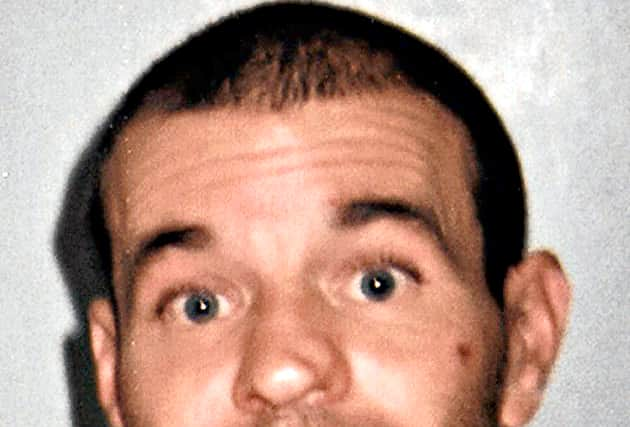
Secondly, did George act alone? He has always maintained he was present, but did not kill the householder. In 1990 double murderer David McKenzie confessed to killing Hilda – a claim dismissed by the Director of Public Prosecutions on grounds of insufficient evidence. The victim’s own nephew, former naval commander Rob Green, publicly stated George’s conviction “may be unsafe”.
Now the dust has settled, those appear the only pertinent puzzles – and they are very much of this world.
Yet still – and this year will mark the crime’s 40th anniversary – the case is embedded by claims of state collusion. There will be many who will read this and balk at my belief Hilda died as a result of a violent break-in. No government plot, no “On Her Majesty’s Secret Service” hitman. Just a known tearaway, perhaps more than one tearaway.
Hilda Murrell’s brutal death is a lesson in how urban myths become a reality when uttered by powerful voices, how dark folklore curdles into fact. And the voices were very powerful.
It underlines our love affair with conspiracies. We don’t like to destroy them by digging too deep.
But first a confession over my own tenuous and bizarre link to the case. In March, 1984, a relative – an amateur wine maker – asked for my assistance in collecting birch sap from trees he’d “tapped” in Shrewsbury woodland.
He intended to make his first batch of birch sap wine.
We arrived at the site, close to where the body was found, to discover a large police presence. Officers were taken aback by our red-faced explanation, but immediately dismissed us as suspects.
To date, a claim Hilda was executed by birch sap wine makers after uncovering their nefarious activities has, thankfully, not been put forward as a theory. It is one of the few avenues not explored.
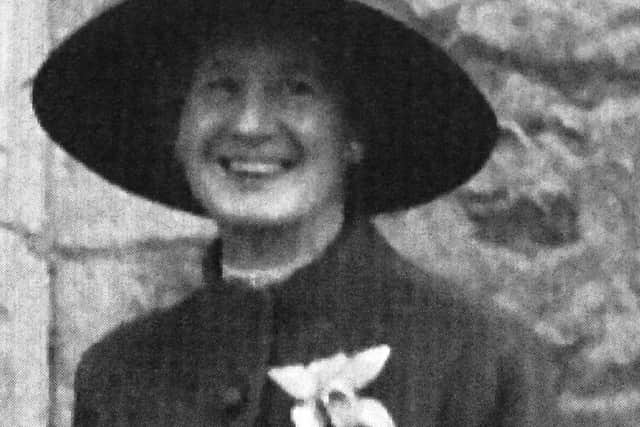
Hilda Murrell represented a lost, more genteel England. She was intelligent, loved nature, adored wildlife.
She was a renowned rose grower, counting the Queen Mother among her customers, and cared passionately about the environment.
Head girl at Shrewsbury Girls’ High School, she gained a scholarship to Newnham College, Cambridge, graduating with an MA in English and French literature and Modern and Medieval languages. Her work during the bleak war years included finding homes for Jewish children saved from the Nazi terror.
Hilda’s family were well-known and respected and she became director of their rose nursery and seed shop business in 1937.
Her life had been peaceful and free from this world’s worst traits. She deserved a death mirroring that existence. As Charles Sinker, writing in The Times, put it: “It is an almost intolerable irony that a life so dedicated to peaceful pursuits, and to the pursuit of peace, should have been terminated by an act of mindless violence.”
The fact she didn’t receive that peaceful end is not down to men in grey suits who carry out their work away from public glare. That is my firmly held belief.
So why have so many bought the theory, hook, line and sinker?
It is, primarily, because of Hilda’s fervent opposition to the nuclear industry.
Hilda was murdered before she presented her own damning submission, entitled 'An Ordinary Citizen’s View of Radioactive Waste Management', to the planning inquiry into the Sizewell B nuclear power plant.
She could not let that cat out of the bag, it is claimed.
But there was another “area of interest”. Nephew Rob Green was, allegedly, one of the few who possessed full details of the Falklands War sinking of Argentine ship General Belgrano by nuclear sub HMS Conqueror. He and Hilda were very close. Did she have information so hot its steam would scorch society?
Doubters also felt it inconceivable the body could lie for three days undetected. I find it entirely conceivable.
The blend of military secrets and nuclear power struggles created a heady cocktail of conspiracies.
And they were endorsed in high places.
Labour MP Tam Dalyell even announced in Parliament in December, 1984, that British Intelligence had been involved. They had executed Hilda while searching her home for classified documents about the Belgrano. Those may have shown the ship was struck 59 miles outside the exclusion zone. When interviewed by police, however, Dalyell could not provide evidence that was new or significant.
In 2012, barrister and campaigner Michael Mansfield QC told the BBC: “The major suspects, if you like, are the security services and it seems to me it is time that there was an investigation into their role in this matter.” He found it “incredible” they had no knowledge or declined to confirm or deny involvement.
In a bombshell, 2013, first person piece published by the Daily Mail, Rob Green stated: “I was a commander in Royal Navy intelligence at the heart of the Falklands War, thus I fear it is more than possible that having me as her nephew sealed her fate.”
Robert, who wrote a book about the case 'A Thorn In Their Side', added: “But standing up for the truth comes at a cost. Our home has been broken into several times, computers interfered with, possessions disturbed, yet nothing stolen. Our mail often arrives in our PO box late, damaged or even empty.
“I still find my phone calls mysteriously disconnected mid-conversation. I do not own a mobile phone because they can be listened to.”
Mr Green said his aunt had told fellow anti-nuclear campaigner Gerard Morgan-Grenville during an agitated phone call: “If they don’t get me first, I want the world to know that at least one old woman has seen through their lies.”
He pointed to the fact a description of the individual driving Hilda’s car did not that match of George. In any case, the boy didn’t know how to drive.
In the chopping sea of claims and counter claims, there is one undeniable truth – Andrew George’s DNA was discovered at Hilda Murrell’s home. He was there. As one former detective inspector said: “His DNA was one in a billion which is almost the most you can get.”
No one has ever suggested the labourer was in cahoots with MI5.
In 2006, the Court of Appeal upheld George’s conviction. Following its decision, Detective Chief Superintendent David Cole said: “I have no comment to make at all. I won’t even say I told you so.”
One detective who arrested George back in 2003 described the torrent of conspiracy theories as “a sign of the times”.
They are even more of a sign of the times today.