
Fears for ancient Shropshire woodlands as 75-home plan faces mounting opposition
A controversial proposal to build 75 homes in Church Stretton has highlighted growing fears that a national housebuilding drive is threatening irreplaceable ancient woodlands across Shropshire.
Fears have been voiced that England's oldest natural habitats are coming under increasing strain from housebuilding pressures, as a fierce planning dispute continues over proposals for 75 homes in Church Stretton.
Across the Shropshire Council area, there are 86,688,718 square metres of ancient woodland, representing 2.70 per cent of the county's total land area.
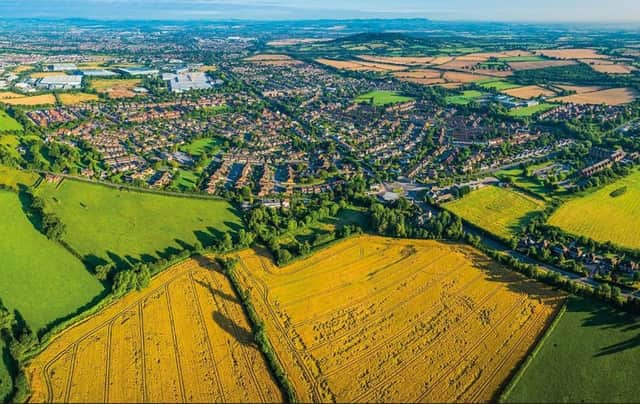
Although ancient woods are supposed to benefit from some of the planning system's strictest environmental safeguards, a BBC Shared Data Unit investigation has revealed that housing schemes across the country are repeatedly being put forward and approved immediately adjacent to them, leading to concerns that existing policies are falling short.
In Shropshire, the spotlight is firmly on Church Stretton, where developer Northern Trust wants to build up to 75 properties on a 10-acre site at Snatchfield Farm.
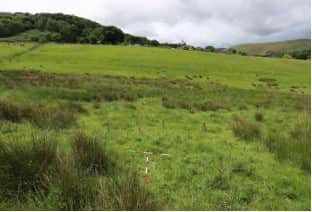

The land has been the focus of local opposition since 2019, when the community launched the "Save Snatchfield" campaign and collected more than £5,000 via a JustGiving page to fight potential development.
Northern Trust's outline planning application seeks permission to construct the 75 properties alongside a new access road, which would be formed off Chelmick Drive following the demolition of an existing bungalow.
Under the blueprint, the estate would consist of 16 two to four bedroom houses, 42 three to five bedroom houses, and 17 four to six bedroom houses.
The application has triggered well over 300 formal objections on Shropshire Council's planning portal. A campaign website set up to oppose the scheme warns that "the Strettons are under threat!"
Campaigners point out that the Snatchfield site contains priority habitats, including rush pasture as well as ancient and semi-natural woodland. The area is also known to support a range of protected and rare wildlife, including brown hare, hedgehog, grass snake, owls, otter and six species of bats, alongside great crested newts recorded in a neighbouring pond.
Lucy Grabe-Watson, chairwoman of Ancient Woodlands UK, warned that national policy safeguards are coming under strain.
She said: "The grey belt policy change is recent, so specific examples are still emerging. However, we are already seeing cases where existing protections are struggling. The grey belt policy change is recent, so specific examples are still emerging. However, we are already seeing cases where existing protections are struggling.
“The 2026 NPPF (National Planning Policy Framework) retains ancient woodland under the irreplaceable habitats clause. Development should only be permitted in wholly exceptional circumstances, and although mitigation is referenced in policy, ancient woodland is irreplaceable so loss cannot genuinely be mitigated.
"Despite this, applications resulting in loss or deterioration have historically been approved, including nationally significant cases such as HS2 and local examples involving boundary encroachment and insufficient buffers."
Dougald Purce, woodland project officer at Shropshire Hills National Landscape, noted that while housing schemes have caused minor impacts to the condition of ancient woods, wider challenges remain.
"Despite a vast amount of guidance and aspiration for PAWS (Plantations on Ancient Woodland Sites) to be converted back to native broadleaved woodland, the pace of change is woefully slow," said Mr Purce.
A spokesperson for the Ministry of Housing, Communities and Local Government defended existing planning rules.
The spokesperson said: "Ancient woodlands have very clear and strong protections, and we have explicitly said development proposals that result in the loss or deterioration of these precious habitats should be refused.
"There are very limited exceptions to this, such as new nationally significant infrastructure projects, and in these instances appropriate measures would have to be taken to compensate for the impact on habitats.”
Comment Guidelines
Iconic Media encourages reader discussion on our stories. User feedback, insights and back-and-forth exchanges add a rich layer of context to reporting. Please review our Community Guidelines before commenting.